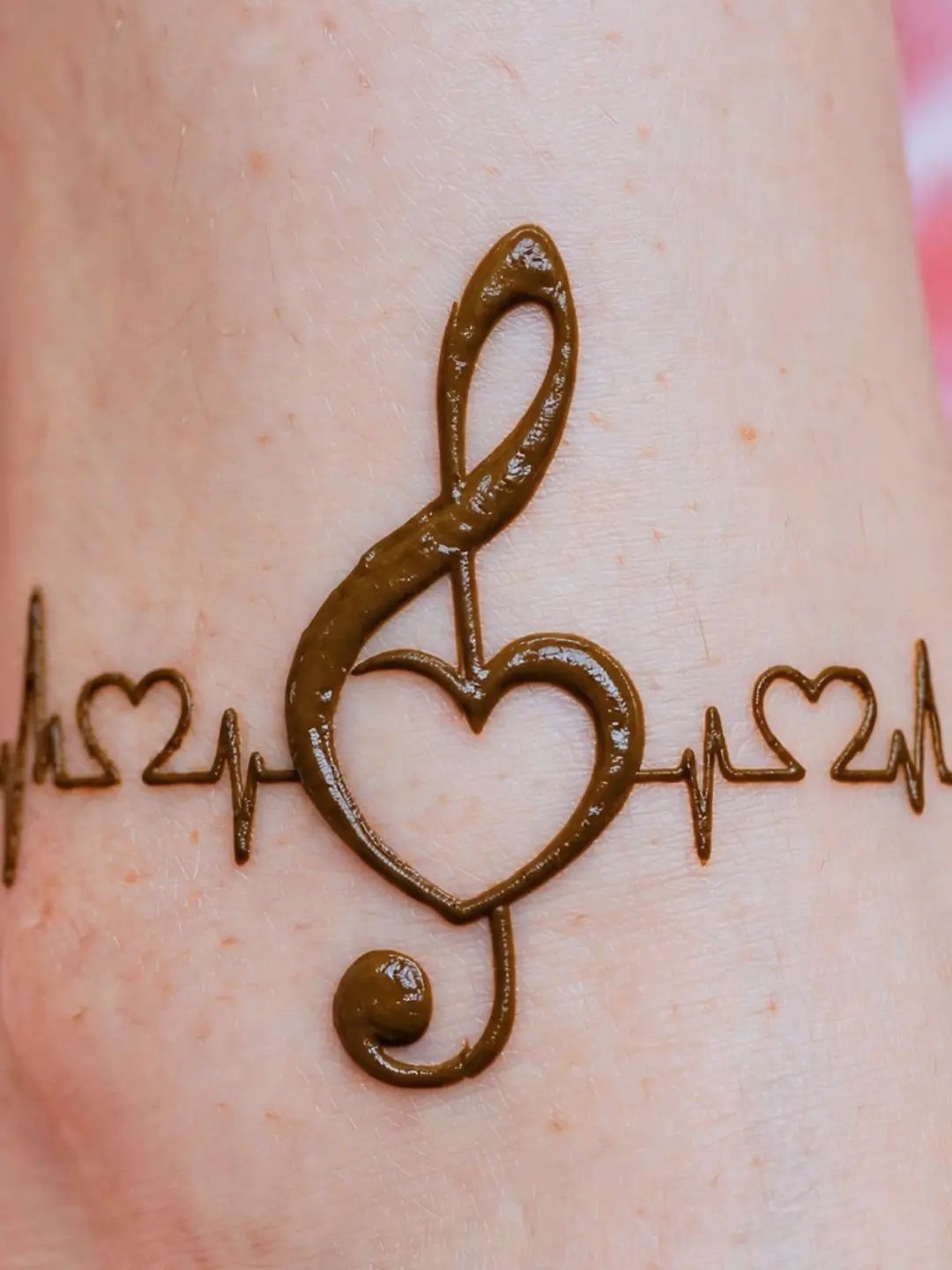
A simple henna tattoo can mean a single dragonfly on a finger or a full butterfly with trailing vines, and the deciding factor is how much time you have before the paste has to be dry.
The 2 mm cone opening that lays a mandala’s thick outer ring is the same one you would use for a leafy wrist vine, so the scale changes more than the tools do.
1. Simple Leafy Henna Design

A vine of small leaves trailing from wrist to fingertip is the first pattern most henna artists learn, and it stays useful because it stretches or compresses to fit any hand size.
Work from the wrist upward so your trailing hand does not drag through wet lines. If the leaf clusters look sparse, add a dot at each stem junction; it fills the gap without complicating the motion.

ALL NATURAL: Our Pure & Natural ready to use henna hair color paste is great for coloring your hair. Forget the hassle of mixing henna powder and enjoy our ready to use henna cones! Our henna is always stored properly, to ensure the freshest henna to you and it is triple sifted so that you get the smoothest application every time.

REDDISH-BROWN NATURAL COLOR: This listing is for 1 Cone. One cone is 24-28 grams.The wrapper color of the cone varies and is sent randomly. All cones have the same color paste. It will give a reddish brown color. If your current hair color is dark brown or black, this may only give you slight red undertones.

ALL NATURAL: Our Pure & Natural ready to use henna hair color paste is great for coloring your hair. Forget the hassle of mixing henna powder and enjoy our ready to use henna cones! Our henna is always stored properly, to ensure the freshest henna to you and it is triple sifted so that you get the smoothest application every time.
2. Simple Floral Pattern

2 lilies with open petals and curling stems suit a forearm better than a palm because the skin there moves less, so the paste cracks less.
The stain starts out light orange after paste removal and deepens to brown over the next day or two, so the real contrast shows up once oxidation runs its course.
After that the stain settles to rust; plan application well before you need it to look its best.

COMPLETE KIT: Set includes 18 sheets of self-adhesive henna stencils featuring traditional Indian Mehndi designs for hands and body art


COMPLETE TEMPORARY TATTOO PASTE CONE KIT:This portable DIY body art set contains 3 maroon tattoo‑paste cones, 3 replacement cone caps and 1 white pre‑draw pencil. Practical matching accessories help you finish your temporary body art quickly without extra purchases.
3. Simple Mandala Design

A shoulder mandala works best when the center sits on the bone itself, not the muscle, because the skin there shifts less with breath and reach.
Each ring masks the imperfections of the last, so precision matters less than steady spacing.
A cone with a 2 mm opening lays the thick outer lines without refilling; for the inner rings, cut the tip narrower or the paste pools.
The whole piece applies quickly and stains darkest where the paste sat thickest, usually the outer ring.

The packaging includes; You will receive 12 different Leaf Vine Stencils, with a wide range of styles and sufficient quantities. The Reusable Leaf Stencil for Craft can meet your daily use and replacement needs

What's included: 1 Set = 9 sheets henna tattoo stencils, template size: 21 cm x 12 cm/8.2" x 4.7" (Only Templates,No Tattoo Ink); Paste location: hand, finger, forearm, legs and other parts of the body

Product Size: You will receive 12 leaf stencil, measuring 19x4.5 inches/50x11.4cm and 11.8x3 inches/30x7.6cm respectively. The quantity is ample to meet your diverse needs.
4. Simple Geometric Patterns
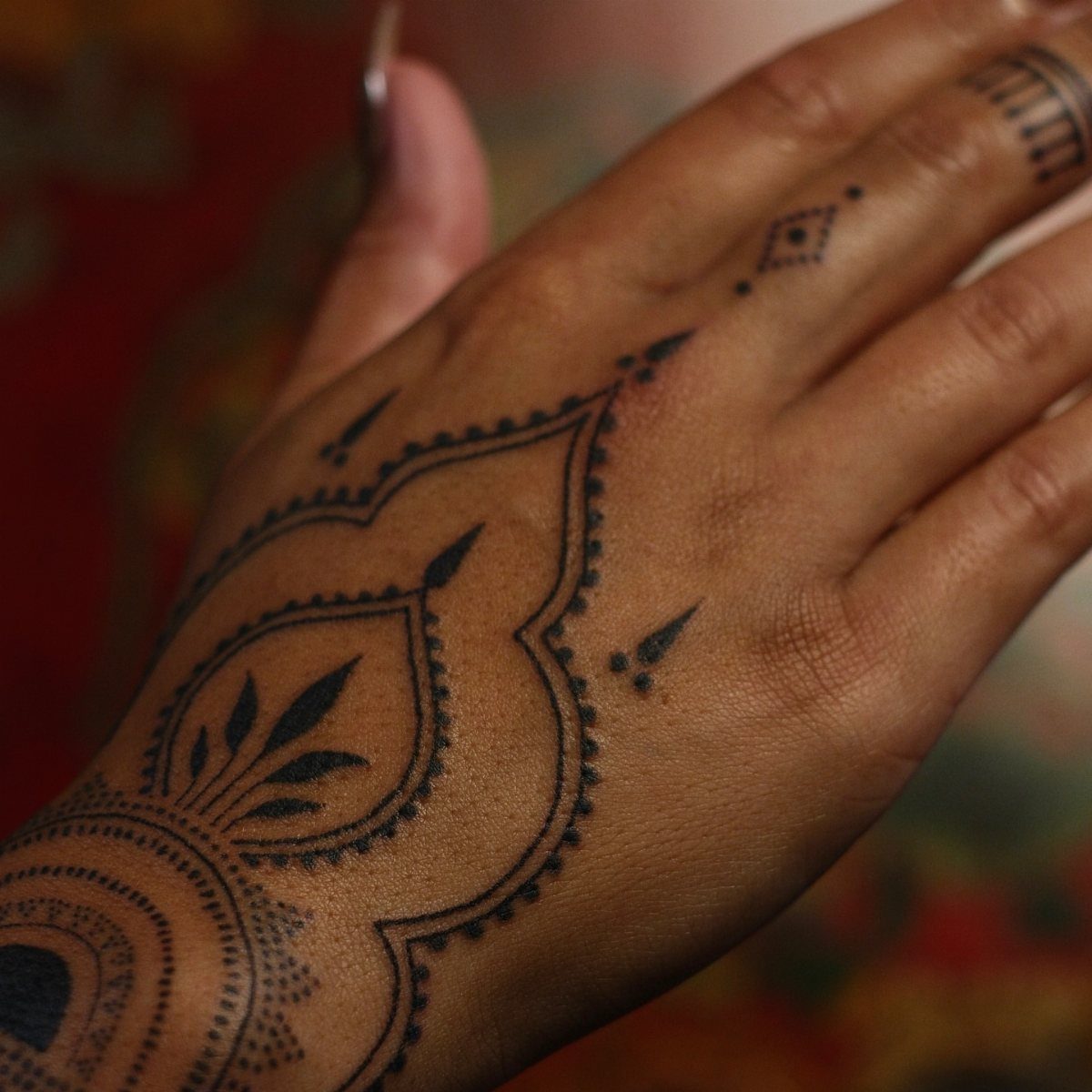
The dot grid is the trick: mark intersections first, then connect them in threes for triangles, in fours for diamonds, in sixes for the hex shapes at the wrist.
Black henna paste, the kind visible here, often contains PPD and can scar; I would ask the artist to mix brown instead. The geometry reads nearly as well and the reaction risk drops to near zero.

✿【Exquisite Traditional Henna Style Design】: Our brown henna temporary tattoo stickers adopt classic Indian and Arabian henna aesthetics, featuring delicate mandala, floral, lace, totem and vintage henna pattern combinations. The natural brown henna tone creates a mysterious, gentle and exotic visual effect, perfectly simulating real henna body art. Suitable for women and teens, these boho-style tattoos beautifully decorate hands, fingers, wrists, arms and ankles for daily and holiday styling.

18 Sheets with high-quality 3 layers PVC henna hand stencils; Safe,Washable and Non-Toxic.Beautiful, Stylish, Easy to Use, Size: 21cm x 12cm/8.2" x 4.7"

COMPLETE KIT: Set includes 18 sheets of self-adhesive henna stencils featuring traditional Indian Mehndi designs for hands and body art
5. Simple Hibiscus Flower

A five-petal hibiscus with a dotted stamen center reads as tropical without the complexity of layered petals or shading.
The dotted lines framing the main vine are laid with the cone tip touching skin, not dragging; lift straight up after each dot to keep them uniform.
A second tiny flower near the pinky base, like the one visible here, balances the composition without requiring symmetry.

✅ 100% NATURAL BIOACTIVE FORMULA: Formulated with an advanced, purely natural bioactive blend including Indigo (60%), Henna (18%), Kattha, Coffee, Manjistha, Shikakai, Amla, Bhringraj, and Brahmi. This organic hair color delivers rich, natural color while coating and strengthening the hair fiber without penetrating or stripping the cortex.

💖LONG LASTING WATERPROOF: The Black tattoo pastes are long lasting. The color darkens over time (24-48 hours) and lasts 7 to 12 days before fading. When dry, it is waterproof, but can also be easily removed by rubbing soapy or makeup remover.

SEMI-PERMANENT HAIR COLOR: Our henna hair dying kit gently adds vibrant color that lasts for about 4-6 weeks.
6. Simple and Unique Mehndi Design

A wavy sunburst on the inner forearm sits where you can see it yourself, which is rarer in henna than it sounds; most palm and hand designs point outward for others.
A simple, evenly balanced Mehndi design suits a single short session and fades evenly because no one area carries dramatically more paste than another.
The inner arm stains lighter than the back of the hand, so expect a caramel result rather than mahogany. For events, apply a day earlier than you would for a hand piece to let the color deepen.
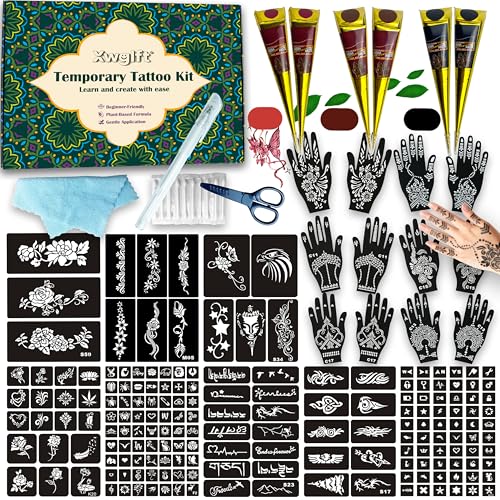
📦【Go Beyond Basics】191 diverse tattoo stencils (ranging from Artistic Vines to Minimalist Symbols) + exclusive white tattoo outline pen. This complete temporary body art kit includes 6 tattoo cones (2 Black, 2 Brown, 2 Dark Red) & Full Prep Kit (Cut-out Scissors, 10 Cotton Swabs, Clean Towel). Perfect for fake tattoos lovers, hena tattoos kit fans, parties, holidays and family DIY!

Package Included:Contains 7 brown tattoo cones, 1 white outline draft pen,with a net weight of 25 grams.made from eucalyptus oil, lemon Juice ,tea tree oil and clove oil. You can be creative and design your own patterns, or use templates to create perfect designs.

Package Included:Contains tattoo cones 7 Pcs in 3 Color (2 Black,2 Cherry Red 3 Reddish-Brown), made from eucalyptus oil, lemon Juice ,tea tree oil and clove oil. You can be creative and design your own patterns, or use templates to create perfect designs.
7. Tiny Dragonfly Henna Design

Dragonflies carry less cultural weight than lotus or peacocks, which is exactly why they work for a first henna piece; no one asks what it symbolizes, they just notice the wing detail.
4 wings with a dotted trail behind the body fits a thigh, a wrist, or the side of a finger.
The body is one straight line, so lay it first and anchor the wings to it; if the wing veins wobble, the body still holds the shape together.
Dots at the wing tips and along the flight path add motion without adding strokes.
The paste here is dark brown, nearly black when wet. That depth fades to a true brown by day two, which is when the wing edges look sharpest.

【Fun Assorted Tattoo Stencils】 -Package Included 24 Sheets(12 pairs) Self-adhesive Hand Stencils, each measurement approximately 8.3 x 4.7 inches.(Only Templates,No Tattoo Ink). Recommended for ages 14 and up.

COMPLETE HENNA KIT – Includes 18 assorted design stencils (floral, mandala, Indian patterns) and 4 tubes of natural henna paste, giving you everything needed for stunning temporary body art.

【RICH TEMPORARY TATTOO KIT】- Contains tattoo templates 194 reusable waterproof stencils,12 tattoo inks in 10 colors (Black, Maroon, Cherry Red, Purple, Green, Blue, Orange, Brown, Red, Magenta),DIY tattoo kit includes detailed picture instructions, applicator tools 1 Pcs Bottle with 4Pcs Nozzles, 6 disposable gloves and wet tissue, 1pcs tattoo outline pen, scraper to make the tattoo paste uniform. Easily achieve the decorative effect and fun of self-expression that tattoos bring
8. Heart Finger Henna Tattoo
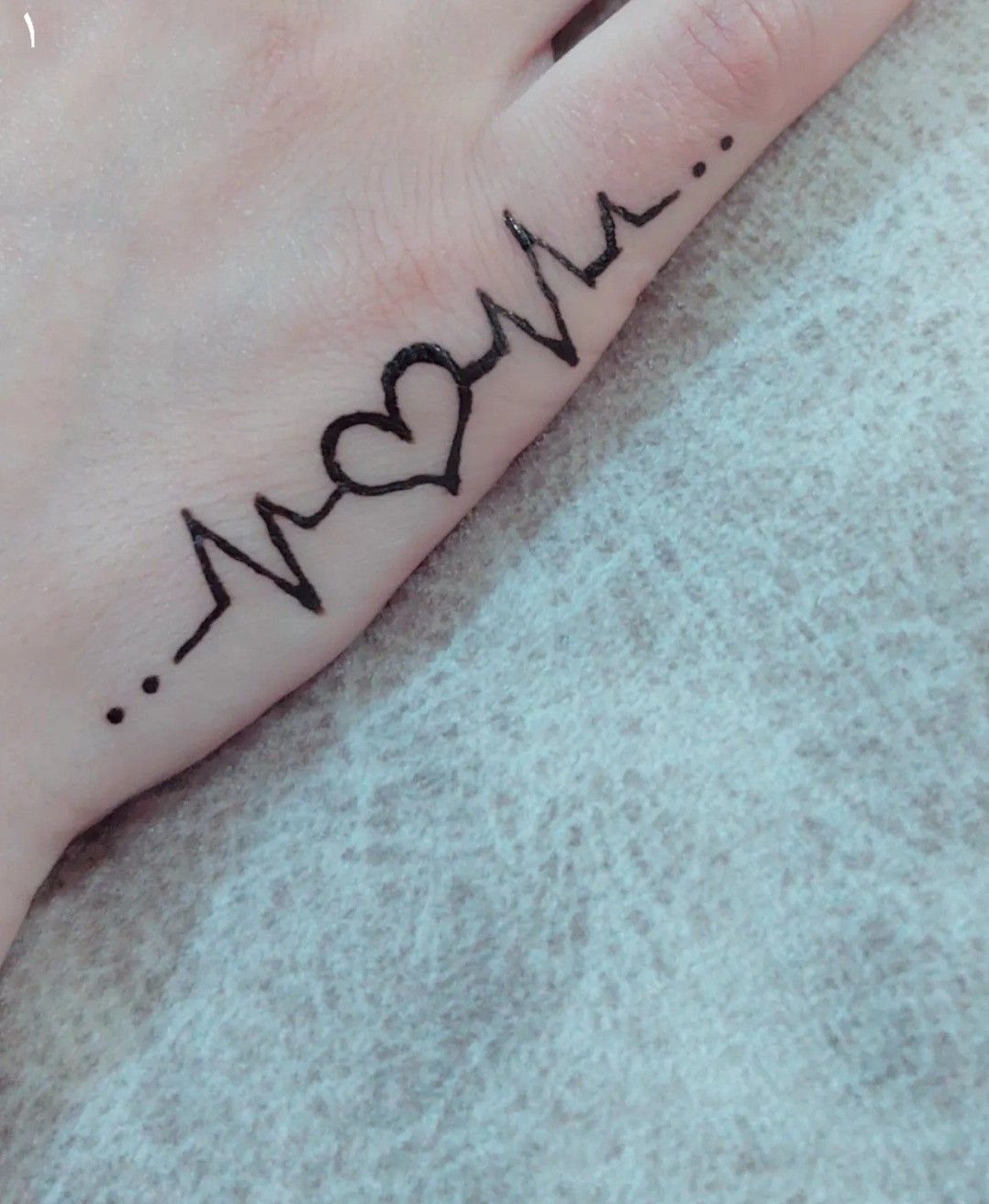
A heartbeat line with a heart at its center turns a medical symbol into something personal, and the finger placement keeps it visible without demanding the full hand commitment of traditional mehndi.
The line reads almost as sharply, and the heart shape still centers the design without the scar risk.
Lay the baseline first, one continuous curve from knuckle to fingertip. Add the heart where the line would peak, then reconnect; breaking the stroke there hides the join.
Finger and palm skin takes henna darker than the forearm because of the thicker keratin layer, though the stain there still fades fast from washing and use.

Leaf Stencils Kit: The kit comes with 14 pieces of tropical leaf stencils in different patterns, quantity and size are enough for your daily DIY use. Our Leaf template contains two sizes,7 pieces are 4.5 x 11.76 inches and 7 pieces are 3 x 11.76 inches.
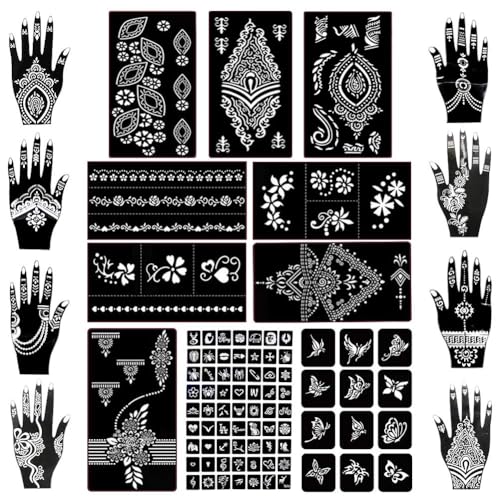
97 HENNA TATTOO DESIGNS IN 18 SHEETS:Includes 8 hand stencils, 8 rectangle flower pattern sheets, and 2 small pattern sheets. Features butterflies, flowers, roses, mandalas, paisley, and traditional Indian/Arabian mehndi designs. Perfect for creating stunning body art for weddings, festivals, and summer celebrations.

[AUTHENTIC INDIAN & ARABIAN DESIGNS]: Features 6 pairs (12 sheets total) of premium henna stencils with matching left-right hand floral patterns, featuring vine tendrils, scrollwork, stars, mandalas, and geometric motifs. Specifically designed for hand back applications, perfect for bridal henna, blending traditional Indian mehndi and Arabian arabesque styles.
9. Simple Butterfly Henna

A butterfly with trailing vines suits the shoulder because the blade gives a flat canvas while the arm hangs, then the vines move with reach and settle back.
Brown paste, not black, is the safer choice; the butterfly and heart-shaped vine read clearly either way.
Start the body at the shoulder peak and let the wings spread toward the spine and collar edge; the vine drops from there to wrap the arm or extend toward the fingers if you want a larger piece.
The small dots along the vine are filler that hides any wobble in the line itself. Lay them last, after the main shapes are set, so their placement corrects rather than competes.
This design asks for more time than a single flower or a dragonfly, but the connecting vine means you do not have to place every element perfectly; the eye follows the flow instead.

Product list: 5 bottles of temporary tattoo ink (black*2, brown, red, cyan), 4 pairs of hand stencils, 88 sheets of square stencils, 20 cotton swabs, 1 pair of gloves.

✿【Exquisite Traditional Henna Style Design】: Our red henna temporary tattoo stickers adopt classic Indian and Arabian henna aesthetics, featuring delicate mandala, floral, lace, totem and vintage henna pattern combinations. The natural brown henna tone creates a mysterious, gentle and exotic visual effect, perfectly simulating real henna body art. Suitable for women and teens, these boho-style tattoos beautifully decorate hands, fingers, wrists, arms and ankles for daily and holiday styling.

✿【Package Included】: 10 Sheets Brown Henna tattoo Stencils. Delicate Henna Hand stickers with various patterns. 10 temporary tattoo stickers Brown Exquisite Totem Indian Lace Mandala Flower Pattern for Beach Festivals Wedding Party Decorations
How to Apply Henna
Mix brown henna powder with lemon juice, tea, or water in a bowl until the paste runs smooth like thick yogurt.
A spatula works better than a spoon for pressing out lumps. Let the mix sit overnight so the dye releases; without that rest the stain stays weak and orange.
Load the paste into a cone with a snipped tip, 2 mm for bold lines or narrower for detail work. The cone gives more control than a bottle or brush, especially around finger edges.
Squeeze from the top, guide with the fingers below, and keep the tip just above the skin so the paste falls in a line rather than dragging.
Once the paste is dry to the touch but before it cracks, dab on a lemon-sugar sealant with cotton; the sugar keeps the paste stuck and the lemon pushes the dye deeper.
Scrape rather than wash, and keep the area dry at first so the stain can set. The stain deepens from orange to brown as it oxidizes over the next couple of days.

★100% Pure and Natural: Our henna hair color paste cones are made from 100% pure, triple shifted henna leaves. Say goodbye to harmful chemicals and embrace a holistic approach to hair coloring. Your hair deserves the best, and that's exactly what we offer.

Surya Henna Cream colors while conditioning, moisturizing and revitalizing your hair

Infused with Certified Fair Trade Shea Butter, Vegan and Cruelty Free Certified by PETA, Certified Organic Ingredients.
Henna Tattoo Safety
Black henna often contains PPD, a chemical dye that can trigger severe allergic reactions in many people, and that reaction can blister and scar, which is why I would ask for brown paste every time.
Do a patch test on the inner arm well before a full application, even with brown. A small dot is enough; if it itches, swells, or burns, skip the session.
Pure henna stains brown or rust, never black, blue, or green. A paste promising those colors in under an hour is suspect.
Store-bought cones from unknown makers are a gamble; the ingredient list may not match what is inside.
If I am mixing my own, I buy body-art-grade henna powder with the botanical name Lawsonia inermis on the label, sifted fine enough to pass through a stocking. Coarse grit clogs the cone and scratches skin.
Henna Tattoo Longevity
A henna tattoo can last several weeks, though where it sits and how you treat it changes the timeline.
Water is the enemy.
Short showers beat long soaks, and gloves for dishes help. Exfoliants, chlorine, and sunscreen accelerate fading too; the stained cells shed like any others, and anything that speeds skin turnover shortens the design’s life.
The paste leaves its deepest color where it sat thickest and longest, which is why the mandala’s outer ring and the dot-grid intersections often outlast the finer lines between them.
For an event, apply ahead of time so the stain matures from orange to its final brown.
Frequently Asked Questions
How to do a simple henna tattoo?
Mix body-art-grade henna powder with lemon juice, tea, or water until the paste is smooth and thick like yogurt. Hold the tip slightly above the skin and let the paste fall into the line instead of dragging it across.
How long will a henna tattoo last?
Most henna lasts a couple of weeks, though placement and aftercare stretch or shrink that window. Water works against it: quick showers over long baths, and dish gloves save the design from sink time.
What are the downsides of getting a henna tattoo?
Black henna often contains PPD, a chemical dye that can trigger severe allergic reactions and scar, which is why brown paste is the safer choice every time.
Even brown paste gets a patch test first, a small dot on the inner arm; itch, swelling, or burning means you sit this one out.
Store-bought cones from makers you do not know are a coin flip too, since the label and the contents may not line up.