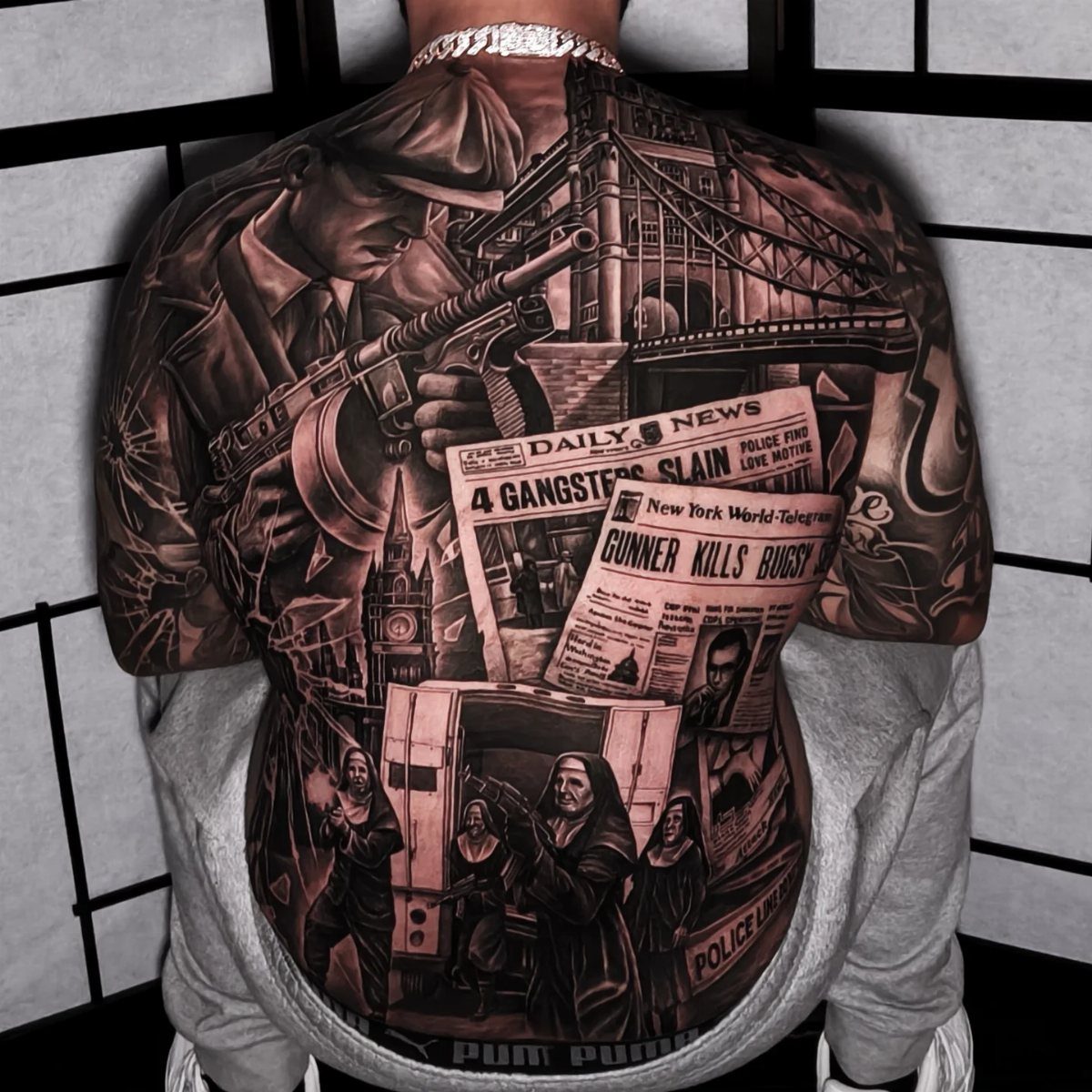
A back piece can mean a single afternoon for a geometric band or a half-decade commitment for a full Japanese dragon, and the only real limit is what your budget and calendar can absorb before the needle starts.
The hourly billing stacks up fast on a full back, and most artists who take these on will split the total into payments you can handle across those years of sessions.
1. Floral Back Piece

Lilies running down the spine with script between them turn the whole back into one continuous stem.
Black and grey shading keeps the flowers readable at a distance while the negative space in the petals keeps the design from turning into a solid black field once it settles.
I would ask the artist to leave the script out and let the flowers carry the meaning alone. Text in a language you do not read ages badly in ways image work does not.
Flowing lines matter more than exact flower choice. Roses, lilies, or cherry blossoms all work if the stems connect shoulder to hip without breaking.

Clean, Flawless Transfers: Your artwork will look so clean once transferred to the skin with the Stencil Stuff gel! Gentle on the skin, Stencil Stuff transfer solution helps you achieve clear and sharp tattoo stencil transfers every time!
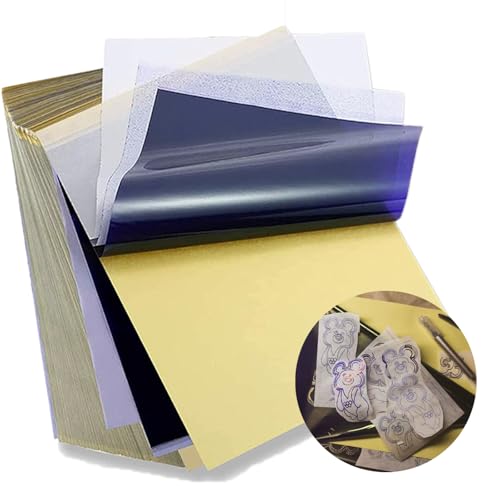
Standard size: Tattoo Transfer Paper is standard A4 paper size, each measures 8.27 in X 11.69 in. There are 4 levels in total. The thickness of the paper is very light and smooth to the touch.

Warm Tips: The tattoo transfer paper need to work with transfer medias.You will need to purchase the stencil ointment separately. Apply the design made on the master paper. Please pay attention to press the back side of the pattern to the skin for at least 3 seconds
2. Detailed Portraits Back Piece Tattoo
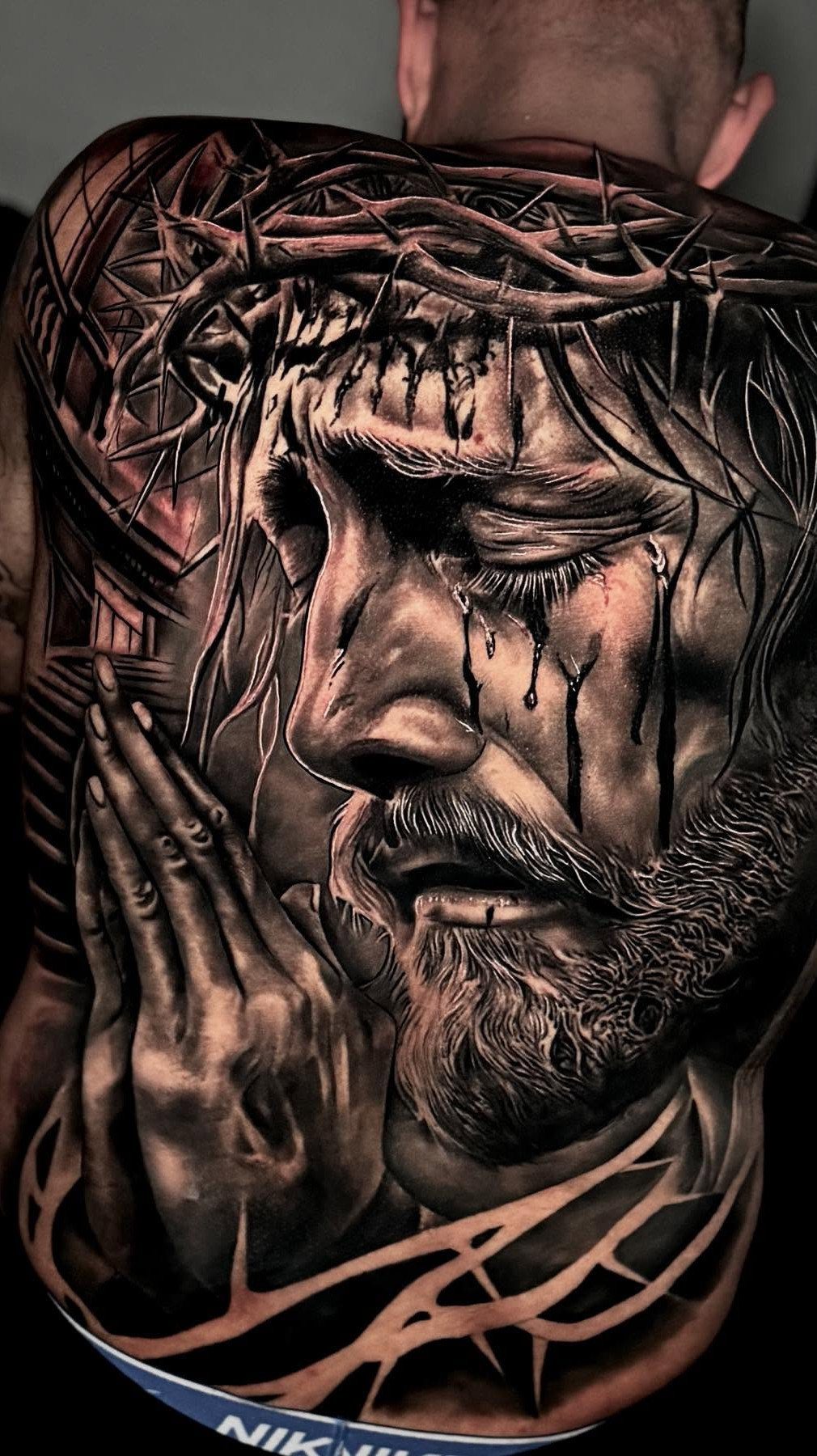
A portrait back piece lives or dies on whether the face still looks like the person once the lines soften, and most do not. Black and grey ink gives you the best shot at holding detail through the fading.
Maps, tigers, and koi mixed into the same back piece tell me this style often becomes a collage rather than a single image.
That works, but only if the artist plans the negative space between elements from the start. Filling gaps later with whatever fits is how a back turns into a busy mess.
Find someone whose portrait work you have seen healed, not just fresh.
Shops will show you fresh photos. Ask for older work instead.

MADE IN THE USA SINCE 1990: For over 30 years Dynamic Color has produced professional tattoo ink in the United States, an established American brand artists built their work on long before most imported labels existed.

VERSATILE TATTOO INK COLOR SET: Our vinrant tattoo ink color set features four shades of gray tattoo ink—Light, Light Medium, Medium Dark, and Dark. Ideal for blending and mixing, this professional tattoo ink simplifies your color palette, saving time for artists.

MADE IN THE USA SINCE 1990: For over 30 years Dynamic Color has produced professional tattoo ink in the United States, an established American brand artists built their work on long before most imported labels existed.
3. Traditional Eagles Back Piece Tattoo

Traditional eagle back pieces pair the bird with something it fights or guards: a snake, a ship, a cross. The eagle goes high, the scene below it, and the wings stretch to the shoulders to use the body’s shape.
Color holds in this style better than most.
The heavy black outlines and solid black fill were built to last on sailors who got no touch-ups. A traditional piece with proper saturation still reads from across the room decades later.
Framing a ship like a cameo is one way to keep the composition tight on a large canvas.
Some artists merge the eagle into the scene instead, talons on the rigging. Both work; the cameo is easier to add to later if you run out of money mid-piece.

RICH TEMPORARY TATTOO KIT - Contains rich tattoos pattern templates (126 designs),6 tattoo inks in 2 colors (black and brown),4 disposable gloves 1 pack of cleaning supplies,allowing you to easily create unique personalized tattoos

【 575+ Fun Assorted Tattoo Stencils 】-The ChurlChurl tattoo stencils collection includes 575 high quality stencils with multiple themes. enjoy cute trendy tattoo stencil designs like butterflies, words, flowers, symbols, totem, Egypt style patterns and more.

EAGLE TEMPORARY TATTOOS: Set of 100 mini temporary tattoos featuring team spirit designs including paw prints, footballs, foam fingers, and sports equipment in various colors. Select your design - tattoos measure approx 1" each and are printed 4 on sheet, 25 sheets in a pack.
4. Detailed Tigers Back Piece Tattoo
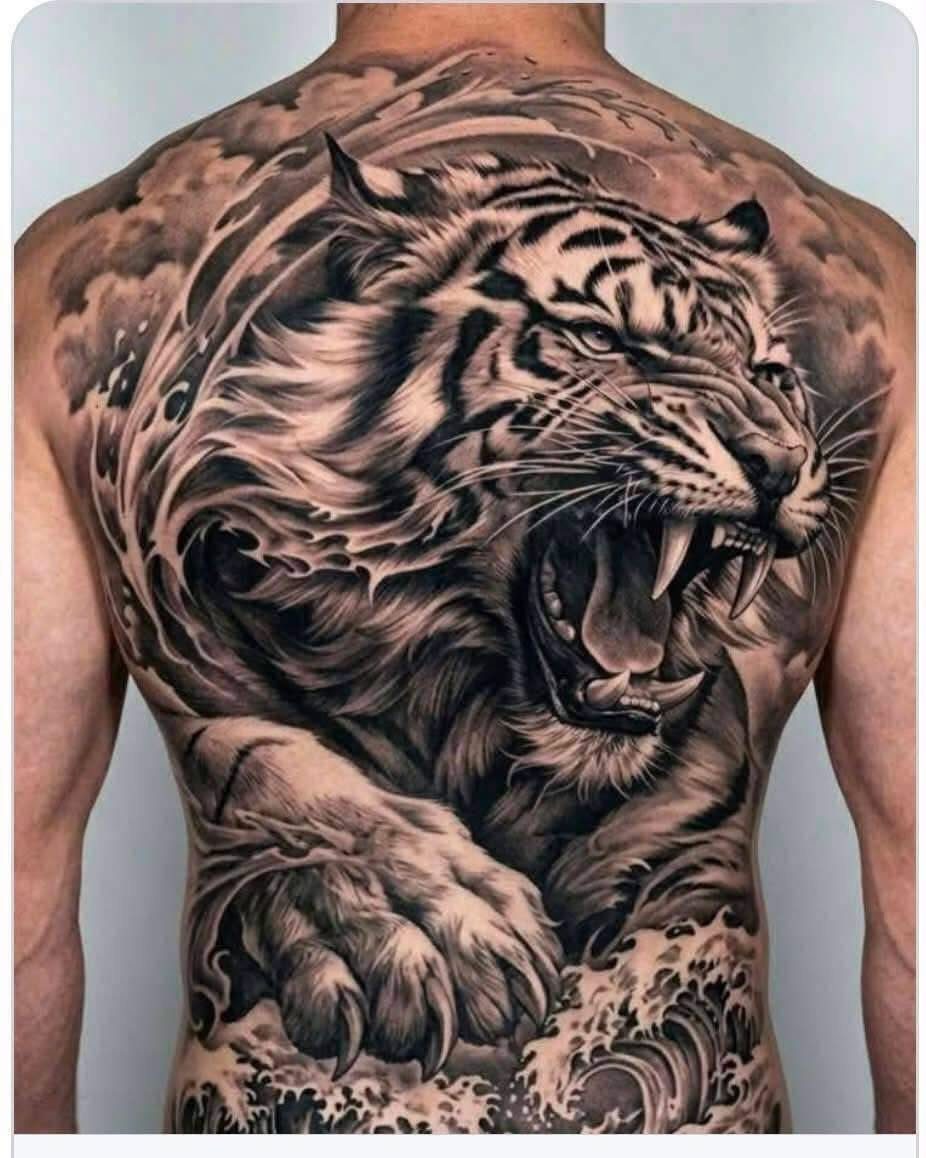
Tigers work on a back because the stripes give the artist natural lines to follow the muscles.
A roaring tiger with its mouth open at the neck and its tail down by the waist uses the whole canvas without looking cramped.
The water and cloud backgrounds in the visible piece are Japanese in origin, not traditional Americana.
Mixing the tiger with that background style is common now, but it is a mix, not pure anything. Pick an artist who has done both elements before, not one who specializes in one and is guessing at the other.
Black and grey keeps the focus on the face. Color on a tiger back piece tends to go orange and brown, which can look muddy against skin tone if the artist does not plan for it.

Spirit Tattoo Classic Thermal Transfer Paper, 8.5” X11” (100 Sheets): Established since 1946, the original and trusted choice of tattoo artists globally, offering reliability and consistency in tattoo stencil creation.

【100pcs Tattoo Stencil Paper Kit】Tattoo Stencil Paper kit come with 100 sheets tattoo stencil paper. 4 Layers of transfer paper includes the master sheet, transparant protective sheet, blue carbon sheet and yellow backing sheet, size approx. 8 1/4" x 11 3/4" which can be cut down into smaller sheets for more use.

Precision Transfers & Long Lasting: Tattoo stencil paper delivers vibrant, high-definition transfers even for intricate designs. Creates crisp, dark lines that transfer cleanly to skin (clearly on different skin tones) which are easy to follow during tattooing. The carbon layer made from high-quality dyes ensures sharp outlines without smudging or fading and maintains crisp lines visibility throughout long tattoo sessions, so you can focus on creating art instead of re-drawing lines
5. Geometric Designs
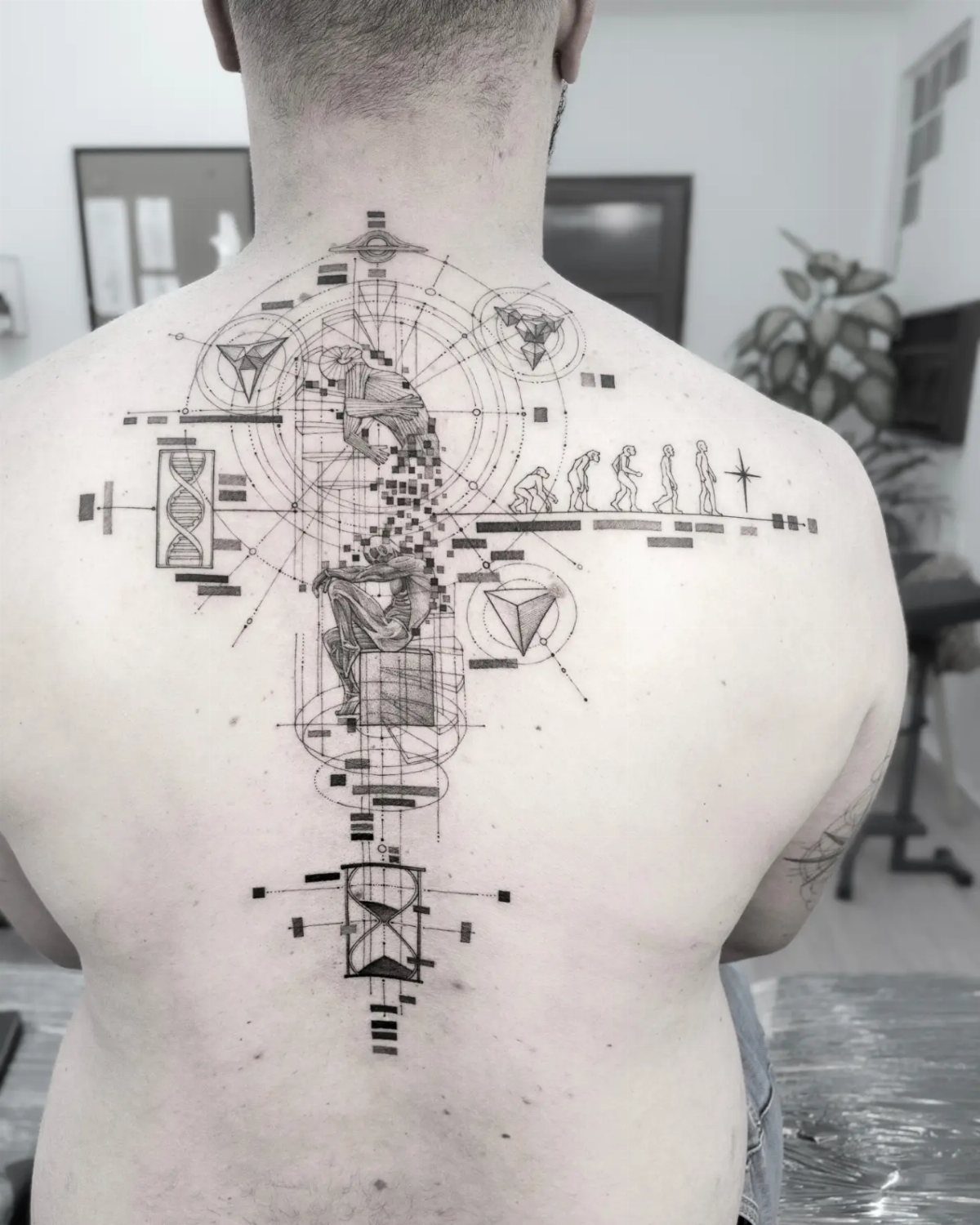
Geometric back pieces look simple from across the room and infinitely complex up close.
The visible piece puts Platonic solids, DNA, and human figures into one diagram, which only works because the spine acts as the central axis everything hangs from.
Sharp edges and straight lines are harder to tattoo than curves.
The skin stretches and settles differently on a back than on a forearm, and a line that looks straight at the end of the session may read crooked after healing.
I would only go to someone who shows healed geometric work, not just fresh photos.
Red linework as an accent can add heat to a geometric design without taking over the whole piece.
It is an option if you want color without the traditional palette, though red fades faster than black and may need more frequent touch-ups.

【High Quality Material】They are made of high-quality materials, and high carbon steel ensures its durability and stability. These materials have high strength, wear resistance, and corrosion resistance, and can maintain good working conditions for a long time.

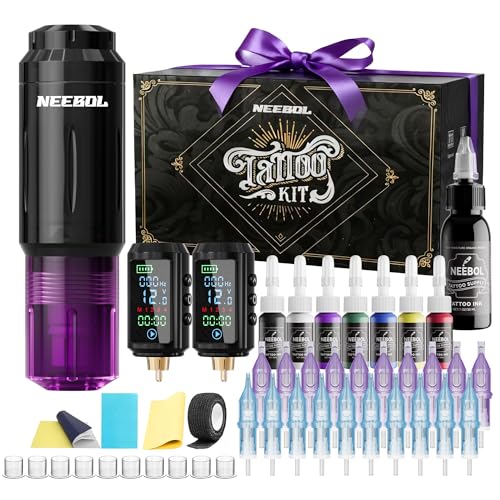
NEEBOL Tattoo Machine Kit with Complete Accessories:This tattoo machine kit includes 1 wireless tattoo gun, 2 x 1600mAh batteries, 20 needles, a large bottle off black ink, a full color ink set, and other essentials—ideal for beginners, apprentices, and professionals seeking a maquina para tatuar.
6. Japanese Dragon Back Tattoo
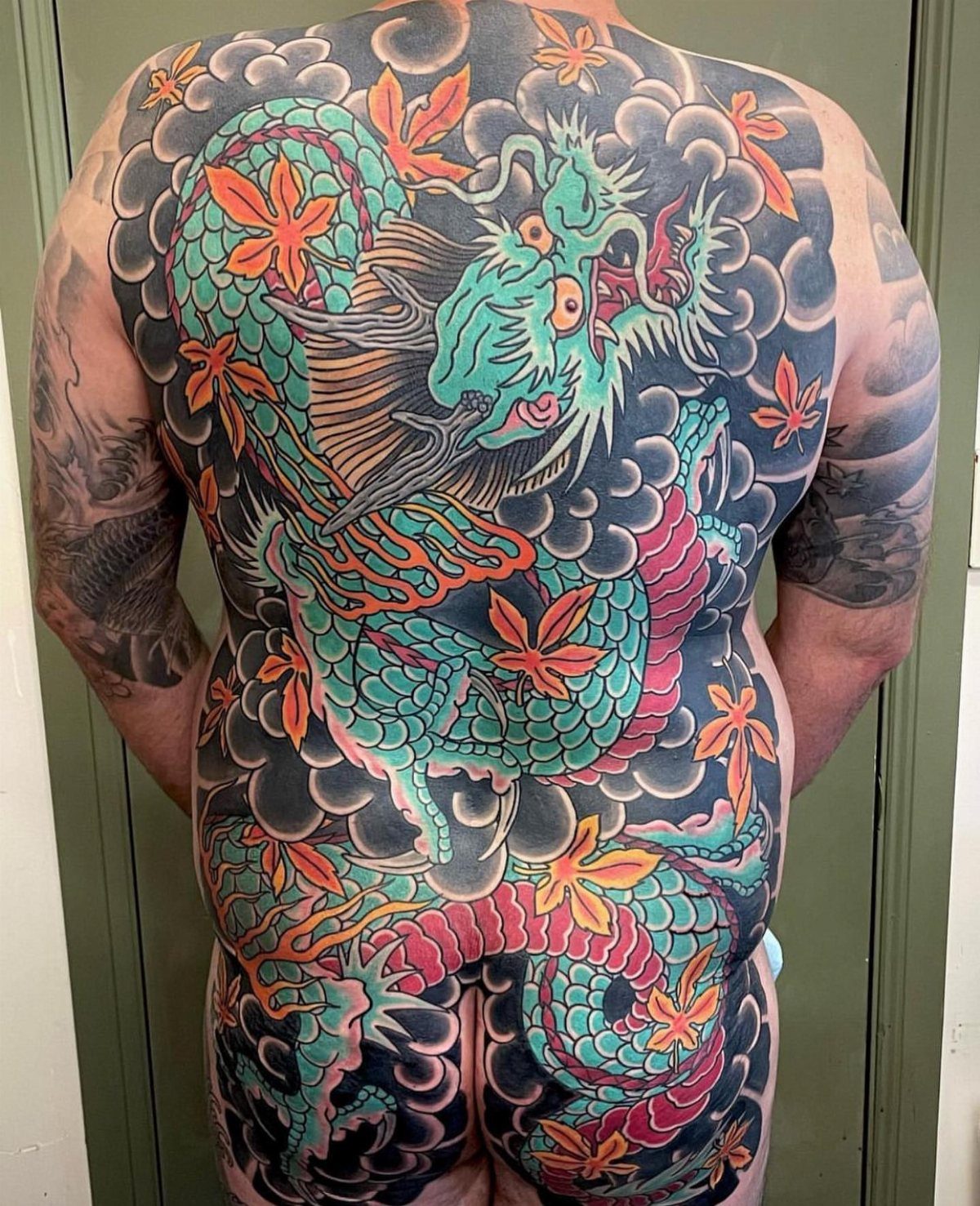
A Japanese dragon winds through clouds and wind bars from the neck to the buttocks, using the whole back and then some.
The green scales and autumn leaves in the visible piece follow the classic color rules: the dragon gets the brightest color, the background stays darker so the creature moves forward.
This is not a one-session piece. A full back with this much color takes years, not months, and the artist will want to finish the black and grey background before laying in the color.
Ask about payment plans up front; shops that do this work regularly usually have them.
The dragon’s head placement matters.
At the neck it reads as ascending, at the buttocks as descending, and the direction changes the meaning in Japanese tradition. Most Western clients do not care, but the artist building it should know which they are doing and why.

Safe and Healthy: Our tattoo transfer gel meets strict safety and non-toxic material standards, non-irritating to the skin and vegan-friendly. Maintains client comfort while achieving clear tattoo stencil transfers.
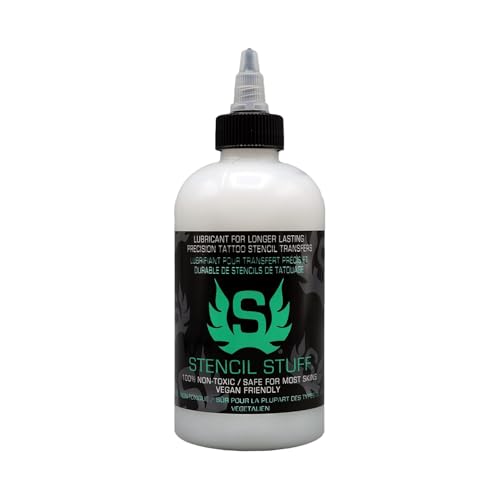
Clean, Flawless Transfers: Your artwork will look so clean once transferred to the skin with the Stencil Stuff gel! Gentle on the skin, Stencil Stuff transfer solution helps you achieve clear and sharp tattoo stencil transfers every time!
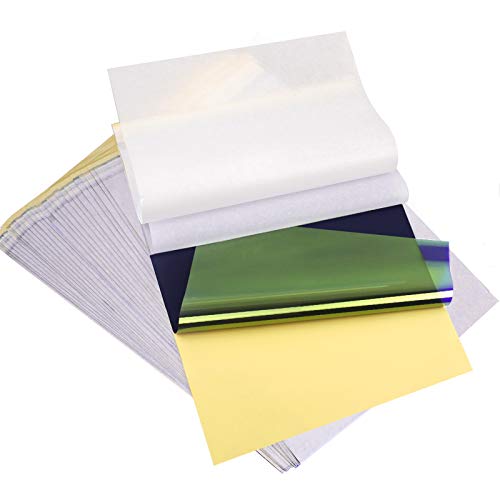
ADVANCED MATERIAL: Tattoo transfer paper is made with the high quality dyes and stencil paper. Transfer marks are very clear, clean and smooth. Tattoo transfer paper kit come with 35 sheets. Great for tattooing, trace and transfer images onto the body.<br>
7. Traditional Japanese Samurai Back Piece

Samurai back pieces draw from the same Japanese tradition as the dragon, but the figure faces forward, which changes how the back’s shape works for the design.
The warrior in the visible piece fights a giant fish among breaking waves, and that action gives the artist motion to wrap around the shoulder blades where a static portrait would sit flat.
The waves and wind bars are not decoration; they are the structure that holds the figure in place.
Without them the samurai would look pasted on, not part of the body. I would ask to see how the artist handles the background first, before committing to the figure.
Color saturation matters more here than in black and grey Japanese work.
The red of the armor and the blue of the water need to stay separate through years of fading, or the whole piece muddies into a single dark mass.
This is long-term work, same payment structure as the dragon: background first, color sessions after, budgeted across years not months.


MADE IN SPAIN, REACH COMPLIANT: Ganga Black is produced in the European Union and formulated to REACH, the EU regulation that restricts hazardous and banned substances used in tattoo ink.

【Designed for Smooth Shading】: This black tattoo ink is specially formulated for soft shading, gradients, and gray wash effects. Ideal for portraits, realism, and smooth transitions.
Cost of Back Piece Tattoos
The Japanese dragon and samurai back pieces take years of sessions, and most shops bill per session or by the hour. A portrait or geometric piece with the detail those entries describe will need the same.
Payment plans exist for exactly this reason. Shops that regularly do multi-year back work usually offer them, and asking before the first session beats finding out your budget ends three-quarters of the way through a dragon.

COMPLETE KIT: Set includes 18 sheets of self-adhesive henna stencils featuring traditional Indian Mehndi designs for hands and body art

COMPLETE KIT: Includes reusable stencils featuring traditional Indian and Arabian designs for creating stunning temporary body art

1 Set = 12 Sheets Henna Tattoo Stencils, 6 Pairs Right and Left hands stencils. Pasting position: Hand, Finger,Forearm, etc. Suitable for Henna tattoo, Airbrush Painting, Glitter tattoo, and so on;
Tattoo Placement Considerations
The back’s size lets you build a scene top to bottom, but the canvas is not flat. The shoulder blades move, the spine curves, and skin stretches differently there than on a forearm.
A back piece also commits you to long hours face-down.
The Japanese entries describe work that spans years, and each session runs multiple hours in that position. If you have back or neck issues, this matters more than the design choice.


🔍 Precision Industry-Standard Transfer - Engineered 4-ply stencil paper (8.25"x11.75") with high-density dyes delivers defined lines for intricate tattoo stencils. Compatible with major thermal printers for reliable tattoo transfer paper workflows.

Phomemo Tattoo Transfer Paper Kit: Paper size: 8.27" 11.69" (210 297 mm). Quantity: 1 box (100 sheets). Color: Blue. This Tattoo Stencil Paper features a dotted line design, allowing for easy tearing without tools. Tear off the master design and yellow backing sheet effortlessly for a smooth tattooing experience. This product is suitable for tattoo enthusiasts, artists, and professional tattoo artists, offering reliability and consistency in tattoo stencil creation
Healing and Aftercare
Healing a back piece is awkward simply because you cannot see it.
You will need a second person to check that the wrap stays clean, that you are applying moisturizer to the right spots, and that nothing is sticking to fresh ink between your shoulder blades where your hand does not reach well.
The back sweats more than most tattoo sites, and friction from chairs, car seats, and bed sheets is constant. Sleep on your stomach or side while the skin seals, and wear loose shirts that do not rub.


Material: Metal with High Elastic, and Not Easily Broken

【TATTOO KIT PACKAGE】:TATTOO KIT PACKAGE: The POSEIDON Tattoo pen kit includes 1 x Tattoo Pen, 2 x Battery, 20 x Tattoo Cartridges Needles, 1 x Self Cohesive Tattoo Grip Cover, 1 x TYPE-C Charging Cable, 40 x Ink Caps, 1 x Practice Skin, 2 x Transfer Paper, 10 x 5ml Tattoo Ink, 1x 30ml Black Tattoo Ink, 1 x Tattoo Gloves, and 4 x Table Mat, 1 x Tattoo Sticker. The complete tattoo kit is a good choice for beginners, starters, and apprentices.
Frequently Asked Questions
What is a back piece tattoo?
A back piece is a large tattoo that covers most or all of the back, from the neck or shoulders down to the waist or hips.
How big is a $400 tattoo?
Back pieces cost far more than a small session piece and take years to complete, so budget accordingly from the start.
A full back piece is in a different category entirely from what most people get in a single session; the scale alone puts it outside the range of moderate-detail work on a smaller area.