Heart placement ideas run from a quick collarbone dot to a multi-session sleeve that builds across years.
The deciding factor is how much of your story you want the piece to carry: a tiny hidden shape keeps its meaning private, while thorns, flames and script turn the same organ into something anyone can read.
A single red blood drop on a dagger heart, set against black and grey, is the kind of restraint that only works when the artist already mapped where your eye will travel.
1. Flaming Heart Tattoos

A flaming heart works best when the fire reads as movement, not just decoration wrapped around a shape. Patchwork flame work stays light and linear, which ages cleaner than heavy black fill.
I would ask for the fire to point upward; downward flames tend to blur faster on arms that move and flex. The forearm gives you room for the flame to stretch without crowding the wrist bone.
The line weight matters more than the size here. Too thin and the fire disappears as it ages; too bold and it reads as a blob.

183PCS Different Styles Tattoos Stencil: Our temporary tattoo stencils forkids comes with 183 temporary tattoo stencils painting set design such as flowers, cats, hearts, skulls, dinosaurs, fruits, deer, scorpions, Hannah, unicorns, whales, cars, rainbows, telescopes, ships, too fast, astronauts, pirates, letters, stars and more Style in 12 sheets A5 size. Perfect for festivals, parties, or daily fashion.

Double Sided Tattoo Practice Skin: easy wipe, 2 sides designed fine line tattoo practice skins feature over 20 different stencil designs.

Charming & Fun Design:Add a delightful touch to your crafts and décor! This listing includes 1 reusable stencil featuring an adorable design—perfect for adding personality to any project.
2. Anatomical Heart Tattoos

The labeled chambers in this piece turn a medical diagram into something personal. I have seen these done with and without the annotations; the labels add context that reads from a distance, but bare anatomy stays softer.
One artist who tattooed this design noted that her son had open-heart surgery at 4 months old, which changed how she approached the piece. That kind of story is common with this design.
The forearm needs enough length for the aorta curve to breathe; compress it and the shape turns egg-like. Black and grey holds the detail better than color for this subject.
Budget 2–3 hours minimum. The veins and arteries are the hard part; a skilled artist maps them first, then builds the muscle texture around.

FUN TATTOOS - Enjoy this fun sheet of temporary tattoos that can be applied on skin or used as a waterslide decal on a variety of surfaces. Temporary tattoos are great for party favors, events, costumes and dress-up, permanent tattoo testing or just for fun.

Innovative Skin-Sync Technology: We don't just sit on the skin; we interact with it. By reacting organically with naturally occurring proteins in your skin's outermost layer (stratum corneum), our plant-based formula magically transforms from a transparent guide into a rich, ultra-realistic navy-black. It looks exactly like a healed, permanent tattoo—without the needles or depth.

【REALISTIC HORROR PATTERN DESIGN】Features bold red heart pierced with knife and dripping blood graphic. Vivid colors create eye-catching spooky body art, ideal to elevate your Halloween cosplay costume look and stand out at horror theme parties.
3. Heartbeat Tattoos

The EKG line with a filled heart at its peak is the standard version, but the script changes the meaning completely.
"You" makes this one address someone specific; without text, it reads as survival or endurance. The inner forearm is a high-visibility spot that also catches sun, so the red fill will fade faster than black line.
I would plan for a touch-up in 3–5 years if you want that color to stay loud. The line itself should follow a real cardiac rhythm, not a generic zigzag.
Most artists can pull the waveform from an actual EKG if you bring one. Bangles sit right at the placement edge; jewelry will rub fresh ink, so plan to go without while it heals.

Minimal ECG Heartbeat Love Design: This semi-permanent tattoos pack holds 8 assorted ECG heartbeat patterns with varied heart element line details. ECG waveforms represent enduring emotional bonds; heart motifs stand for sincere affection and intimate connection, symbolizing lasting mutual fondness. Clean minimalist fine-line style. Ideal for minimalist style fans, matching wear and anyone seeking subtle meaningful everyday body art.

Temporary Tattoo Sticker

Features a See-Through Window for establishing the EKG baseline
4. Broken Heart Tattoos

Shattered glass around negative space is a newer take on an old idea, and it solves the problem broken-heart designs often have: they look like clip art.
The cracks here radiate from the heart’s edge rather than splitting it down the middle, which keeps the symbol readable even as it breaks.
Elbow placement moves with the joint and stretches the cracks in a way that flat skin would not. That is either a feature or a flaw depending on how you feel about distortion.
A fine-line piece like this needs an artist who specializes in single needle; standard needles blow out detail at this scale. Healing on the elbow is rough.
You will bump it, sleep on it, and bend it constantly for 2 weeks. The impact is worth the pain; nothing else reads like a broken heart on the joint that bends.

You will receive 8 sheets of Valentine's Day temporary tattoos at one time, and each sheet has 15 small pieces, 120 pieces in total, enough quantities to satisfy your daily using and sharing on Valentine's Day

Horror-Ready Designs – Features scary bleeding heart tattoos inspired by cult horror films, perfect for creating a chilling Halloween look or adding an iconic touch to costumes, cosplay, and parties.

Dark and expressive emo-inspired illustration featuring a figure holding a shattered heart like a glass shard, capturing raw emotion, heartbreak, and vulnerability in a visually striking and deeply personal design.
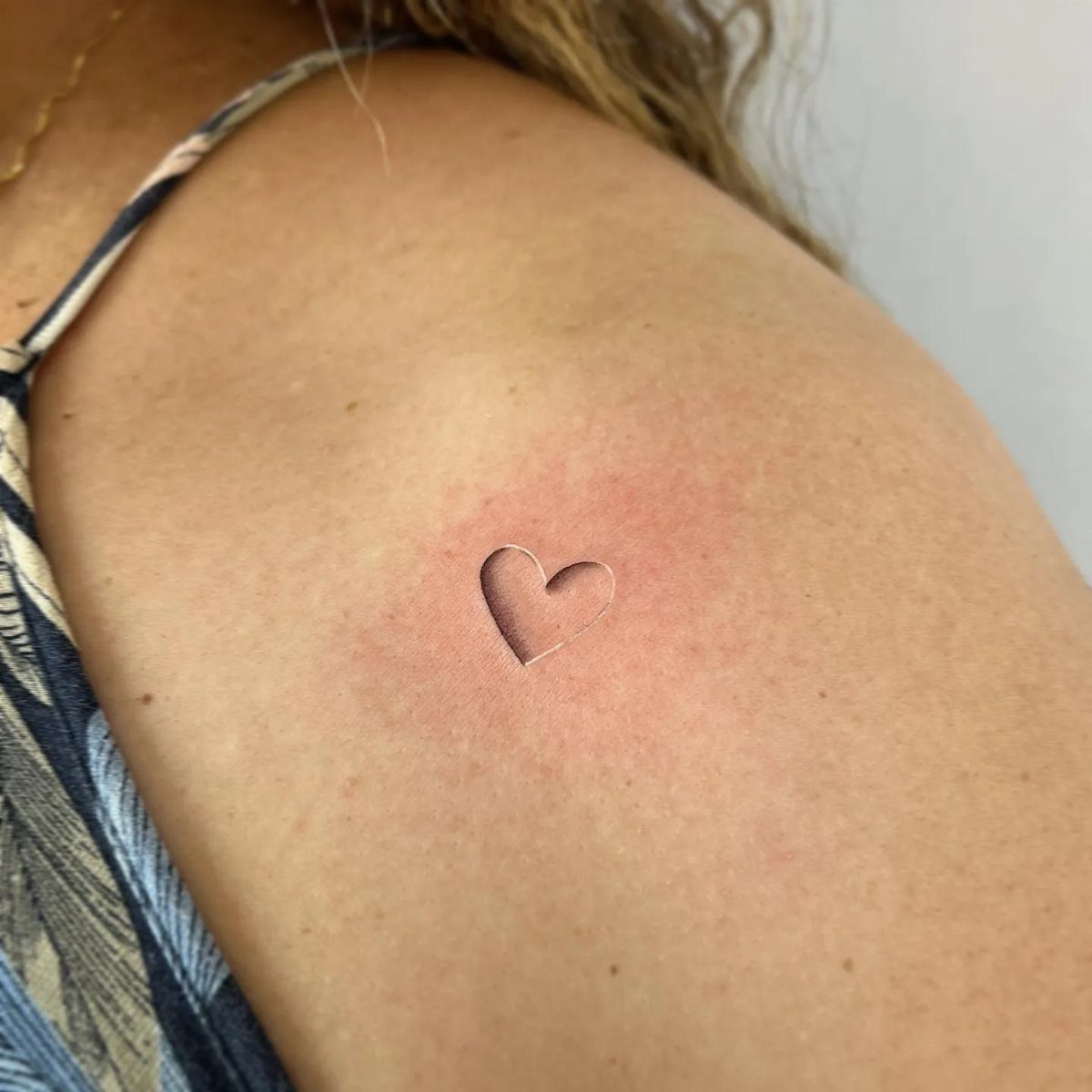
5. Tiny Heart Tattoos
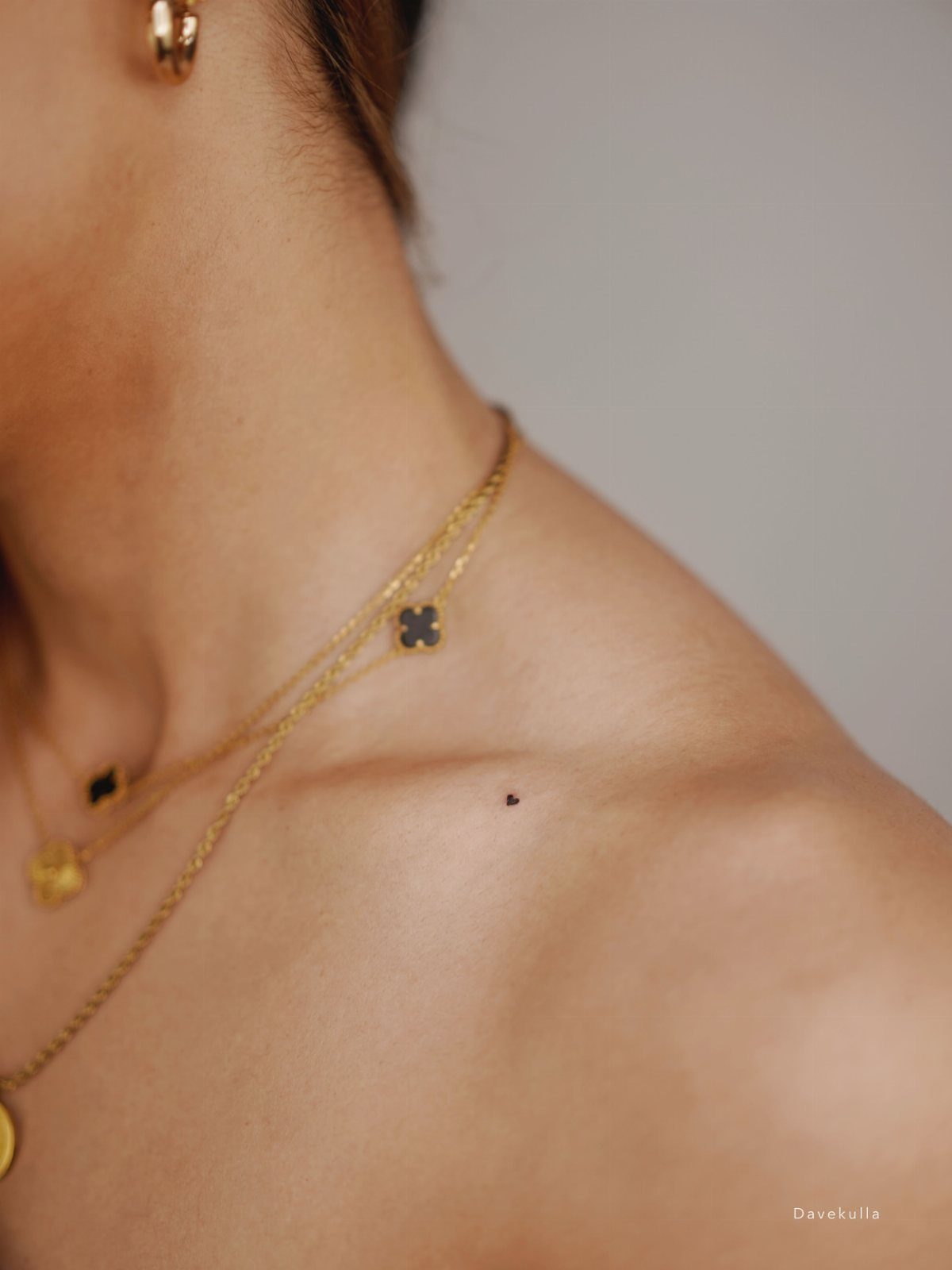
A heart small enough to hide under a necklace chain is less about who sees it and more about who knows it is there.
The collarbone sits on bone, which hurts more than muscle but heals cleaner because it moves less. Black ink this small can spread slightly over time; I would keep the shape simple, no fill, no outline variation.
Some people add these as part of a cluster, but a single heart reads as intentional in a way that multiples do not.
The religious association, courage or Christianity, depends on placement and context; on the wrist it leans faith, on the ribcage it leans personal.
Cost stays low for something this small, but minimums apply so a walk-in on a slow Tuesday gets you the best rate.

Package includes:3 pieces Bride Heart and 3 pieces Tiffany Heart tattoos.

Heart Design – Features a detailed heart, knife, and dripping blood design, adding a spooky and iconic touch to Halloween costumes, cosplay, festivals, and parties.

Iconic Heart Design – Features 7 heart-shaped tattoos with a knife and dripping blood detail, capturing sinister charm for authentic Halloween costumes and cosplay.
6. Dagger Heart Tattoos
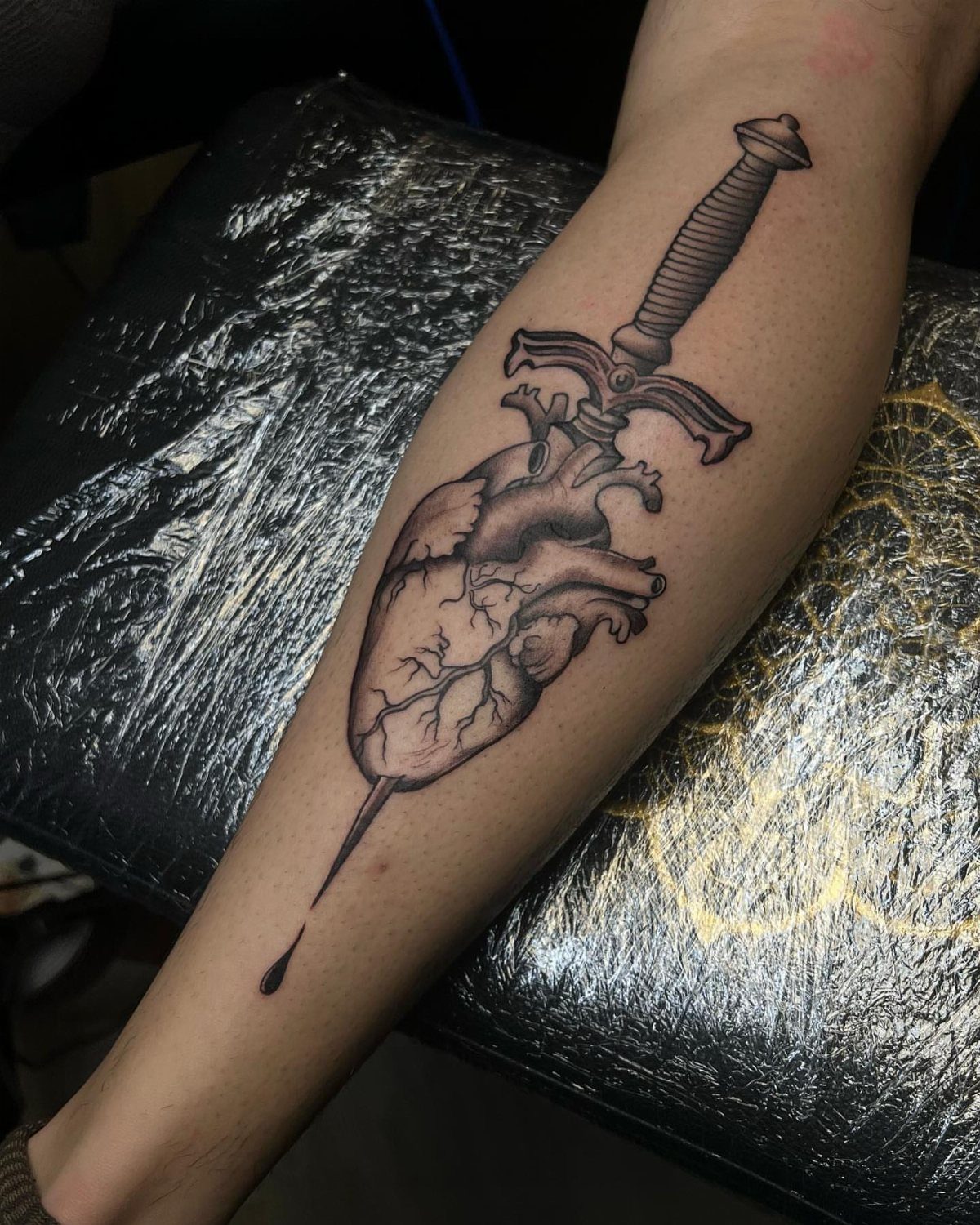
Anatomical heart with a dagger is a harder image than the traditional valentine version, and the blood drop in this piece confirms it.
The calf gives the artist a flat, stable canvas for the detail work; the forearm alternative twists more and distorts the blade angle.
Black and grey with one red accent, the drop, is a classic restraint that keeps the focus on the pierce point.
The dagger’s hilt is where style shows; ornate here, plain in other versions. I prefer the detail at the handle because the eye travels there naturally.
This size, 5–7 inches, needs 2–3 hours and an artist comfortable with both weapon geometry and organic texture. The 2 subjects fight each other technically; smooth metal against veined tissue requires different needle groupings in the same piece.

【 575+ Fun Assorted Tattoo Stencils 】-The ChurlChurl tattoo stencils collection includes 575 high quality stencils with multiple themes. enjoy cute trendy tattoo stencil designs like butterflies, words, flowers, symbols, totem, Egypt style patterns and more.

Versatile 12-Pack Heart Painting Templates for Creative Projects: Unlock your creativity with a 12-piece set of heart-themed stencils, featuring a variety of designs including solid hearts, patterned hearts, and romantic phrases like "LOVE" and "I LOVE YOU." Perfect for DIY cards, gift wrapping, and heartfelt decorations. (Keywords: Heart stencils, painting templates, DIY Valentine crafts, LOVE stencil)

Animal Design Collection: Features 6 sheets of creative animal-themed temporary tattoo stencils that allow you to express your personality through diverse wildlife and creature designs for versatile body art applications
7. Heart and Key Tattoos

Matching lock and key tattoos work only when both people commit to the same style and scale. The wrist limits detail; too ornate and the lines blur together within a few years.
I would keep the heart simple, save the filigree for the key’s bow where it has room to breathe. Script adds a third element that competes, so choose lettering or ornament, not both.
One partner carrying the lock and the other the key reads clearer than two identical halves. The inner wrist faces inward, which keeps the sentiment private unless you offer your hand.

❤️ 12 Sheets of Delicate Designs: This set includes 12 unique sheets featuring a charming variety of minimalist line-art hearts. Each design is a simple, single-line or outline sketch, perfect for creating tiny, meaningful accents.

This bright red graphic features a skeleton hand - perfect for Hallowe'en, autumn, fall - and a tattoo inspired anatomical heart outline. In the left chest are (where the heart is), the skeleton bones reach out to show off the beating love from the heart!

Temporary Tattoo Sticker
8. Infinity Heart Tattoos

A fingerprint texture turns a standard symbol into something no one else can claim.
The infinity loop needs continuous flow; break it to add text and the shape loses its meaning. A forearm placement lets the loop run its full curve without compressing the heart or any name underneath.
Single-line style keeps the whole piece unified, but the artist must plan the full path before the needle touches skin; there is no stopping mid-loop.
Black ink ages safest here. Color in the fingerprint fades to a smudge faster than you would want for something this personal.
Hardcover journal with 240 line-ruled pages (120 sheets)

Romantic EKG Design: 2 art style love heart patterns with undulating EKG, the fierce heart rate is the proof of heartbeat, this stencil is designed in a romantic and creative style, perfect for Valentine's Day or anniversary decoration!

FUN TATTOOS - Enjoy this fun sheet of temporary tattoos that can be applied on skin or used as a waterslide decal on a variety of surfaces. Temporary tattoos are great for party favors, events, costumes and dress-up, permanent tattoo testing or just for fun.
9. Winged Heart Tattoos
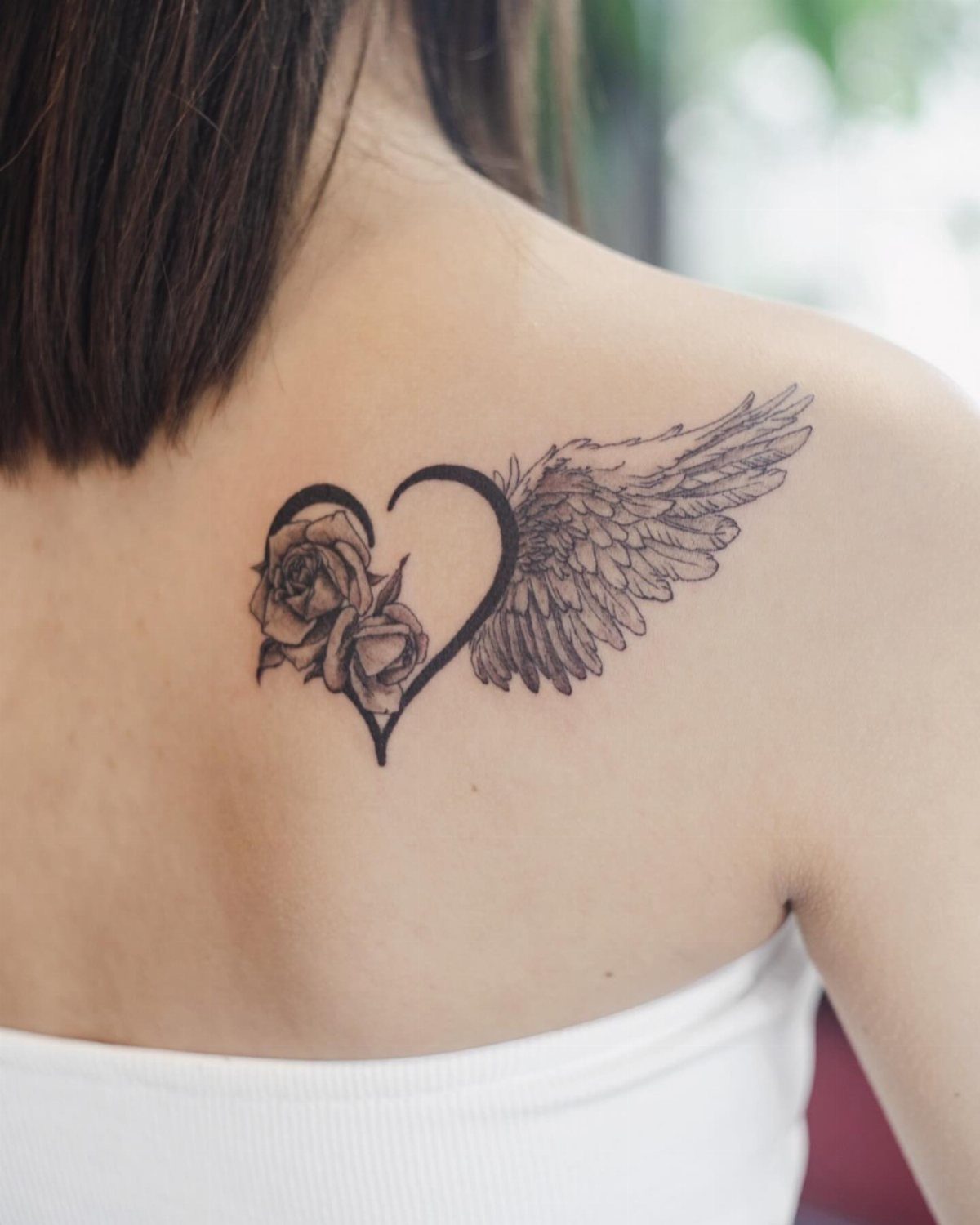
One wing reads as loss; two read as flight. The back shoulder blade offers flat bone and enough width for the wing to spread without wrapping onto the ribs.
The heart itself stays small in this version, almost an anchor for the feather work, which is where the hours go.
Dotwork shading on the wing keeps it soft against the bold heart outline; solid black fill would make the whole piece heavy. The rose on the opposite side balances the composition and gives the eye somewhere to rest.
Expect 3–4 hours minimum. Healing on the back means sleeping on your stomach for 2 weeks.

High Quality:These temporary heart tattoos are Made of high quality material, the fake tattoo stickers are Safe for Skin,waterproof, realistic,long lasting 3-9day,removable,and with vivid patterns

Sufficient Quantities: You will receive 12 sheets of Valentine's Day temporary tattoos at one time, and each sheet has 15 small pieces, 180 pieces in total, enough quantities to satisfy your daily using and sharing on Valentine's Day. Size: 3.93" x 2.35" / Sheet.

Dark and expressive emo-inspired illustration featuring a figure holding a shattered heart like a glass shard, capturing raw emotion, heartbreak, and vulnerability in a visually striking and deeply personal design.
10. Mother-Child Heart Tattoos
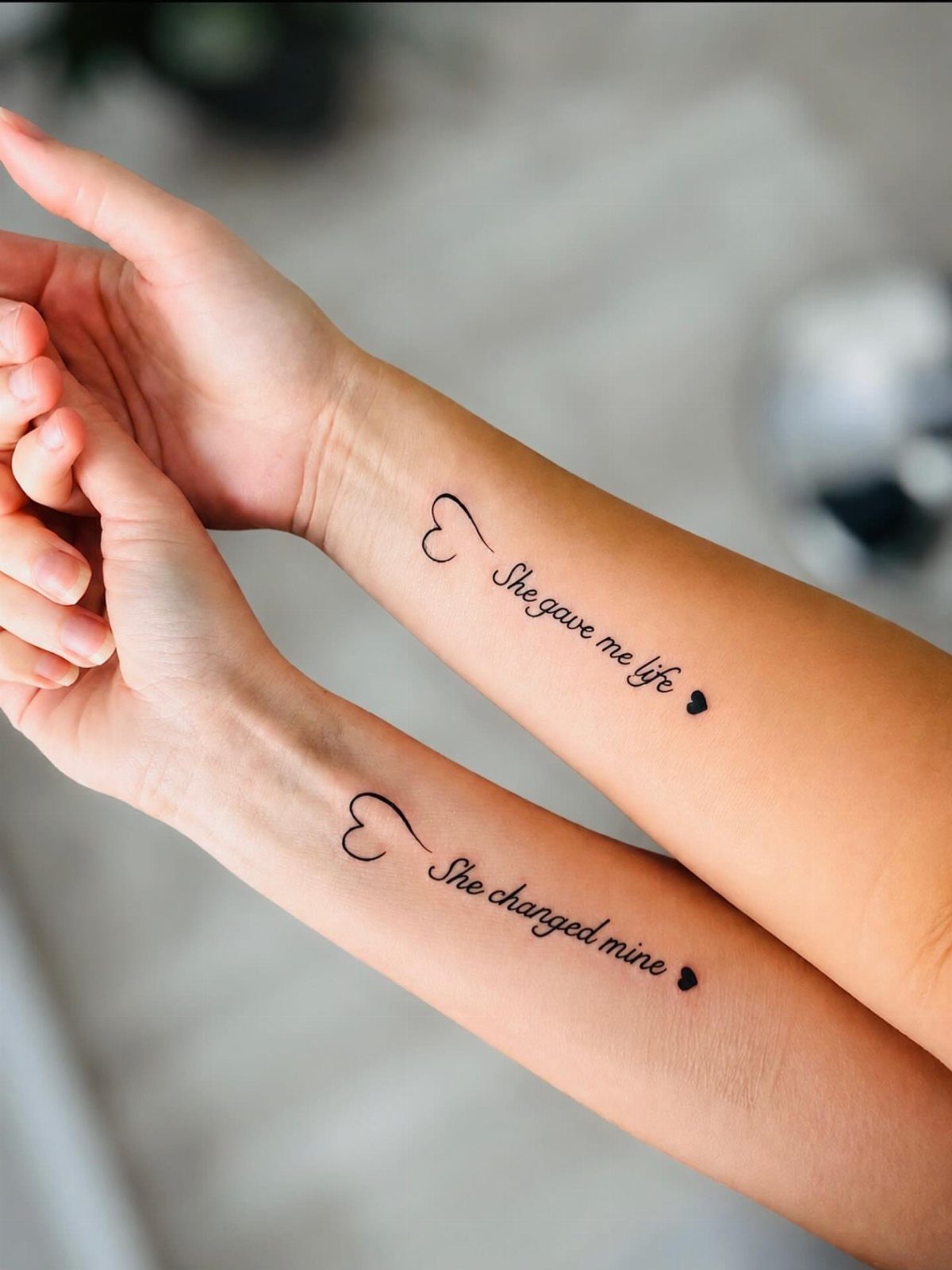
Text tattoos age poorly unless the lettering is large enough to hold its weight. The phrases here are short, which helps, but I would still ask for a simple sans-serif font; anything script-based closes up as the skin shifts.
Matching placement on both arms means both people feel the same needle time and the same aftercare restrictions.
The tiny filled heart after the words acts as a period; it also gives the artist a place to hide a needle slip if the line wobbles.
Black only, no color, so the message stays readable at 60 as it was at 30.

Packaging: You will receive 6 Sheets blood vessel tattoo stickers in different patterns, enough quantity to meet your decorating needs, which you can share with family and friends

OLD SCHOOL HEART ART: Features two iconic American traditional motifs: a classic heart pierced by three sharp daggers and a melancholic crying lady face heart with flowing teardrops. This bold old-school design is crafted using a digital hand-drawn fine line tattoo ensures crisp lines and flawless gradient shading to bring out the classic stippled dotwork gradients, heavy black fills, and scalloped lace borders with vintage authenticity.

Innovative Skin-Sync Technology: We don't just sit on the skin; we interact with it. By reacting organically with naturally occurring proteins in your skin's outermost layer (stratum corneum), our plant-based formula magically transforms from a transparent guide into a rich, ultra-realistic navy-black. It looks exactly like a healed, permanent tattoo—without the needles or depth.
11. Sacred Heart Tattoos

The thorns, flames and cross add 3 layers of iconography that can overwhelm the heart itself. This version keeps the heart central and lets the thorns do the wrapping, which is the traditional arrangement.
Dotwork on the forearm needs an artist with steady pacing; rushed dots cluster and blow out, calm dots stay even. The cross at top draws the eye up, so the heart reads last, which is the right order for devotion.
Fine lines this dense stay sharper in black and grey than they do once color starts bleeding at the edges. Religious content means the wearer should know the meaning; borrowed symbolism reads as costume.
12. Geometric Heart Tattoos

Faceted color on the inner wrist faces you every time you check a phone or hold a steering wheel. Saturated ink gives this pink-to-blue shift; pack it right and it softens without turning muddy.
Geometric hearts read as crystal or gem depending on the angle count; fewer angles, softer read. The wrist bone limits size, so 2–3 inches is the practical max before the shape wraps and distorts.
Color saturation this varied usually needs a second pass and a touch-up down the line. A colorful piece this small is high risk, high reward.
13. Cherub and Heart Tattoos

Cherubs frame a sacred heart differently than a single angel would; two figures create a scene with weight and symmetry, one on each side like attendants.
The roses and rays in this piece pull from Catholic iconography, and the Latin text roots it in tradition rather than generic romance.
Black and grey keeps all 3 elements, cherubs, heart, and ornament, in the same tonal world so nothing competes. The inner forearm is a long, narrow stage; stacked vertical compositions work here better than horizontal spreads.
An artist who knows Baroque draftsmanship will place the cherubs’ gazes so they lead the eye inward toward the heart. Ask about the dagger’s meaning before you commit; it changes the piece from devotion to sacrifice.
14. Realistic 3D Heart Tattoos

A heart that reads as metal asks the eye to believe in weight and reflection on skin. The drop shadow in this piece sells the illusion; without it, the heart would float instead of sit.
Shading this smooth needs a steady hand and time; 3–4 hours for something this controlled is common. The upper arm placement gives this piece room to breathe without folding into a joint.
Skin there stretches and compresses more than most spots, so the 3D effect will warp when the arm bends. That is not always bad; a metal heart that shifts with movement has its own logic.
Black and grey with white highlights is the only path here; color would break the metal read entirely. An artist who does automotive or portrait realism will understand how to place the light source so it stays consistent.
15. Religious Sleeve Tattoos with Heart

A sleeve builds its story across years and sessions, not in one sitting.
The heart with cross and thorns in this piece functions as a station in a larger pilgrimage; the doves, the reaching hands, each claim their own territory. Black and grey unifies what could otherwise read as separate tattoos forced together.
The script running onto the hand is a commitment most artists will warn against; hand ink fades fast and limits job options in ways arm skin does not.
A sleeve this dense needs a single vision, or at least a single artist who can finish what another started.
A full religious sleeve with a heart at its center takes multiple sessions, and the heart area alone is a sitting of its own.
Religious sleeves work best when the wearer knows which denomination’s visual language they are speaking; mixed symbols read as confusion, not breadth.
Symbolism of Heart Tattoos
A heart tattoo rarely means just one thing, which is why the same client might walk out with a sacred heart and another with a broken one.
A heart tattoo picks up whatever meaning you attach to it: love, grief, loyalty, or simply the beat of being alive.
Romance is the obvious read, but mother-child pieces use the heart for permanence without any romantic charge. Self-love sits at the other end; a tiny heart hidden where only you know it exists is not about display at all.
The anatomical versions complicate this further. A medical diagram of muscle and chamber says mortality and function, not sentiment.
Add labels and it turns documentary; strip them and it softens to something more like a Valentine. The tattoo does the speaking.
Explore heart tattoo designs from classic love hearts to detailed anatomical hearts. Discover traditional heart tattoos, sacred hearts, broken hearts, mother-child hearts, and Valentine’s heart designs in styles from old school to fine line.
— Tattoodo
Tattoo Placement Considerations
Visibility and pain trade against each other in most placements, but not evenly.
You can show the inner forearm off easily and the pain stays moderate; the back shoulder blade hides under a shirt but still costs you 3–4 hours of needle time.
The elbow is the outlier. Skin there stretches and compresses constantly, which distorts fine lines and cracks, but that same movement can become part of the design if you plan for it.
Sun exposure matters for color.
Choosing the Right Design
The design you settle on should answer a question you actually have, not one the image asks generically.
If your design leans on text, keep the lettering large enough to hold its weight as skin shifts. Sans-serif ages better than script.
Frequently Asked Questions
What is the 1/3 rule tattoo?
The 1/3 rule suggests a tattoo should fill about one-third of the body area you place it on.
For a heart on the forearm, that means leaving enough blank skin around the design so the shape reads clearly without crowding the wrist bone or elbow crease.
Compressing an anatomical heart’s aorta curve turns the shape egg-like, which is the same problem the 1/3 rule prevents.
Where is the most feminine place to get a tattoo?
Smaller, more private pieces tend to land on the wrist and collarbone. The ankle and behind the ear are not covered.