A single finger motif takes minutes and you can apply it while checking your phone; full bridal coverage takes hours and the price scales up with the time.
What you choose depends on how long you want the stain to stick around and how much that spot moves during the day, since the palm keeps color longer than the back of the hand or anywhere that hits soap and friction often.
1. Geometric Patterns
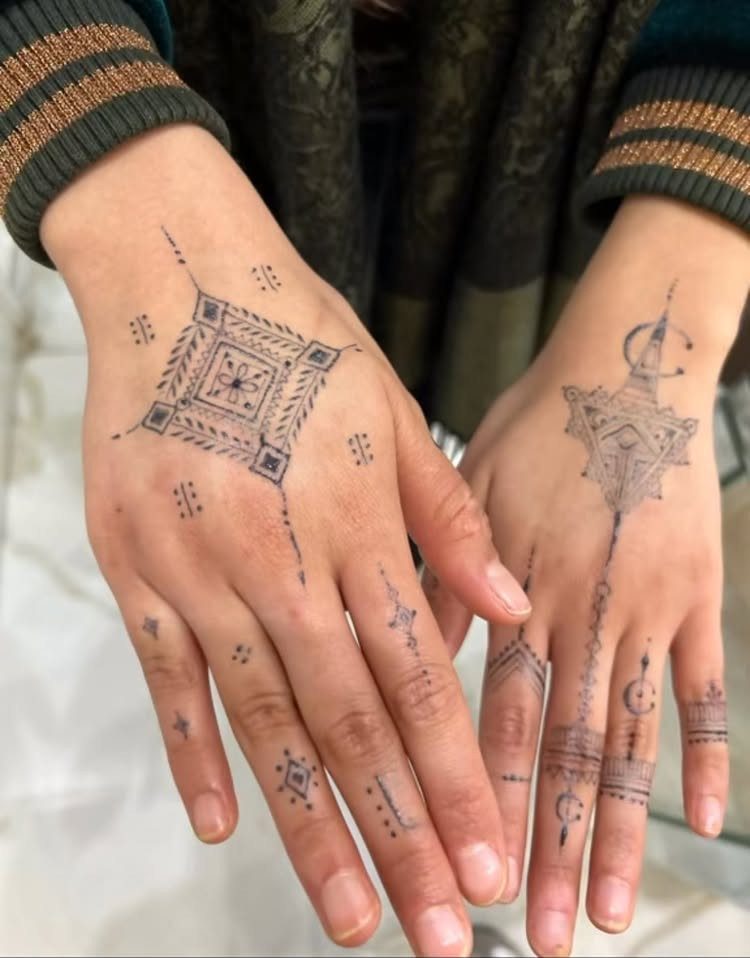
Geometric henna reads sharp from across a room, which is rare for something drawn in paste.
Diamond shapes and zigzags across the wrist and fingers hold their structure as the stain darkens, and the negative space between shapes does as much work as the lines themselves.
I would start with a single repeating shape rather than mixing several; one motif carried across the hand looks intentional, while too many compete.
The paste needs to stay thick enough to hold an edge. A cone with a fine tip helps, but a toothpick dragged through wet lines cleans up wobbles before they set.

★100% Pure and Natural: Our henna hair color paste cones are made from 100% pure, triple shifted henna leaves. Say goodbye to harmful chemicals and embrace a holistic approach to hair coloring. Your hair deserves the best, and that's exactly what we offer.

★100% Pure and Natural: Our henna hair color paste cones are made from 100% pure, triple shifted henna leaves. Say goodbye to harmful chemicals and embrace a holistic approach to hair coloring. Your hair deserves the best, and that's exactly what we offer.

2. Swirling Vine Patterns
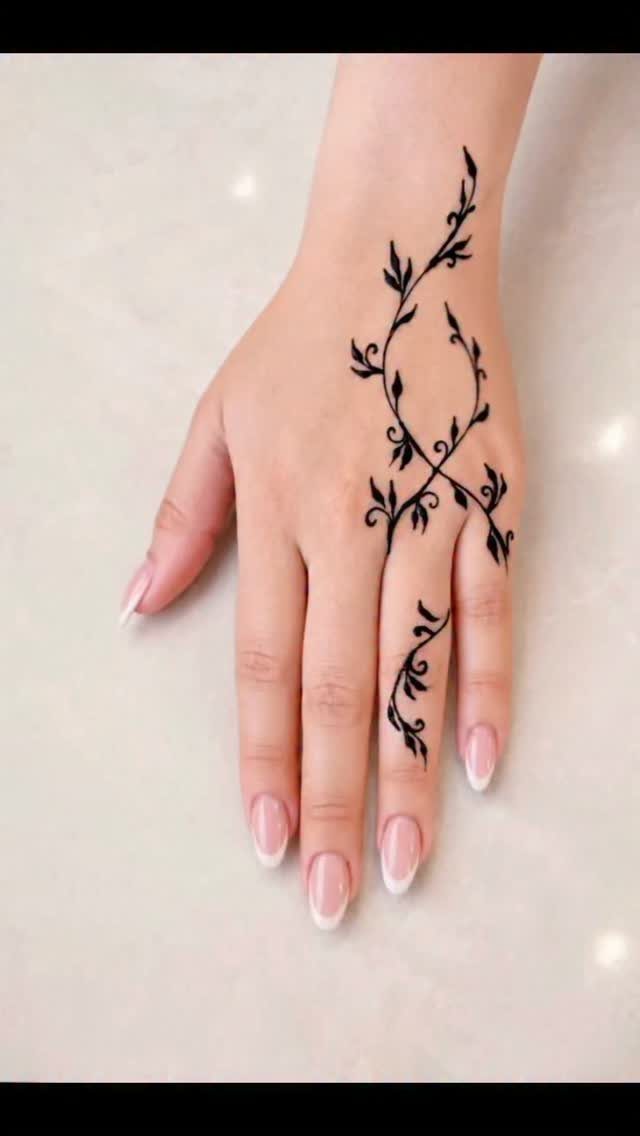
Swirling vine patterns suit someone who wants movement without filling every inch of skin. Small leaf and flower motifs trail along each finger, and the flow between them hides any slight wobble in your line.
The vine itself is just a continuous curve; leaves and buds branch off at intervals, and dot accents fill gaps where the pattern thins.
I have seen this done with the vine starting at the wrist and climbing, or anchored at the base of one finger and wrapping outward.
Either way, the hand’s natural creases become part of the design rather than obstacles. Keep the paste smooth as it dries; cracks create gaps where less dye transfers and the stain ends up lighter.

1 Set = 12 Sheets Henna Tattoo Stencils, 6 Pairs Right and Left hands stencils. Pasting position: Hand, Finger,Forearm, etc. Suitable for Henna tattoo, Airbrush Painting, Glitter tattoo, and so on;


1 Set = 12 Sheets Henna Tattoo Stencils, 6 Pairs Right and Left hands stencils. Pasting position: Hand, Finger,Forearm, etc. Suitable for Henna tattoo, Airbrush Painting, Glitter tattoo, and so on;
3. Butterfly Motifs

A butterfly on the hand works best when the wings span a natural anchor point, the knuckles or the back of the hand where the bone sits close to skin.
Small butterfly accents on the fingers or wrist keep the theme without the main shape distorting every time you grip something.
The body of the butterfly, that thin central line, is the hardest part to keep symmetrical; I mark it with a light pencil guide before touching paste to skin.
Brown henna with floral accents around the wings reads as a butterfly without needing perfect symmetry. Those extras matter: they let you adjust the overall size if one wing spreads wider than you planned.

Bold Tribal Floral Scroll Design: This Large semi-permanent pack holds two pieces—bold flowers bloom with dramatic swirling tribal scrolls, plus delicate small flower vine with intricate curly tendrils. Flower symbolize purity and quiet inner strength; scroll vines represent eternal life flow and timeless beauty. Edgy boho tribal style fits ribcage, waist, ankle or forearm. Ideal for bold women, boho lovers and festival-goers who love striking decorative floral body art.

Elegant Lily Vine Design: This Large semi-permanent tattoo pack features two distinct delicate fine-line lily vine patterns, one with twin lilies and soft swirling tendrils, another with a single bloom paired with bold flowing scroll foliage. Lilies symbolize purity, femininity, rebirth and gentle inner strength; sweeping curved vines deliver soft, organic body-hugging lines. Minimal boho fine-line art creates a sleek, romantic aesthetic.
4. Celestial Designs
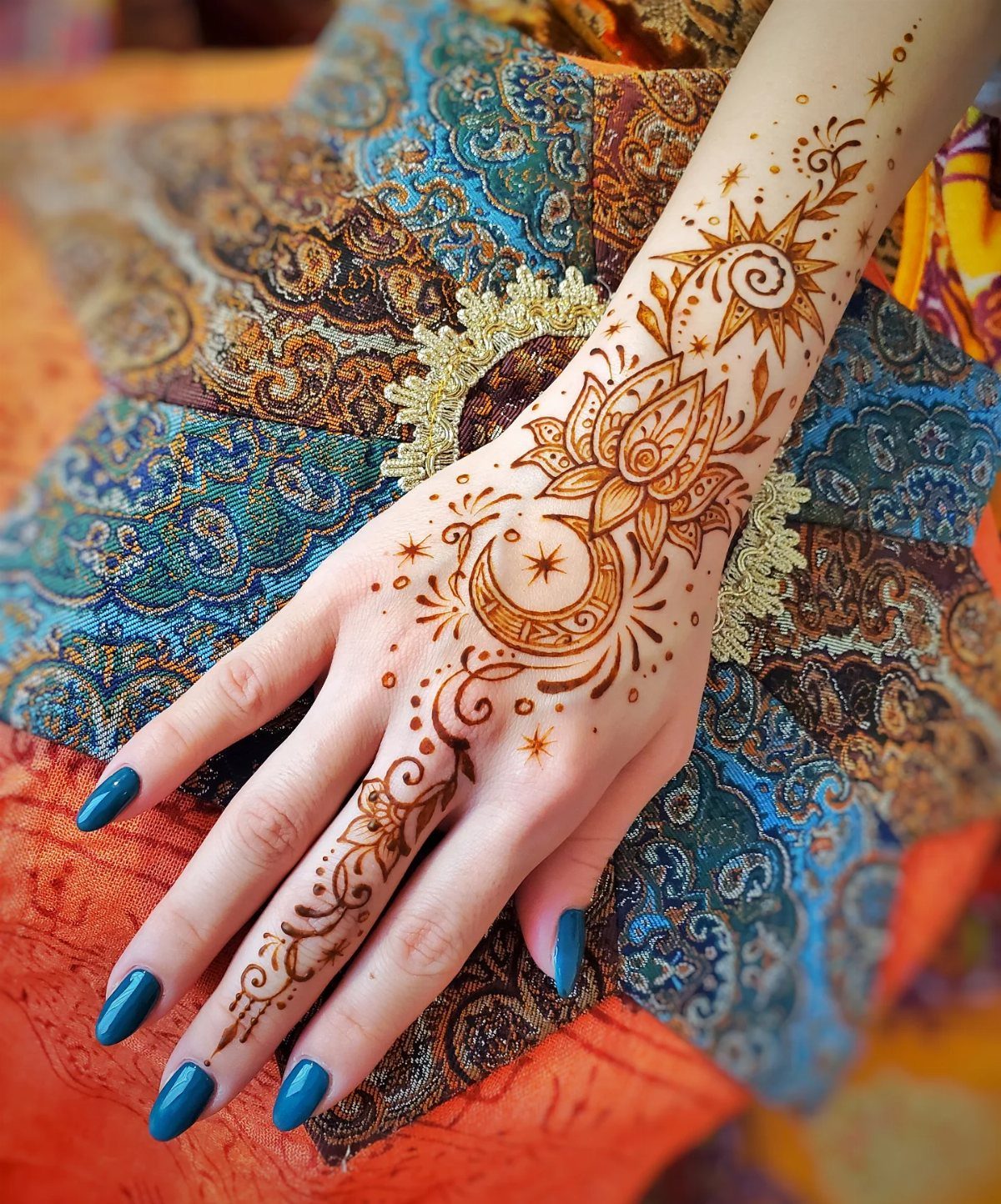
Celestial patterns borrow from a long tradition, but on a hand they need restraint to avoid looking like a sticker sheet.
Swirling dotted lines carry the eye between a crescent moon, small stars, and four-pointed shapes, and the dots themselves fill space without adding more symbols.
The wrist and back of the hand give enough flat area for a sun or moon to read clearly; fingers are better for scattered stars that do not need detail at small scale.
Dark brown paste goes almost black on some skin tones, which suits night-sky themes. Test your mix on the inner wrist first; the same formula reads lighter or cooler depending on where it sits.

[Tattoos Stencils Kit]: 40 sheets Ramadan style tattoo stencils featuring moon,star, butterfly,floral,lamp design. Enough quantity and different pattern for you unleash your creativity and adorn yourself with beautiful henna designs. Variety of options to meet your every need.

What's included: 1 Set = 9 sheets henna tattoo stencils, template size: 21 cm x 12 cm/8.2" x 4.7" (Only Templates,No Tattoo Ink); Paste location: hand, finger, forearm, legs and other parts of the body

Product Kits: You will receive 12 A4 sheets featuring 142 unique henna tattoo stencils patterns including butterflies, flowers, words, symbols, totems and egyptian designs. Our versatile temporary tattoos adult with stencils collection offers something for every taste with its wide variety of artistic models.
5. Minimalist and Easy Henna Designs

Minimalist henna is the entry point most people actually use, not the one they save for later.
A single object, a cup, a flower, a small animal, with one or two supporting lines, sets fast and dries while you check your phone.
The risk is stopping too soon and leaving it looking accidental; the fix is deciding the boundary before you start, a cuff line, a corner of the palm, a ring around one finger.
Beginners should choose a design with one continuous outline and no filling. Shading in henna is advanced work; an open line drawing forgives uneven pressure and still photographs well against almost any background.

Minimal Celestial Finger Design: This semi-permanent temporary tattoos pack holds two sheets packed with assorted micro-sized celestial motifs, including sunbursts, crescent moons, starbursts, dotted sprigs and tiny ornamental flourishes. Sun patterns symbolize vitality and optimism; moon motifs stand for intuition and inner peace; star elements represent hope and guidance. Ideal for celestial aesthetic fans and anyone seeking delicate discrete tiny wearable body art accents.

MINIMALIST CELESTIAL ELEMENTS: Features a delicate collection of radiant sunbursts, crescent moons, and sparkling North Stars. The artwork is crafted using a digital hand-drawn fine line tattoo technique, delivering crisp geometric contours, micro-sparkle accents, and timeless bohemian aesthetic charm.

SIZE - 4 sheets large gold sun moon star temporary tattoos with beautiful metallic designs, original brand of Briyhose fake tattoos for adults women girl, size is 8.27 * 5.83 inch (21 * 14.8cm) 4 Sheets tatoos kit, used for wrist, arms, half sleeves, forearm, shoulder, back, neck, hands, finger, ear, legs, thigh and any other part of your body skin.
6. Bridal Hand Henna Tattoo Designs

Bridal henna demands coverage that holds up through hours of greeting guests, eating with your hands, and photographs from every angle.
Intricate patterns across the palm and extending past the wrist give that density, and the darkness of the stain matters as much as the design; brides often leave paste on overnight, wrapping hands in tissue and socks to sleep.
The henna should read as one tone among several: skin, stain, metal, cloth. If your wedding colors run cooler, ask your artist about jagua, which stains blue-black rather than reddish-brown, though it fades faster and costs more per session.
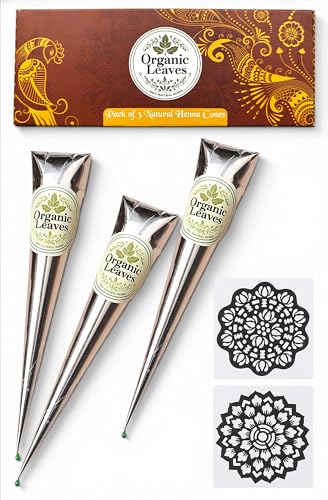
MADE FROM 100% NATURAL HENNA LEAVES Crafted with care using pure, sun-dried henna leaves ground into a fine powder for consistent, smooth application and an authentic, earthy aroma.

Fine Precision Tip Design: these pre-rolled cellophane henna cone applicators feature ultra-fine precision tips with uniform thickness and proper firmness, delivering smooth and neat lines for skin drawing. The delicate tip structure supports detailed pattern creation and stable line control, fitting daily temporary tattoo and body art drawing needs perfectly

2 Pcs Henna Applicator Bottles(1.18*3.35 inch) with 16 pcs Needles for Henna Jagua Tattoo Kits
7. Henna Designs with Traditional Motifs

Traditional motifs carry the weight of actual use, not decoration for its own sake.
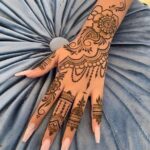
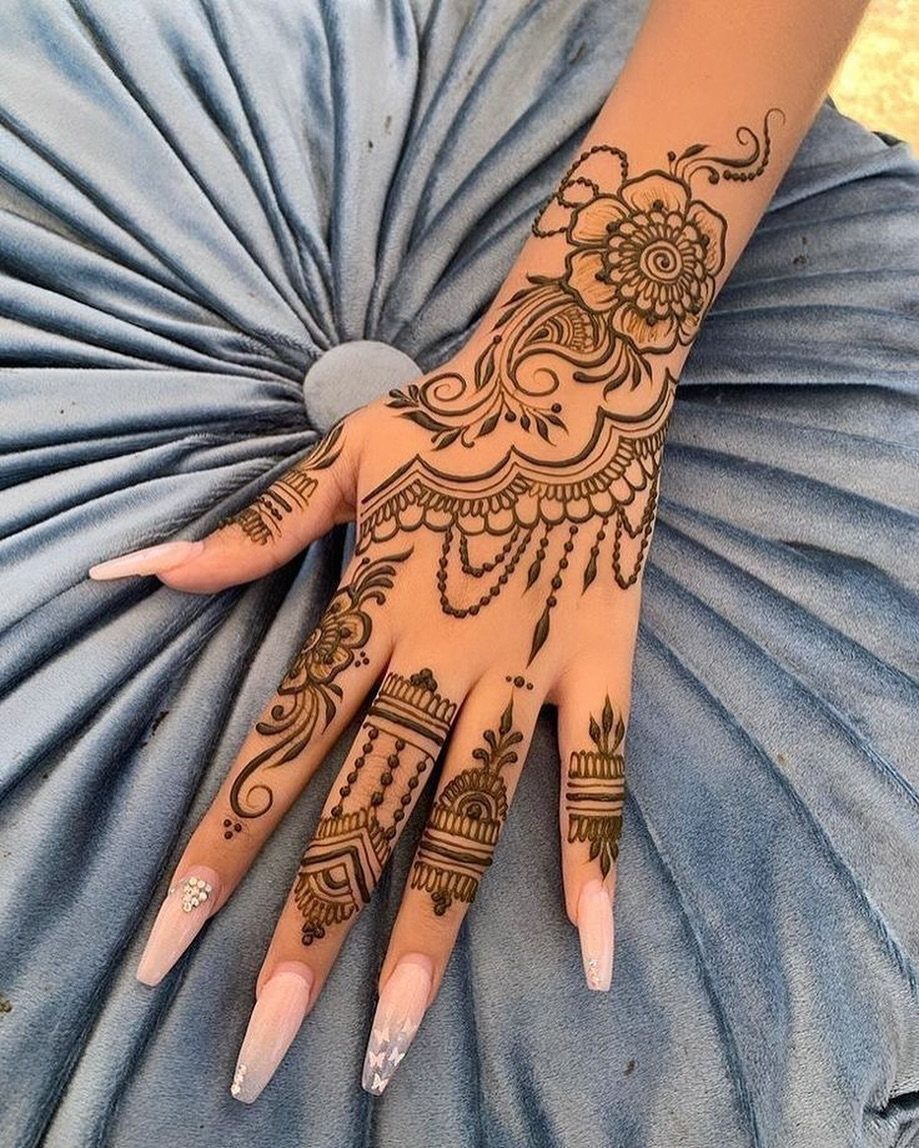
Mandalas centered on the back of the hand draw the eye inward, and the lace-like bands that frame them at wrist or finger base give the pattern a finished edge that single floating shapes lack.
Wide bands need paste thick enough to hold a raised line; when they dry and crack, the stain sinks deepest in those fissures.
Dot clusters fill the spaces between larger shapes and hide any tremor in your hand, which matters after the first hour of work.
For festivals, I would keep the main mandala open and light, saving dense fill for the bands where skin moves less. The design photographs clearly from a distance and still rewards someone looking close.

Henna Hand Tattoo Art Mandala Pattern Design Yoga Love Artist Mehndi India Women Men Adults.

🐳[200+ PCS 20 Sheets Small Tattoos in One Package!] - Original Brand of TASROI 3D Small Cute Tiny Bulk Hand Finger Temporary Tattoos For Women Men Adults Hand Finger Tattoos Temporary Contains 20 Sheets Water Transfer Cute Small Geometric Arrow Crescent Moon Sun Leaf Dots Chians Jewelry Pendant Tattoos For Finger Hands Ear Neck Tattoo Sticker.

Package: 6 Sheets tattoo stencils. 3 layers PVC Henna tattoo stencils, Washable and Non-Toxic.,Design shown in the picture. Ink is not included
Henna Tattoo Longevity
Henna tattoos fade faster on oily skin and anywhere your hand meets soap or friction, so the palm usually holds color longer than the back of the hand.
The stain fades quickest on faces and the back of the hands where oil is present; the palm holds color longer because the skin is thicker and lacks sebaceous glands.
Leaving the paste on as long as you can stand deepens that first stain, but water is what strips it.
Skip the dishes for a day if you can, and rub a light oil on the design before showering to repel moisture. Scrubbing accelerates fading; so does chlorine.
A faint ghost usually remains after the main color goes, which some people mistake for the tattoo being gone entirely. It is not; the skin underneath has simply replaced itself.
Cost of Henna Tattoos
The cost of henna hand tattoos shifts a lot based on design complexity and how long the artist spends on your skin.
A single small motif on one finger sits at the low end; full bridal coverage with both hands extends past that ceiling.
Geometric patterns and mandalas take longer to apply than simple vines or dots, so they cost more.
Festival booths often price by the piece rather than the hour, which works in your favor for dense work and against you for quick accents.
Ask what the quote includes.
Some artists charge extra for aftercare oil or sealing spray. Others fold touch-ups into the original price if the stain comes out patchy.

Easy Application: Made of durable 3-layer PVC material, these henna tattoo stencils are flexible, waterproof and easy to apply. The self-adhesive design helps keep patterns in place for clean and precise temporary tattoo designs. Does not includ ink

1 set = 9 henna tattoo templates, Paste location: hand, finger, forearm, legs and other parts of the body.Suitable for henna tattoos, airbrush paintings, flash tattoos, etc.;

Cultural Significance of Henna
Henna carries actual weight in ceremonies, not just aesthetic appeal. Guests apply simpler patterns too; the act is communal, not competitive.
The mandala and lace bands described earlier mirror this tradition. A mandala centered on the hand draws the eye inward, which matches its symbolic use as a focal point for meditation and blessing.
Bands at the wrist or finger base frame the work the way traditional application frames the bride’s transition.
If you are borrowing these motifs without the ceremony behind them, that is common now and mostly accepted. Still, calling it "henna" rather than rebranding it respects the source.

💕【200+ PCS 20 Sheets Mixed Style】--VANTATY Lovely Cute Black Temporary Tattoos For Women Men Adults Body Art Stickers Look Real! Tiny Infinity Geometric Arrow Smile Face Flowers Crescent Moon Sun Stars Temporary Tattoos For Hands Fingers, Realistic Small Butterfly Love Heart Mountain Birds Feather Snake Cat Dog Tattoos For Ear Neck Arm Hands Temp Tatoos Decals.【Click Our Store/brand Name To See More Fashion Designs】

Innovative Skin-Sync Technology: We don't just sit on the skin; we interact with it. By reacting organically with naturally occurring proteins in your skin's outermost layer (stratum corneum), our plant-based formula magically transforms from a transparent guide into a rich, ultra-realistic navy-black. It looks exactly like a healed, permanent tattoo—without the needles or depth.

✨ INSTA GLAM GLITTER FRECKLES Create instant viral-inspired glitter freckle makeup looks with premium waterproof metallic makeup patches for face and body. These blue ombre and silver celestial moon and star freckle and motifs deliver a sparkling glitter effect inspired by TikTok beauty trends, festivals, and editorial glam.
Frequently Asked Questions
How long does a henna tattoo last on the hand?
Henna on the hand typically lasts one to three weeks, with the palm holding color longer than the back of the hand because that skin is thicker and turns over more slowly.
The back of the hand turns over fast because of the oil, so a stain there is usually the first to go.
Water is harder on henna than the clock; I skip hand-washing dishes the first day and rub a thin layer of coconut or olive oil over the paste before I step into the shower.
How much does a henna hand tattoo cost?
One small motif on a single finger is the cheapest seat, while both hands covered end-to-end for a wedding is the top of the scale.
Tight geometry and mandalas run higher than loose vines or dotwork because the artist is sitting there longer, squeezing the cone with more control.
Festival artists often price per piece, which rewards dense, time-heavy work and undercuts quick accents that take 5 minutes.
What are the downsides of getting a henna tattoo?
The main downside is how fast hands lose color between washing, friction, and oil in the skin.
After the brown goes, a faint ghost can hang around for another week or two, and some people think the tattoo is already gone when the skin is just halfway done replacing itself.
Scrubbing and chlorine both accelerate fading. There is also the risk of stopping too soon with a minimalist design and leaving it looking accidental.
Is it racist to do henna?
Using the patterns without the ceremony is ordinary now and generally tolerated, though keeping the word "henna" instead of inventing a new name for it shows where it came from.
In the ceremonies that matter, henna is done together, not to outdo anyone, and the mandalas and lace bands trace back to practices of focus and blessing rather than pure ornament.
Context matters: applying it as decoration without claiming the cultural meaning behind it is generally the line people expect.