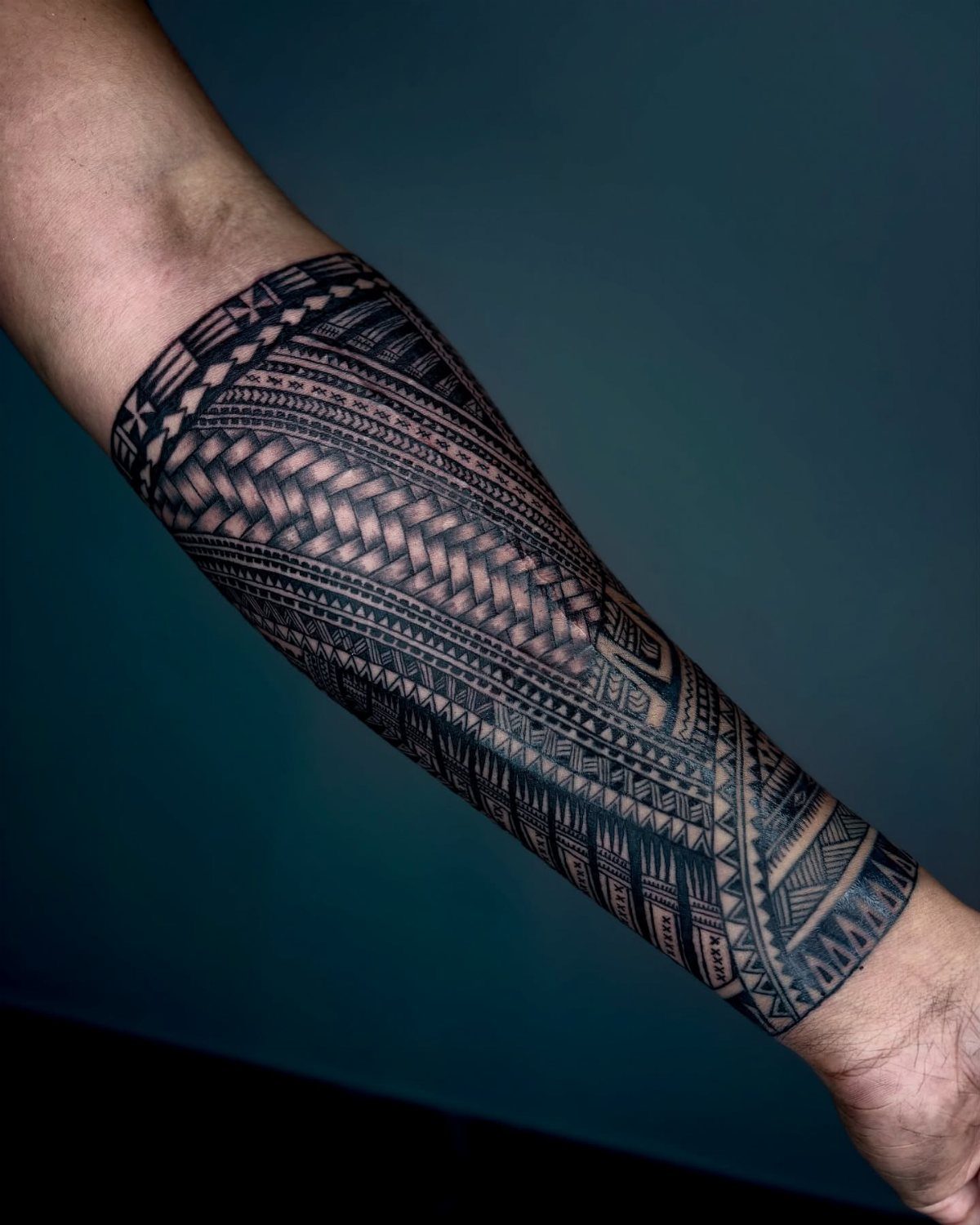
Polynesian tattoo patterns range from flash-sheet armbands you can book in one afternoon to full pe’a or malu hand-tapped over days by families in Samoa, and the list below covers the styles, symbols, and placement rules you will actually run into when you start looking.
What separates one idea from another is how much skin you are ready to commit, whether the placement you want carries open meaning or closed cultural boundaries, and which of the styles and symbols below matches what you are trying to say.
The elbow alone can derail a sleeve if your artist does not plan for skin that stretches and compresses with every bend.
1. Marquesan Tattoo
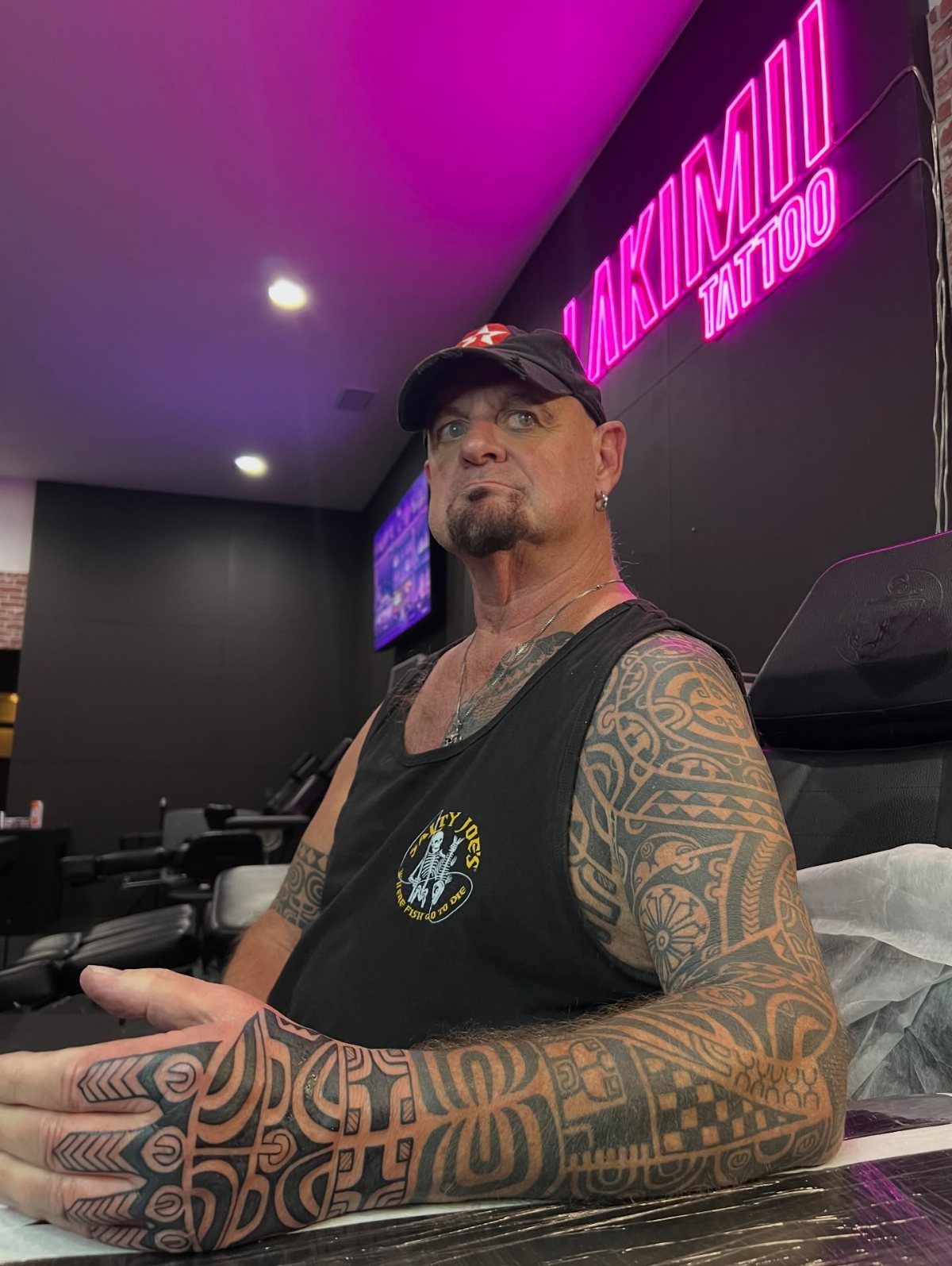
Marquesan work carries the heaviest geometric load in Polynesia. Historical full-body compositions left almost no untouched skin, and that density still shapes how modern sleeves read when someone wants panel after panel of black ink.
Marquesan work earns its density from interlocking shapes and deliberate gaps; the eye reads the pattern because the skin left open matters as much as the skin filled.
This suits a reader who wants coverage that looks built, not scattered. Plan for multiple sessions if you want this much fill; the skin needs time to settle between rounds.


2. Samoan Tattoo (Pe’a and Malu)
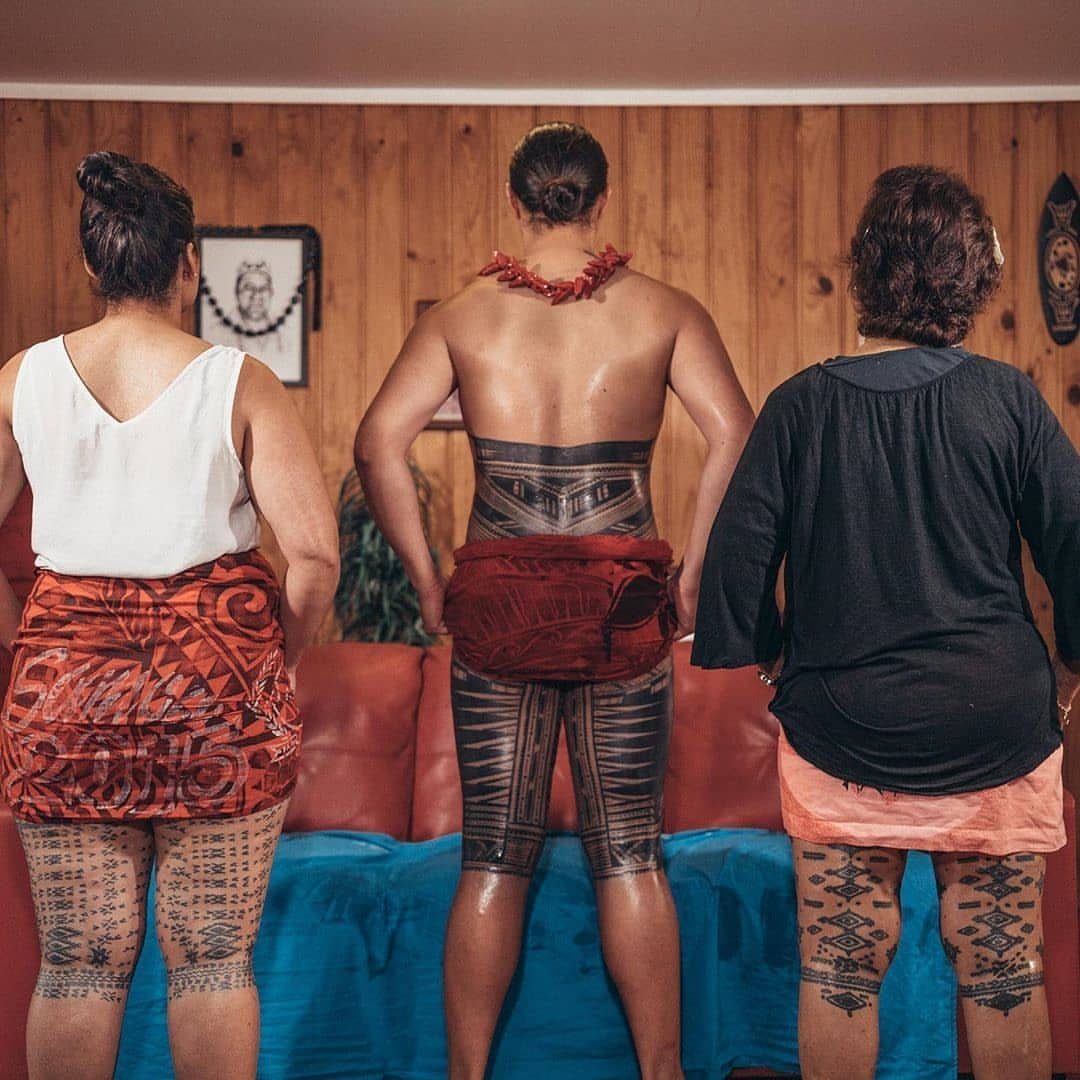
Samoan tatau is the one Polynesian tradition that never broke; families still hand-tap the full pe’a and malu today. The pe’a covers a man from mid-back to knees; the malu covers a woman’s thighs to knee.
The pe’a covers a man from mid-back to knees, the malu a woman’s thighs, both tapped over days with au tools made from boar tusk and turtle shell.
Studio artists outside Samoa borrow the bold black lines, the geometric density, and the symmetry, but leave the ritual marks and full placement to Samoan wearers.
A non-Samoan artist can draw on the visual language; the pe’a and malu themselves stay within cultural boundaries.
Samoan work builds from mirrored panels; what you see on the left leg repeats on the right, balanced down the center line. If you want that kind of formal balance, ask for it by name.

[Festival & Party Ready] Want to stand out at concerts or beach vacations without the pain? These 18 realistic Polynesian & Maori tribal armband designs instantly elevate your style, making you the center of attention in any crowd or photo.

Warm Reminder: This couple's set is not sold as a combined order. Please purchase the dress and the shirt separately to choose the right size for yourself. The couple's outfit includes an elegant samoan-inspired strapless dress and a stylish men's short-sleeve shirt, featuring a strong island vibe and a unique, eye-catching style
3. Maori Tattoo (Ta Moko)
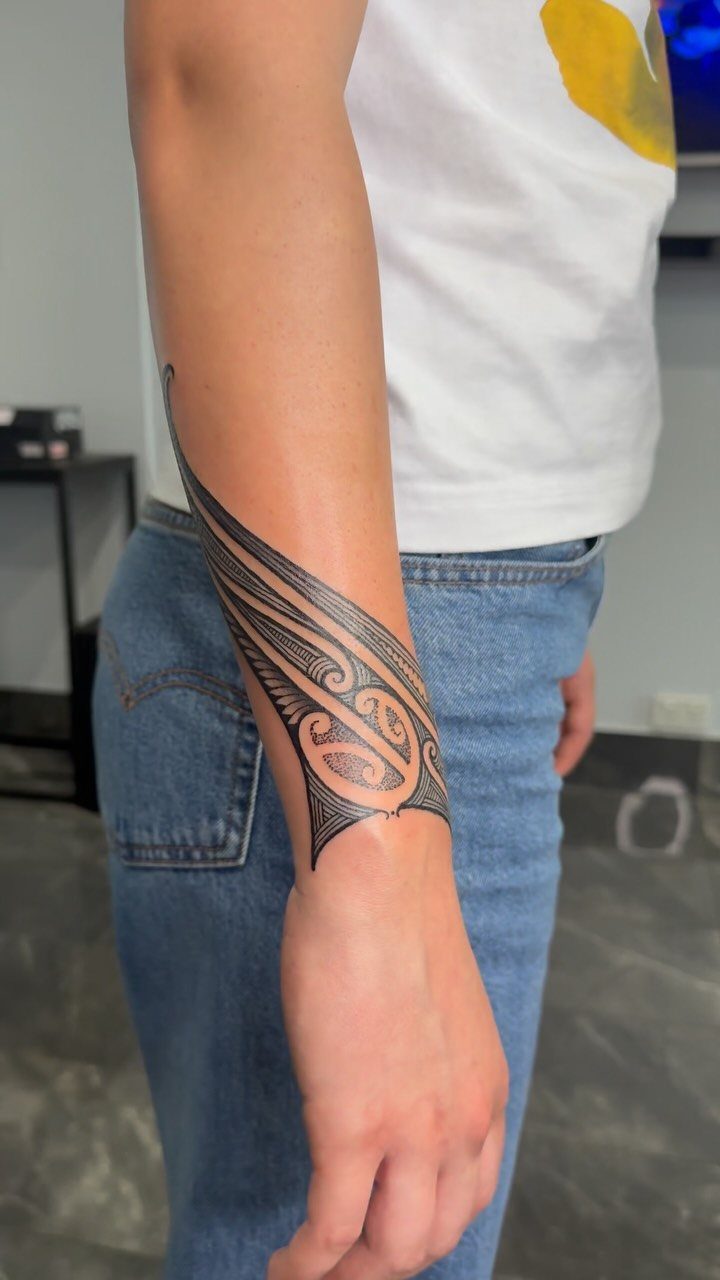
Tā moko comes from Aotearoa, and its curves flow where island styles stack blocks. Spirals called koru, curvilinear flow, and chisel-worked texture, traditionally cut rather than punctured, give it a living, growing quality.
The chin tattoo for women, moko kauae, and the full face for men, mataora, belong to Māori identity; wearing them without that bloodline is not done.
Koru spirals, the curved shapes that unfurl like a fern, can join a contemporary piece without crossing into facial territory reserved for Māori.
Koru spirals suit a forearm because they follow the muscle; the curve reads as growth, not as something bolted on. This suits someone who wants their piece to feel like it is still unfolding.


4. Hawaiian Tattoos
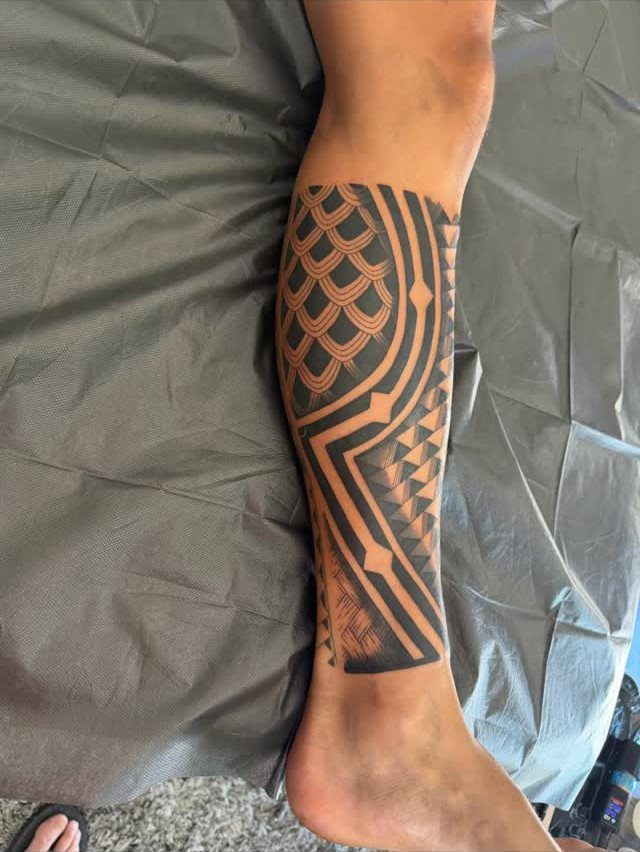
Kakau, Hawaiian tattooing, tracks who your family is, where you come from, and which aumakua, your family god, walks with you. Hawaiian marks repeat: shark teeth, waves, the eight-pointed star, each one stamped in geometric rows that cover ground fast.
Keone Nunes and others have brought traditional Hawaiian tattoo back over the past 2 decades with its roots intact.
A full calf reads as terrain when you pack it with repeating Hawaiian forms; the leg becomes a map the owner walks on.
Hawaiian work often layers nature motifs, taro leaves, lizards, into the geometry. If you want your piece to name where you are from, this is the style that builds location into the pattern itself.

👑 [FESTIVAL & PARTY READY] Instantly elevate your look! Our 18 extra-long tribal and boho designs easily wrap around arms, wrists, or ankles, making you the center of attention at music festivals, concerts, or holiday parties.

Features an intricate Polynesian tribal tattoo design inspired by Maori and Hawaiian cultural art, perfect for those who appreciate traditional tattoo patterns and indigenous Pacific Islander heritage.
- Easy Application in Minutes Cut out the design, peel off the clear film and place it face down on clean, dry skin; keep it still, soak the backing with water, press for 30 to 40 seconds, then lift the paper gently from a corner.
5. Tattoos on the Head
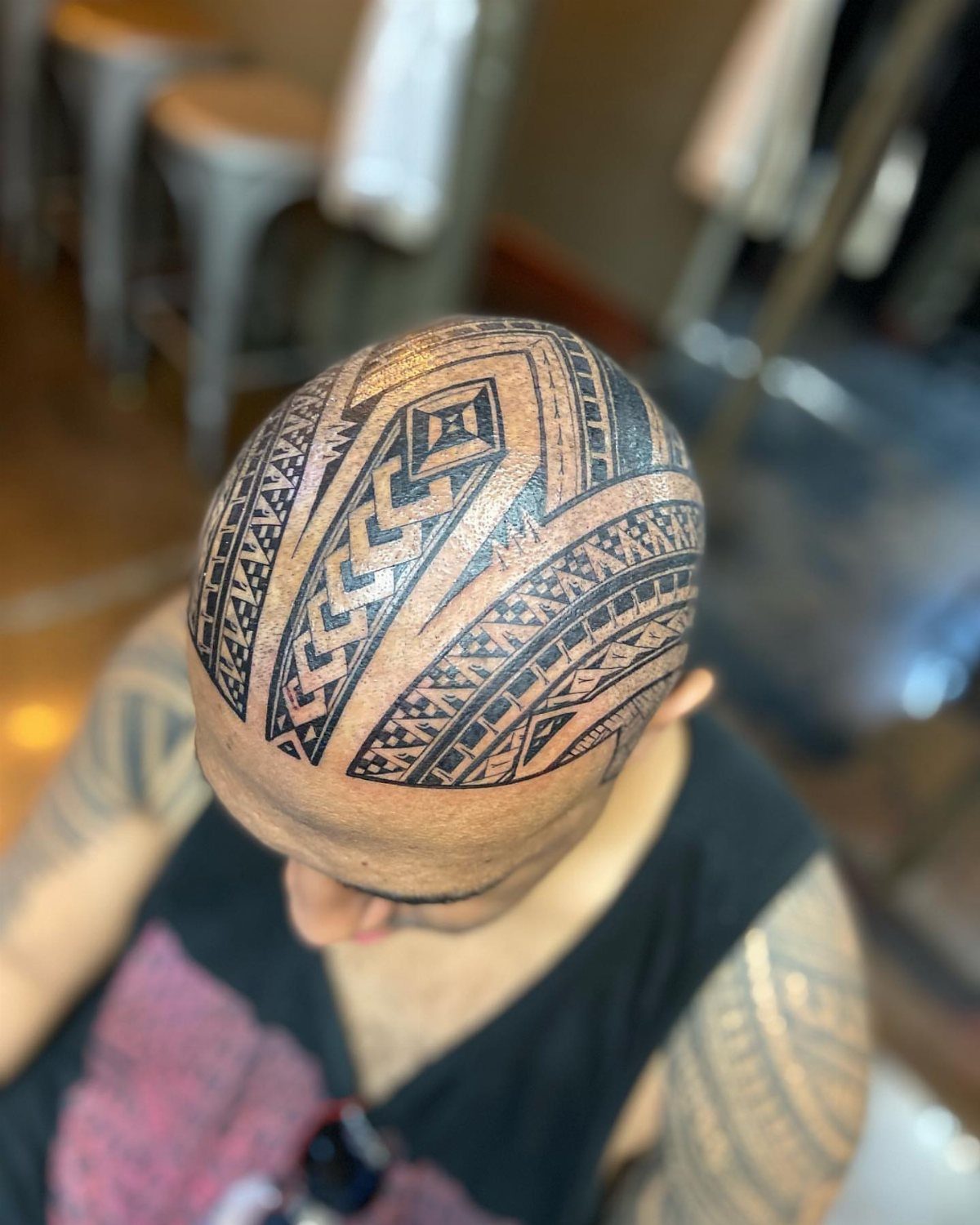
Head placement in Polynesian tattooing carries spiritual weight, a direct connection to mana and higher identity. The scalp carries weight in every Polynesian culture; tattooing there is a statement, not a starting point.
Modern wearers choose this for visibility and commitment. The healing is demanding, the scalp sheds and flakes in ways that test aftercare, and the pain sits at the high end of the scale.
The pattern must be designed to read on a curved, moving plane, hair growth direction matters for long-term clarity, and not every motif translates well to this scale. What works on a flat forearm often needs redrawing.
This is not a first tattoo placement. Build trust with your artist on visible skin first.


6. Enata
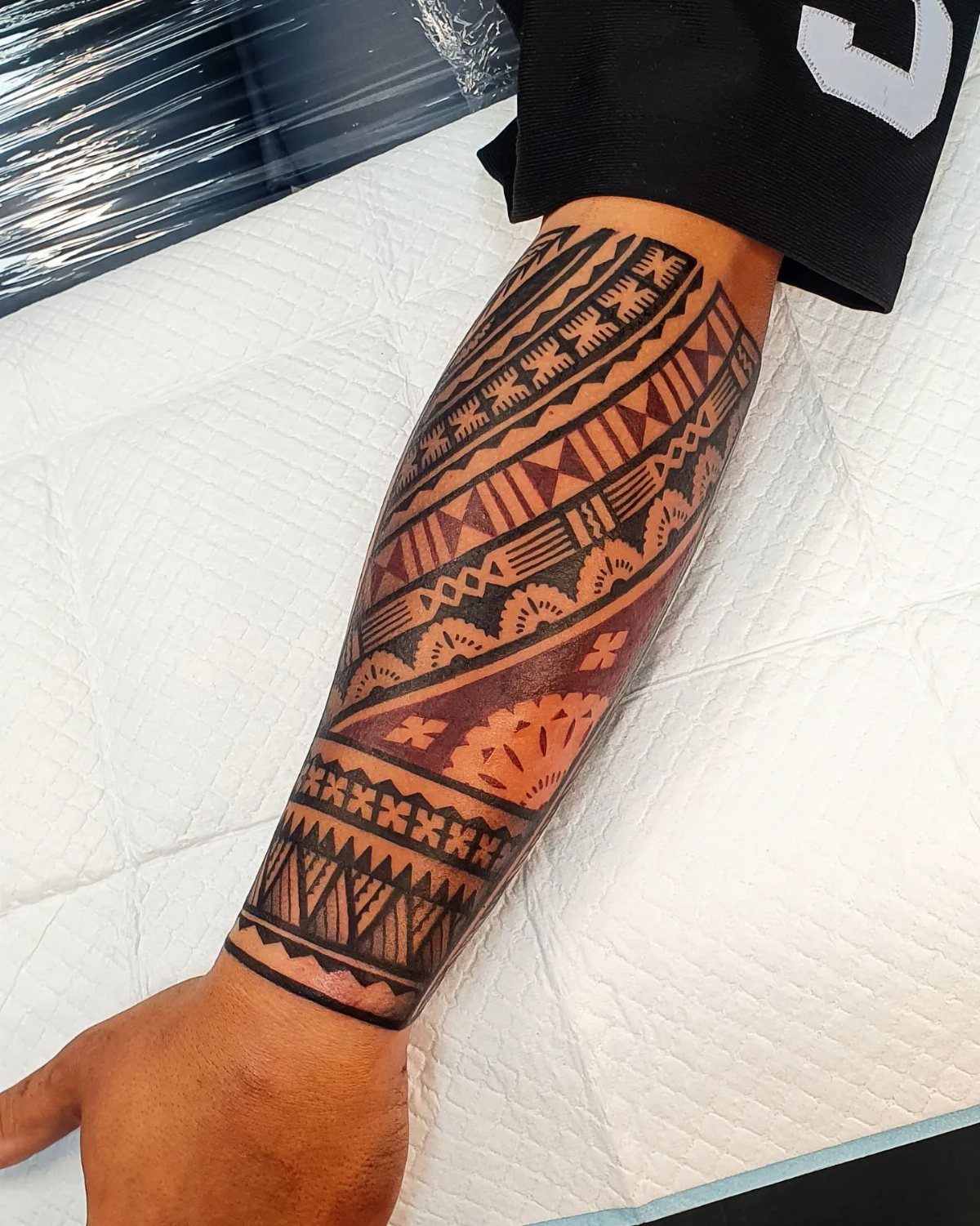
Enata are the human figures in Marquesan tattoo language; they stand for people, for gods, for the living and the dead. Their meaning shifts with placement and surrounding space: life experiences, birth, rank, relationships, actions, stories.
An enata standing upright faces forward as ancestor, as family, as the community that holds the wearer.
Inverted, they mark defeated enemies. Multiple enata can show relationships, distance or closeness between figures reading as bonds or separations.
Figures work between bands of pure geometry; the enata break up the pattern and give the eye a place to rest. This suits a reader who wants their tattoo to name specific people without lettering or portraits.
Work out what each figure stands for before the session. The story lives in the arrangement, not in the figure alone.

6 Sheet Tribal Tattoos temporary, Each sheet measures 9cm* 19cm/3.54*7.48 inches (L*W).

4 x Sheets of different Tribal Hawaiian Tattoo is Temporary Tattoo Transfer Paper Body Art Sticker
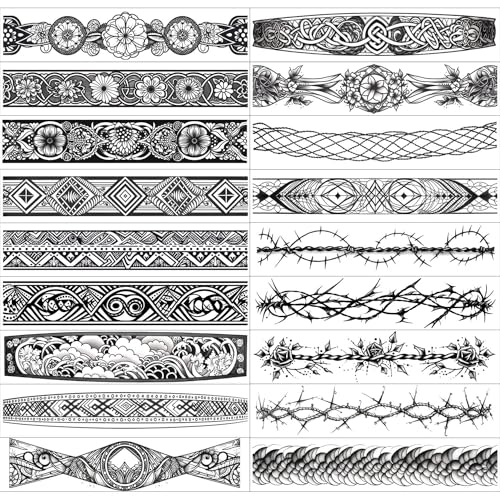
👑[Realistic Tribal Style, Zero Pain] Get the bold look of Polynesian and Maori tribal art without the commitment. These 18-pack extra-long (11") armband tattoos wrap perfectly around biceps, wrists, or ankles, making you stand out at parties, festivals, or beach vacations.
7. Honu Shell
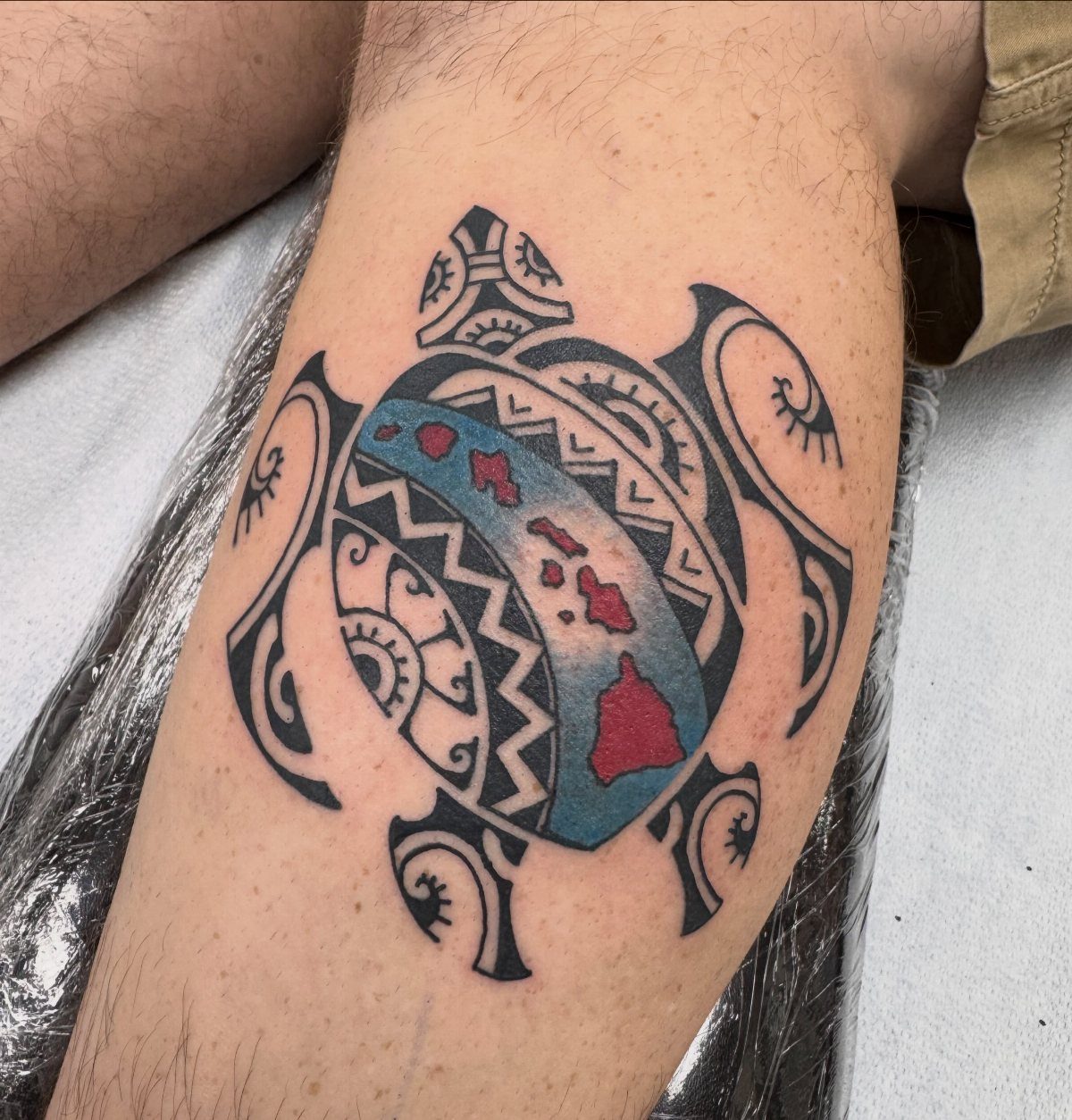
The honu shell carries family, longevity, and peace into a single rounded form. Geometric bands wrap the flippers and rim, while the shell itself holds space for something personal: island outlines, a name, a color accent against the blackwork.
A leg placement lets the turtle read from the side, walking or standing still.
The curve of the calf shapes the shell naturally; flat surfaces like the forearm fight the motif and need the artist to build false roundness into the pattern.
Decide early whether the shell stays pure geometry or opens for an inset symbol. That choice determines how the surrounding bands connect; retrofitted additions show their seams.


8. Polynesian Tattoo Styles
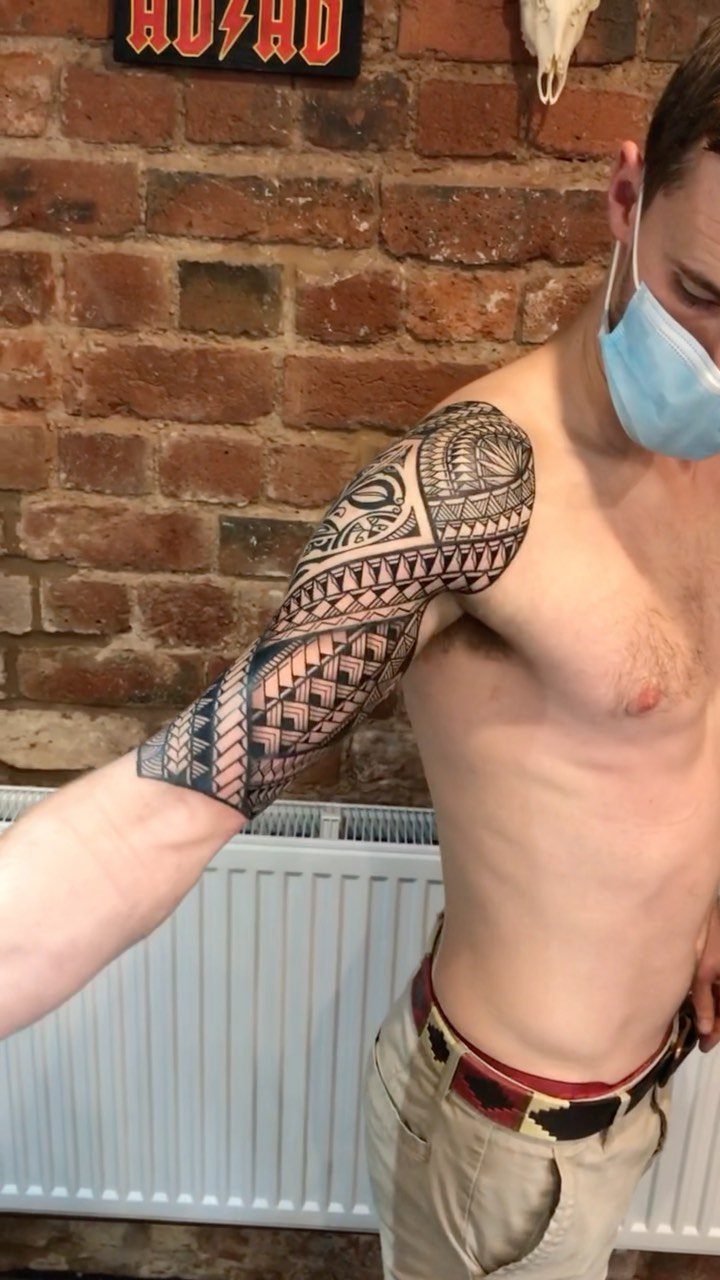
Polynesian tattooing breaks into distinct island dialects: Maori spirals, Samoan symmetry, Marquesan density, Tahitian bold silhouettes, Hawaiian layered nature motifs. Each developed its own rules for placement, scale, and which marks belong to whom.
A sleeve that mixes styles needs one dominant language or it reads as tourist sampler.
The shoulder and upper arm gives enough real estate to establish a single style through the upper zones, then echo others as accent if the wearer wants.
Ask which culture’s rules your chosen artist knows cold. Someone fluent in Samoan balance may flatten Maori flow; the match between artist training and your chosen style matters more than portfolio variety.
9. Tahitian Tattoo

Tahitian work gave the world the word tattoo itself: tatau, the sound of the hand-tapping tools.
That origin shows in the style’s dramatic scale and the confidence of its negative space; bold black shapes sit against skin left deliberately open, a compositional habit that reads clean even at distance.
The lower back and waist placement suits this drama. The broad plane lets large motifs hold their shape across muscle movement, and the natural waistline gives a built-in horizontal anchor for the composition’s weight.
Modern Tahitian-style work absorbs influences freely: Marquesan geometry, Samoan line weight, Western graphic sensibility.
That flexibility is its strength and its risk; without discipline, the mix drifts generic. Find an artist who can name which tradition each borrowed element comes from.
10. The Sun
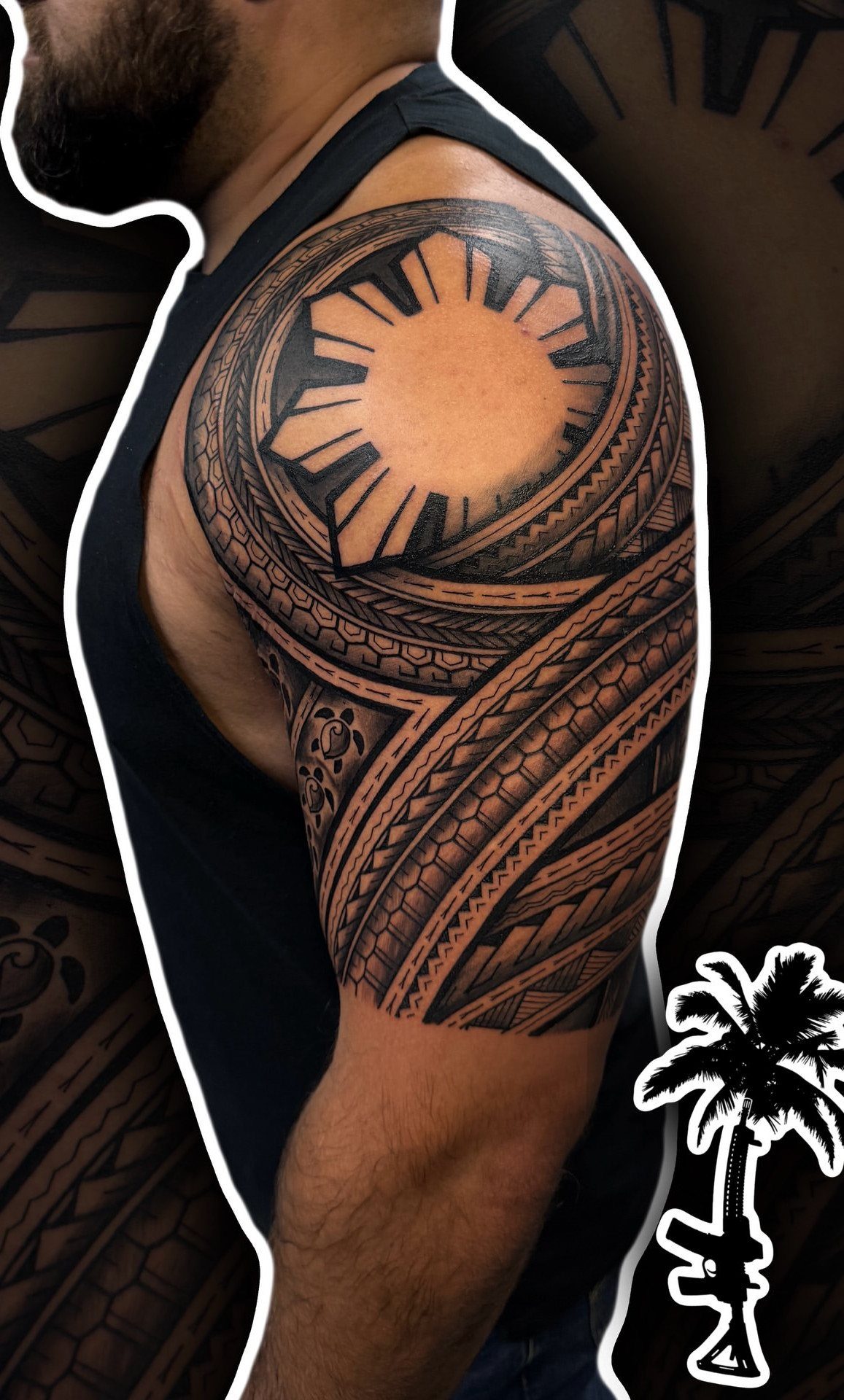
The sun in Polynesian work marks leadership, brilliance, and the cycle of return; its rising and falling shape the day’s rhythm and the wearer’s.
A shoulder placement catches light and shadow as the arm moves, the rays shifting emphasis with each gesture.
In Polynesian tattoo art, the sun is traditionally placed at the highest point of the design—shoulder, chest, or upper back—so that lesser patterns radiate downward from it.
Greywash in the rays softens the usual hard black of Polynesian work; that choice reads as atmosphere, not as weakness, but it ages faster.
Solid black holds its geometry for decades; grey blurs sooner. Choose based on how long you need the edges crisp.
11. Shark Teeth
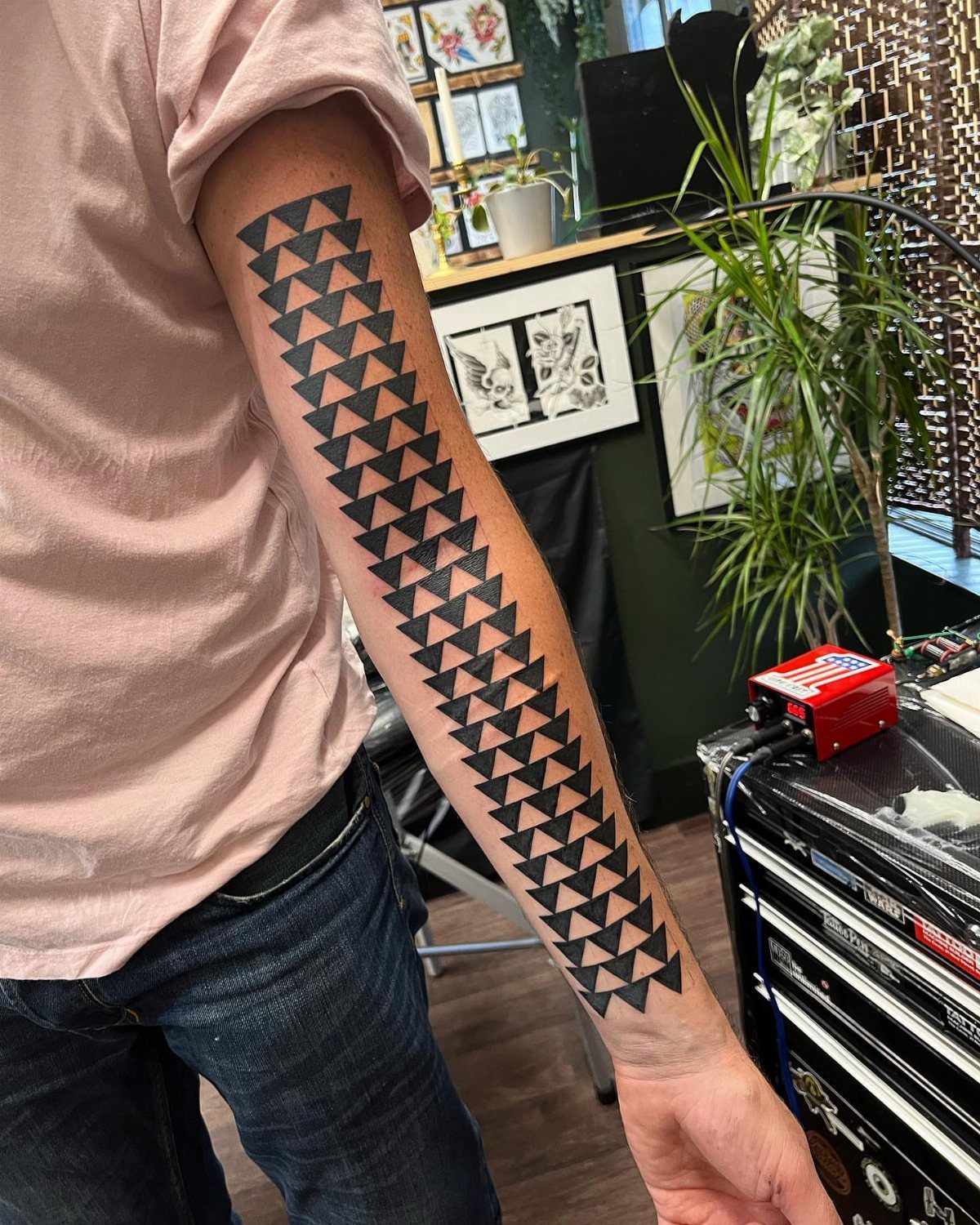
Niho mano, shark teeth, repeat as interlocking triangles that read as texture from across a room and as individual blades up close.
Rows of them run the full arm, from bicep to wrist, a banded rhythm that needs no central figure to hold attention.
This pattern scales to any length: a single row as bracelet, stacked rows as sleeve filler, or the full-arm treatment.
The triangle direction matters; points down carry different weight than points up, and a good artist varies the rhythm rather than marching identical shapes.
The motif suits someone who wants the protection symbolism without the narrative complexity of figures or full scenes. It is pattern as armor, direct and readable.
12. Polynesian Sleeve Tattoo

Without this zoning, the arm becomes a stack of separate tattoos; with it, the eye travels the length as a single statement.
The elbow is the hardest zone to solve; skin there stretches and compresses dramatically, and dense blackwork can blow out or thin unpredictably. Most artists lighten the pattern at the joint or switch to simpler shapes that tolerate distortion.
Plan for multiple sessions; a sleeve this dense cannot be rushed.
The skin between elbow and wrist recovers slower than upper arm, so session spacing matters. Budget time as well as money: a full sleeve at this density typically runs multiple sessions across months, not weeks.
13. Chest and Shoulder Pattern

Chest and shoulder work in Polynesian tattooing turns the upper body into a single shield. The pectoral panel anchors the composition, and the pattern flows over the shoulder cap rather than stopping at the collarbone edge.
This placement reads as strength and bravery in the tradition; the broad planes of chest and deltoid carry dense blackwork without distortion. Skin here heals relatively evenly, though the sternum centerline hurts more than the outer pec.
The extension over the shoulder matters.
A chest piece that ends in a hard line at the T-shirt edge looks like a decal; letting the pattern continue onto the arm makes it part of the body. Plan the shirt boundary before the session, not after.
14. Polynesian Leg Sleeve

A leg sleeve in Polynesian work runs thigh to ankle as one continuous map, the calf and front of lower leg the most common zones to fill.
The leg has more flat real estate than the arm, so wide bands and repeating rows hold their shape without the elbow’s distortion problem.
Skin at the knee shifts with every step you take, so an experienced artist will either fade the detail across the joint or drop back to bolder, simpler shapes that will not distort as you walk.
Thigh skin takes ink well; lower leg skin, especially around the shin, sits tighter and heals slower.
Plan for the same session count as an arm sleeve, months rather than weeks. The leg hides more easily for work, but shorts season exposes it completely; that visibility shift is worth considering before you start.
15. Polynesian Manta Ray Tattoo

Manta ray silhouettes filled with Polynesian pattern carry grace, freedom, and guidance into a single form.
The manta’s outline creates a built-in frame for smaller symbols; a turtle, a shark, or family marks can sit inside the wings without the design feeling crowded.
The calf suits this motif because the curve of the muscle echoes the ray’s wingspan.
Decide what fills the body of the ray before the session. The surrounding geometry must connect to that central choice, not frame an empty space you plan to decide later.
Adding a manta ray onto an existing sleeve later almost always leaves visible joins; plan the full layout early or commit to the standalone piece.
16. Flat Geometric Pattern Flash

Red and black Polynesian geometric bands on a flash sheet read as pattern first, culture second.
The color shift from traditional blackwork is a modern choice; red carries its own weight in Polynesian symbolism, often tied to divine protection and high rank.
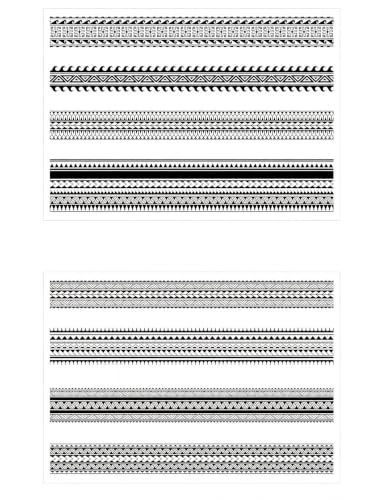
These curved bands are designed for application as armbands, leg bands, or chest panels, the curve built to wrap anatomy rather than sit flat.
A band drawn flat on paper has to be wrapped to a forearm or a calf, and the circumference of your limb decides how many repeats fit before the pattern meets itself.
Flash sheets like this one are drawn as repeatable units; you buy the stencil as-is rather than working with the artist to map it to your specific muscle structure.
A flash piece applies faster and costs less, but it will not name your lineage or follow your muscle structure. Use it if you want the visual vocabulary without the long consultation; know what you trade away.
Tattooing Techniques and Materials
Traditional Polynesian tattooing was done with sharpened bone or wood combs set in handles, tapped into the skin with a mallet and loaded with soot-based pigment.
The comb teeth determined line weight; fewer teeth meant bolder strokes, more teeth meant finer detail.
Modern work outside the islands mostly runs on rotary or wireless machines.
The machine gives the artist control over speed and depth that hand-tapping cannot match, and it lets a studio artist work the dense black fills that Polynesian-style sleeves demand without the days-long sessions traditional timing requires.
The trade is in rhythm and sound; the tap of wood and bone has its own ceremony, and the machine replaces that with efficiency.
If you want traditional hand-tapping, you travel to the source or find one of the few practitioners who apprenticed in that method. Most readers will sit under a machine.
Ask your artist whether they have worked with skin tapped as well as machine-worked; the healing differs, and aftercare advice from someone who has only seen machine work may miss what tapped skin needs.
Tattoo Meanings by Body Part
Polynesian placement carries meaning that outlasts the session.
The head connects to mana and spiritual identity; the arms and shoulders hold strength and tribal responsibility; the back carries legacy and ancestral support; the hands mark creativity and craft; the legs map travel, movement, and the life journey itself.
Modern requests cluster where visibility and symbolism overlap. Polynesian leg tattoos and hand tattoos draw the most interest now, the leg for its canvas size and the hand for its statement.
That visibility is the point and the burden; a hand piece enters every job interview, every handshake, every first impression.
Facial moko marks Māori bloodline; the pe’a and malu carry Samoan cultural context. Know which belongs to which before you ask.
Those are closed placements. For open marks, the meaning still shifts by zone.
A shoulder sun reads as leadership and brilliance; the same sun dropped to a calf would carry different weight. Work with an artist who can name what each placement signals, not just what fits the muscle curve.
Cultural Appropriation Concerns
A Polynesian tattoo worn without understanding becomes costume, not composition.
Every motif on your body should have a name, a region, and a reason you chose it. If you cannot explain it, you should not wear it.
Some marks are closed to outsiders.
Research before you choose.
Consult Polynesian artists or cultural advisors when possible. Mixing Polynesian with Japanese or other traditions only works if you understand both visual languages; otherwise the result reads as sampler, not synthesis.
A flash sheet or repeatable stencil speeds the session and cuts the cost, but it cannot name your lineage or map your life.
Custom work costs more and takes longer because the artist builds your narrative into a visual language that originated in the Pacific. That labor is the respect built into the price.
Frequently Asked Questions
What are the 5 main Polynesian tattoo styles?
The five main Polynesian tattoo styles are Maori, Samoan, Marquesan, Tahitian, and Hawaiian.
Maori work flows in spirals called koru; Samoan builds from mirrored geometric panels; Marquesan carries the densest black fill; Tahitian uses bold silhouettes with strong negative space; Hawaiian layers nature motifs like shark teeth and waves into repeating rows.
Every island group shaped its own code for where marks sit, how large they grow, and who has the right to wear them.
Is it okay for non-Polynesians to get Polynesian tattoos?
Yes, but respect the boundaries. Open motifs like koru spirals, shark teeth, or geometric bands can be worn by anyone who learns their meaning.
Closed marks stay within their cultures: the full Samoan pe’a and malu, the Maori facial moko kauae and mataora, and specific Hawaiian lineage marks.
A respectful artist can trace each symbol back to its origin and will refuse to ink patterns meant only for those born into the lineage.
What do Polynesian tattoos symbolize?
Polynesian tattoos symbolize identity, status, genealogy, and personal story through a vocabulary of recurring motifs.
No symbol holds a single locked meaning; what it says changes with how it is arranged, what neighbors it keeps, and where on the body it falls.
The same shark tooth carries a different weight on the shoulder than it does circling the wrist. The composition as a whole narrates heritage, family, and journey rather than any single symbol acting alone.