A leg tattoo base can run from a $100 ankle piece to a year-long sleeve project crossing well past the five-figure mark, and the deciding factor is how much of the limb you are willing to surrender to one vision.
1. Calf Tattoos
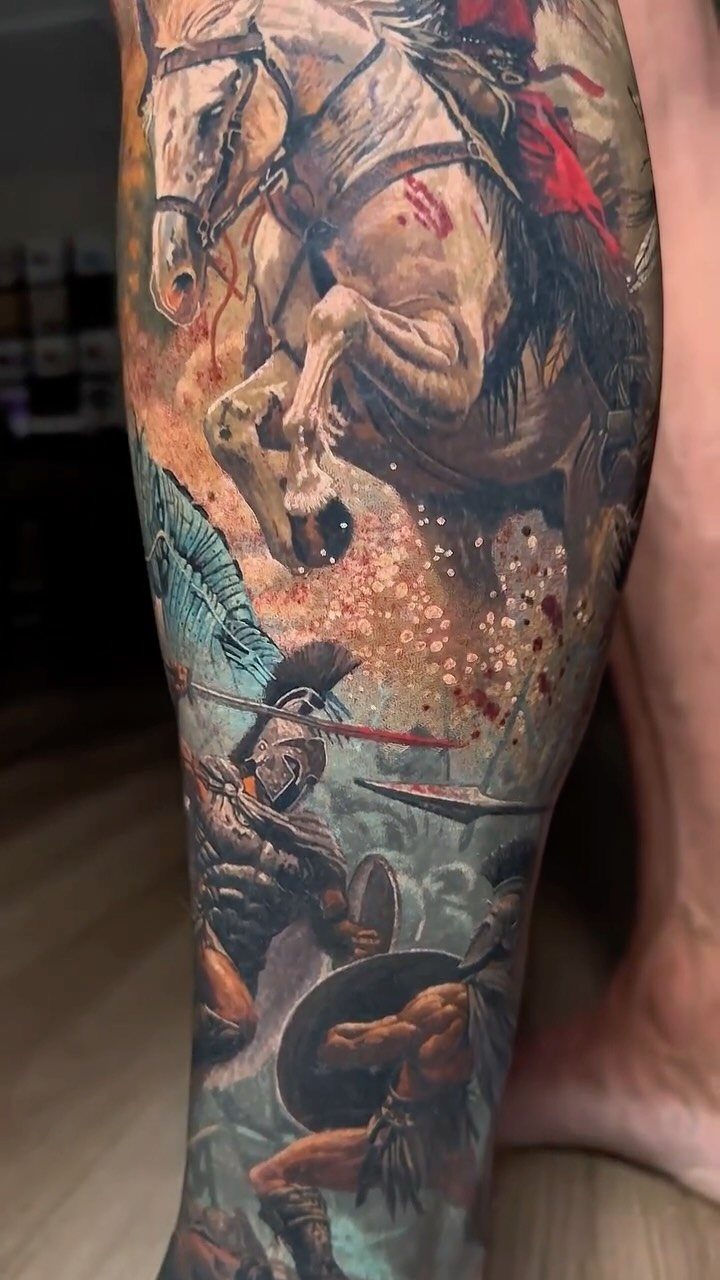
The calf carries a tattoo like a curved wall carries a mural: the muscle’s roundness gives a three-dimensional quality that flat skin cannot match.
This is the least painful spot on the back of the leg, especially if you stay clear of the knee crease, and the space is generous enough for a solid design without committing your whole limb.
American Traditional pieces framed in ovals sit particularly well here, though the curvature also flatters geometric patterns and realistic portraits. The area hides under pants for work and shows with shorts, making it practical for first-timers and collectors alike.
Keep the design clear of the back of the knee if pain is a concern; that thin skin changes the experience entirely.

Premium Quality 1.5mm Silicone Material – Crafted from premium 1.5mm thick silicone, this tattoo skin offers a true-to-life feel with excellent durability and a smooth surface for effortless needle movement during practice.
3MM Tiny Tattoo Practice skin Made from high-quality materials, it is closely mimic the texture and feel of real human skin. This gives you a realistic experience, allowing you to refine your skills before working on actual clients

【 575+ Fun Assorted Tattoo Stencils 】-The ChurlChurl tattoo stencils collection includes 575 high quality stencils with multiple themes. enjoy cute trendy tattoo stencil designs like butterflies, words, flowers, symbols, totem, Egypt style patterns and more.
2. Full Leg Sleeve
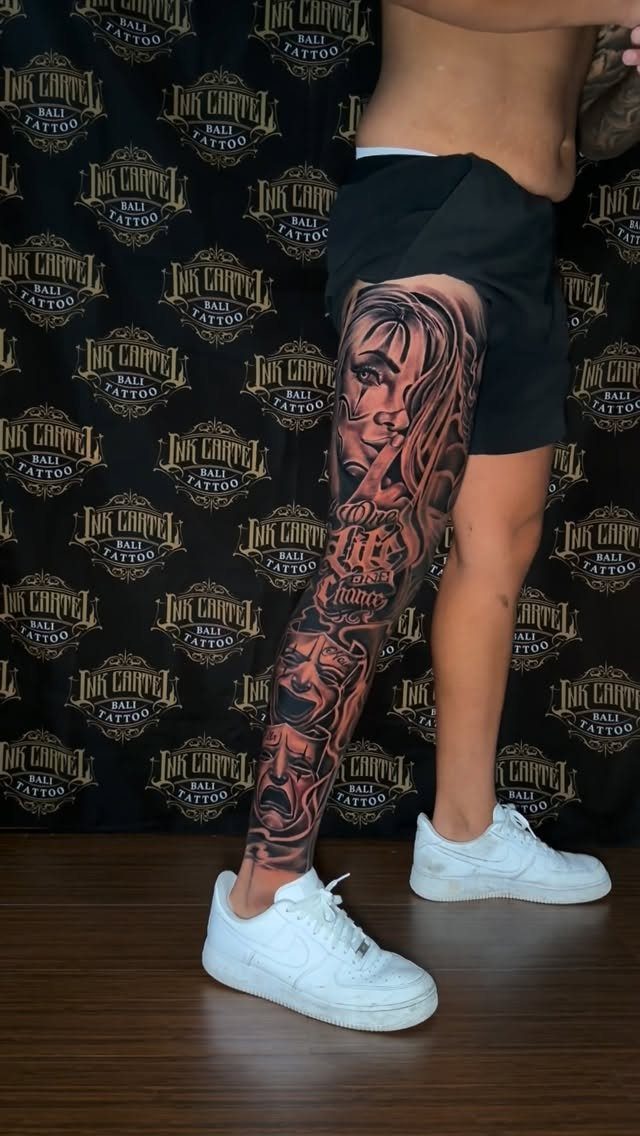
A full leg sleeve runs from hip to ankle as one continuous piece, and the commitment matches the canvas: 40 to 100-plus hours of needle time, spread across many sessions.
Japanese traditional work dominates this placement because the scale suits its narrative demands, though biomechanical and nature themes hold their own.
The cost and endurance required filter this for serious collectors with a unified vision, not someone assembling random pieces. Every element must flow into the next; a disjointed collection reads as failure rather than art.
Start with your theme and a single trusted artist. Switching hands mid-project risks a seam that no amount of planning hides.

Premium Quality 1.5mm Silicone Material – Crafted from premium 1.5mm thick silicone, this tattoo skin offers a true-to-life feel with excellent durability and a smooth surface for effortless needle movement during practice.

Tiny Tattoo Practice Skin: the double-sided, easy-wipe, fine-line tattoo practice skins feature over 80 different stencil designs on the front and back of the skin.

🌼 Beautiful Hand-drawn Fine Line Style Tattoos - Black and White Fine Line Flowers, Roses, Branch, Butterfly, Arrows, Hearts, Stars
3. Ankle Tattoos

Ankle work reads as permanent jewelry: fine-line script, tiny botanicals, or ornamental bands that wrap the bone.
The skin here is thin and the bone close, so the pain stays sharp, though sessions run short enough that most manage without drama.
Friction from socks and shoes means some fading over time; placement on the outer ankle, above the shoe line, protects the ink better.
This suits a first piece or a discreet addition. Choose something small enough that the artist need not force detail into space that will blur it.

[Comfortable Breathable Material]: Crafted from premium ice silk polyurethane fiber, these leg sleeves offer breathable, quick-dry comfort that fits snugly against the skin, effectively guarding against sunburn during long summer cycling sessions or outdoor activities.

🐙2 Sheets Creative Large Flower Temporary Tattoo Sleeve:🐠 There Are 2 Sheets Full Arm Temporary Tattoos For Women Full Sleeve Temporary Tattoos For Adults Including Popular Unique Designs Black 3D Rose Peony Flowers Tattoos Watercolor Butterfly Flamingo Floral Tattoos Full Sleeve Thigh Leg Tattoo Sticker.

Size:M(27x11x8 cm),Package include:1x Leg Tattoo Cover Up Sleeve
4. Floral Leg Tattoos
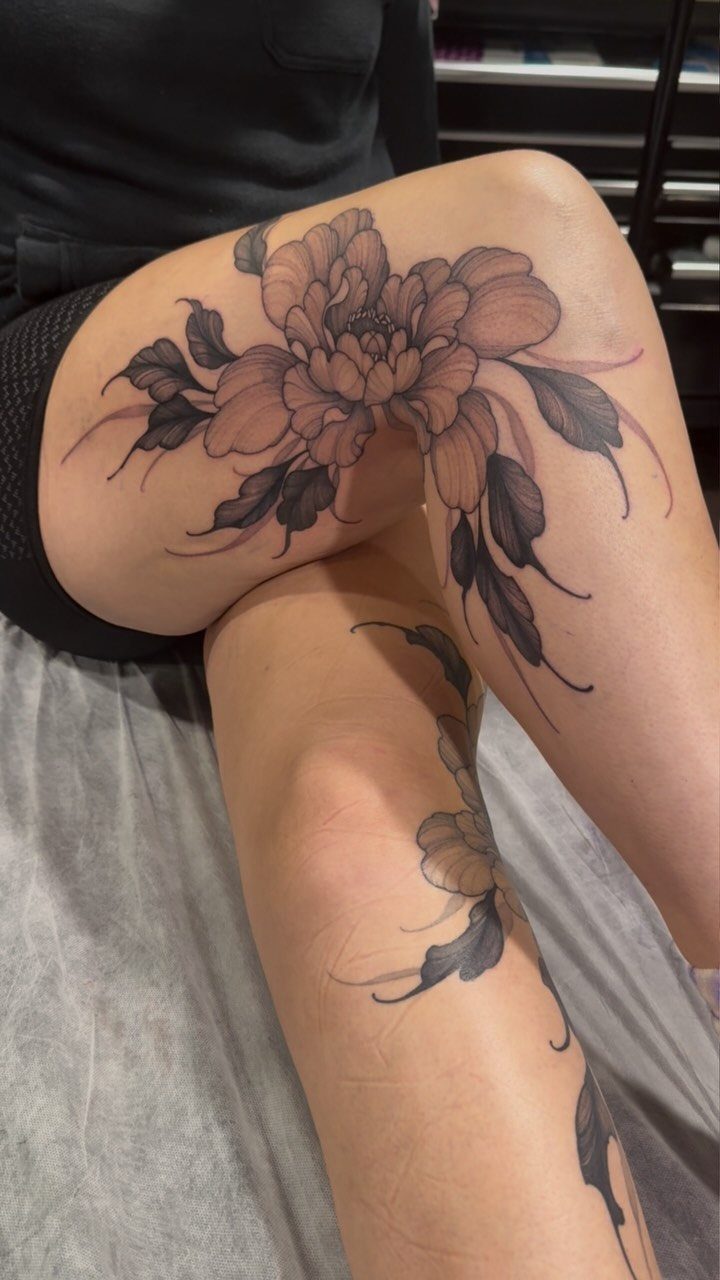
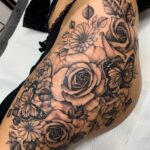
Flowers on the leg work at any scale from a single stem to a garden that wraps thigh to ankle. Roses and peonies remain the usual choices, rendered in color or in black and grey as the visible piece shows.
The leg’s length favors trailing compositions: vines that climb, blooms that cluster at the knee or thigh, negative space that lets the skin breathe between dense petals.
A full bouquet can carry personal meaning, each flower chosen for its traditional symbolism or for memory alone.
Monochrome ages more predictably than color, which settles and softens over years. If longevity matters more than vibrancy, black and grey is the safer bet.

OVER 60 TEMPORARY TATTOOS: One package includes 20pcs temporary tattoo stickers, more than 60 exquisite Chinese character tattoos designs. Safe, non-toxic, tasteless materials, realistic, waterproof, durable, carefully selected styles each can be called a classic, you can try a variety of different styles


【Fit & Comfort】Designed for a slim-to-standard build, with a flexible fit that works best for average-sized legs. They are not recommended for very large limbs or frames, as over-stretching may affect comfort, patterns can also stretch and deform, affecting visual effects
5. Shin Tattoos
The shin offers a flat, prominent stage for designs meant to be seen: long vertical pieces like daggers or swords, symmetrical patterns, or script that draws the eye down the leg’s length.
Pain runs high here; the skin sits thin with bone right underneath, making this one of the rougher leg spots to sit through.
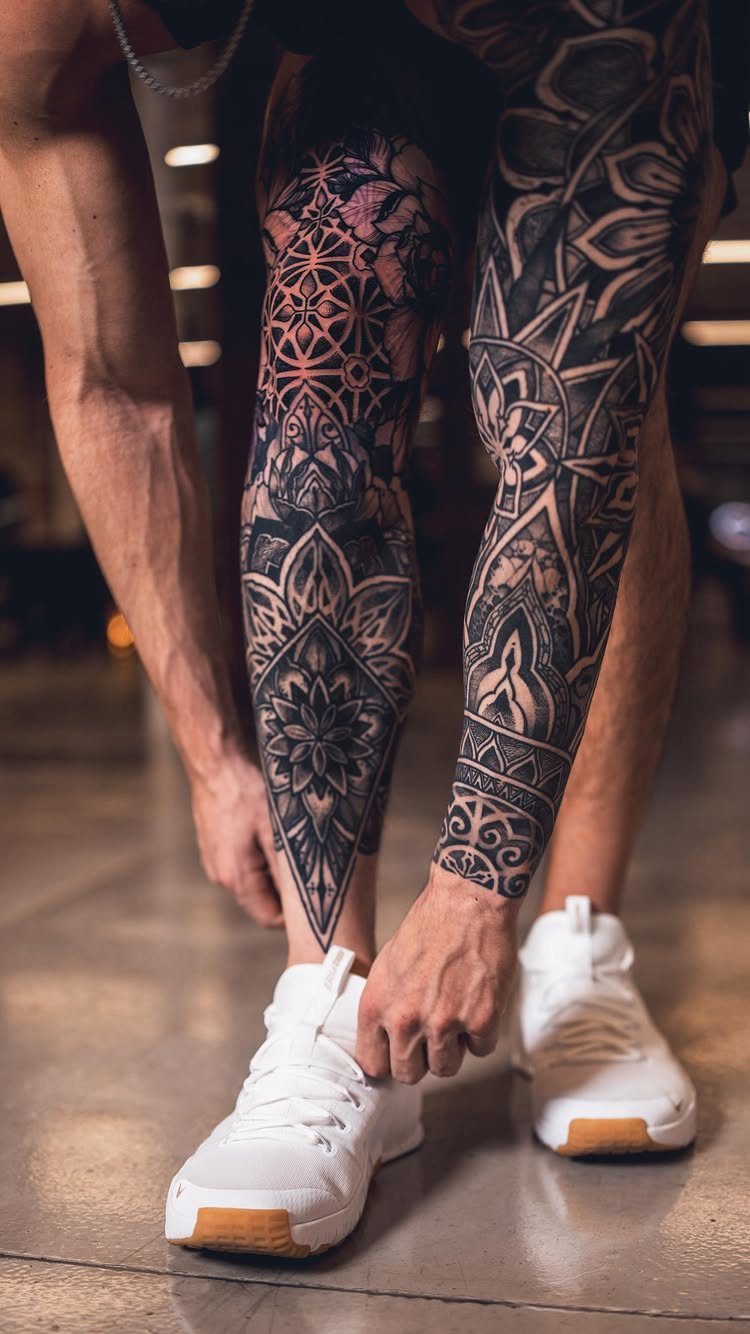
Geometric and mandala work, as visible here, suits the shin well because the flat surface keeps lines true where a curved calf would distort them.
Tattooing both legs to match demands precision; even a small shift in placement or line weight shows up as a clear mismatch.
Reserve this for experienced collectors or the pain-tolerant. The result commands attention with every step, which is exactly the point.

【Elegant Large Flower design】This semi-permanent tattoo set features oversized floral compositions designed to make a statement. The flowing petals and balanced proportions create a powerful yet elegant look across thighs, legs, arms, or waist. A confident floral style that feels expressive, feminine, and visually striking.

💕【4 Sheets Creative Large Flower Temporary Tattoos For Women】--VANTATY Unique Desgin Watercolor 3D Rose Butterfly Temporary Tattoos For Adults Body Art Painting Stickers Look Real! Package Includes 4 Sheets Large Watercolor Lily Temporary Tattoos For Thigh Hips Buttock Leg Arm Tattoos Lily Tattoos Butterfly with Flower Rose Temporary Tattoo Sticker.
💕【61 Sheets】--VANTATY 3D Flowers Temporary Tattoos For Women Girls Kids Adults Body Art Stickers Look Real! 【click Our Store/brand Name To See More Fashion Designs】
6. Knee Tattoos

The knee serves as the anchor of a larger leg sleeve, its circular shape demanding designs that incorporate or echo the joint itself.
Mandalas, spiderwebs, and animal faces centered on the kneecap turn the body’s movement into part of the artwork.
This is specialist territory. The skin is tough, the area constantly in motion, and the pain severe; stretching and bending must be built into the design or the tattoo will distort.
Starbursts and geometric linework, as visible here, handle this better than figurative pieces that depend on proportion.
Most artists who take this on require existing work nearby, proof that the client understands what they are committing to. The knee is not a starting point; it is a centerpiece earned after the surrounding canvas is established.

▶ Henna Tattoo Kit: 16 sheets tattoo stencils. airbrush tattoo stencils suitable for tattoo lovers. Experience the effects of tattooing without the pain of tattooing.

24PCS Unique Henna Stencil Pack – This complete henna tattoo kit accessory set includes 24 sheets of reusable mehndi stencils (6.89" x 3.34"). Featuring exclusive designs like long arm bands, moon motifs, vine flowers, and large floral templates, it is ideal for creating DIY temporary skin art on wrists, arms, back, and full body.

REUSABLD VARIETY OF OPTIONS - This set of temporary tattoo stencil includes 123 different patterns for adult,male. Scorpion tiger dragon cow eagle skeleton Tribal Symbols geometric design etc patterns in 20 pages A4 size, Almost unlimited creative combinations and options to meet your every need.
7. Patchwork Leg Tattoos
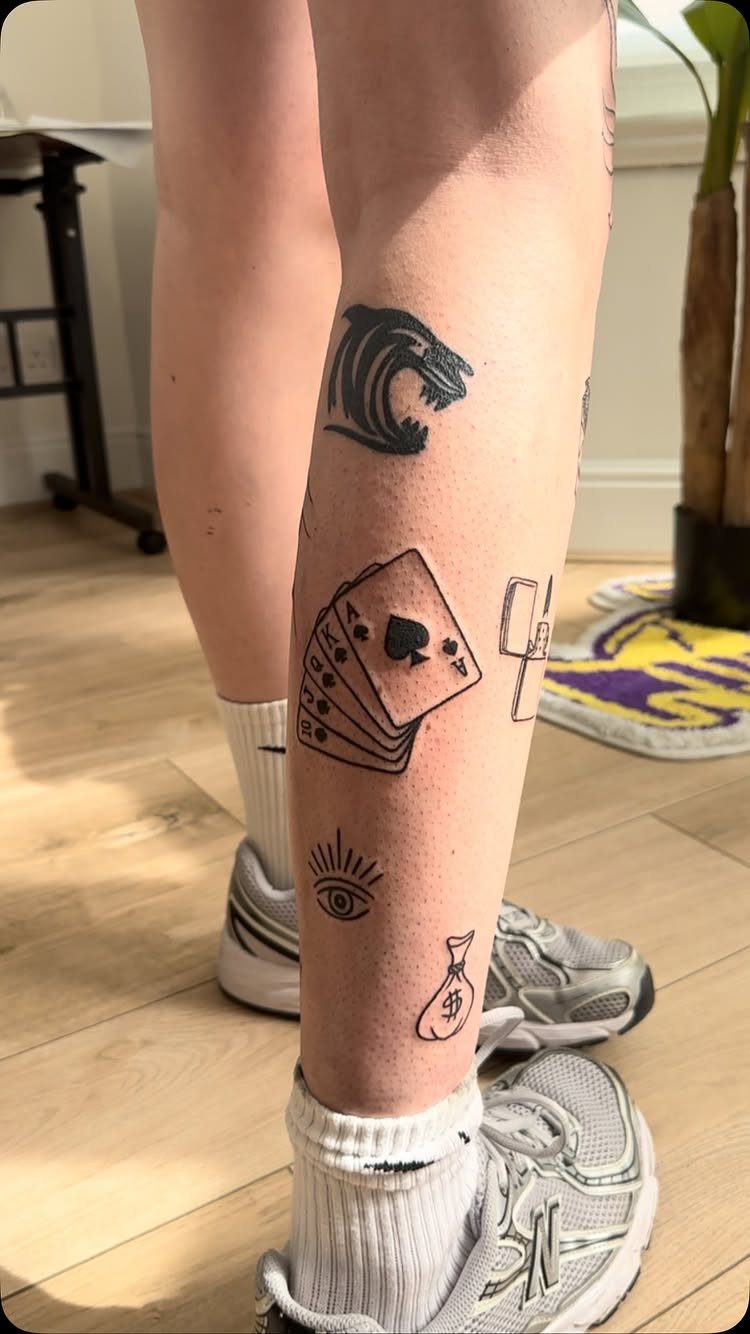
A patchwork leg builds itself over years: small standalone pieces that share a style or black and grey palette, gathered like stamps in an album.
Playing cards, eyes, panthers, each one chosen for itself rather than fitted into a larger plan.
The leg becomes a record of travels and artists, a spot where you can collect from different hands without demanding they match. This suits the indecisive, the collector, the person who wants variety without sitting for a sleeve.
Keep some unity in scale and density. A tiny delicate piece beside a heavy black one looks accidental, not eclectic.
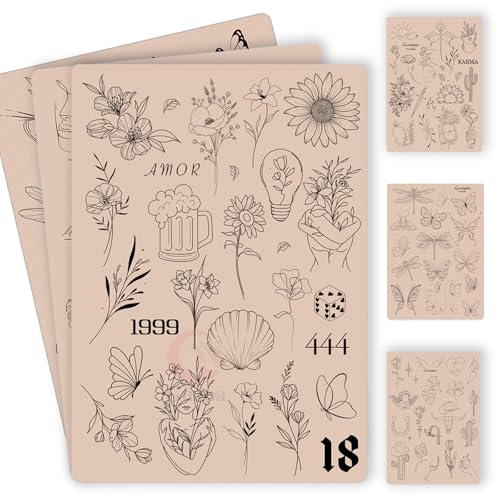
100+ Pre-Printed Designs – Features a wide variety of fine line and tiny tattoo stencils to enhance detailing skills.


⚡Awesome Realistic Black Fake Tattoos for Adult Women -- Super stylish design temporary tattoos, set includes variety of elements(line,flower,word..) that you can use for different locations on your backbone, leg, arms, chest, etc. Easy to share it with your family and friends.
8. Realistic Portraits Leg Tattoo

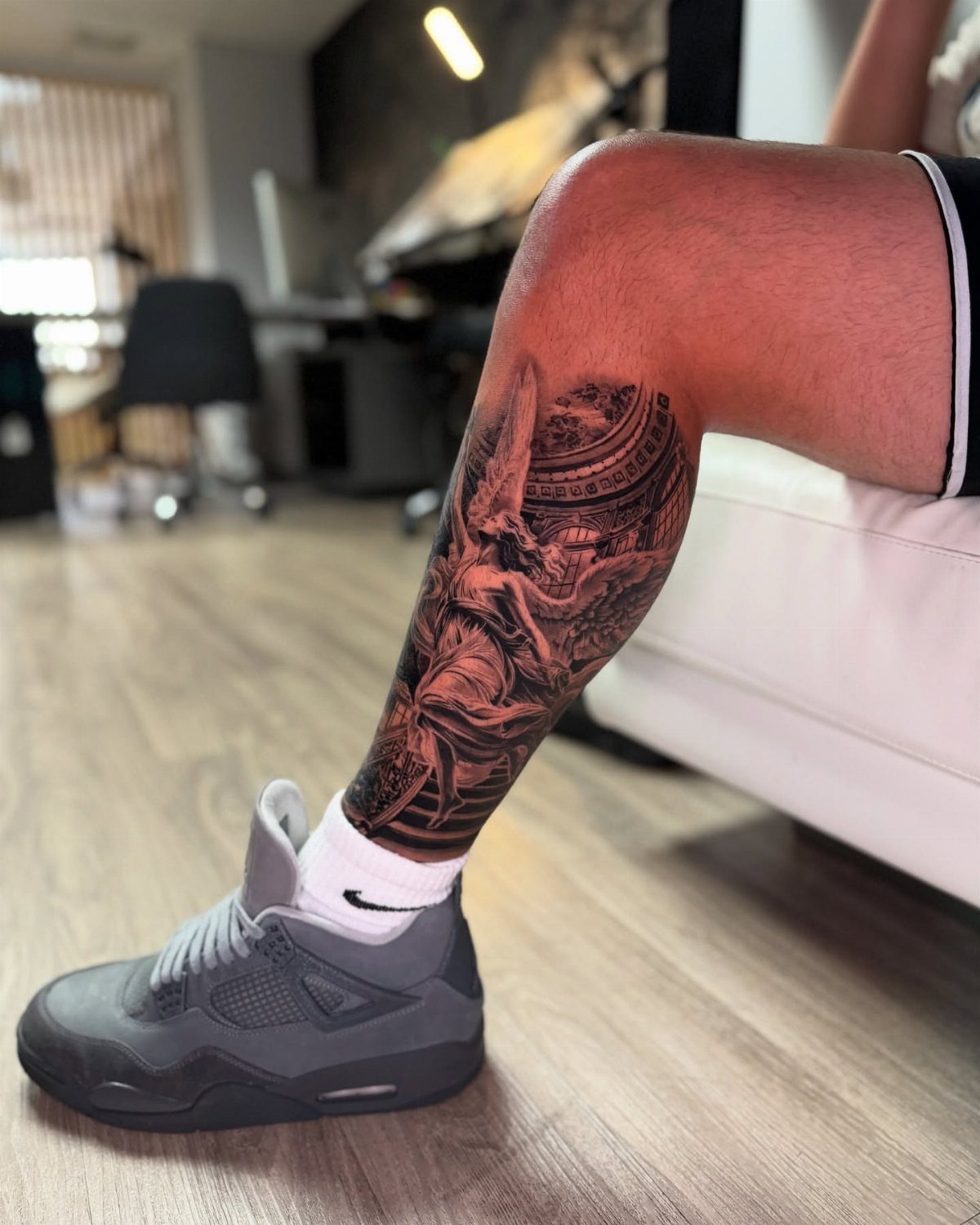
A portrait on the leg demands the flat planes and steady curves that keep a face true: the calf’s muscle, the outer thigh, maybe the shin if you can endure the bone.
Black and grey realism, as visible here, handles the leg’s movement better than color, which shifts and muddies where skin stretches most.
The artist matters more than the placement.
A portrait that reads well at 6 inches becomes unrecognizable at 3; give the work the space it needs to breathe. Mythological figures and statues, common in this style, forgive more than a loved one’s photograph if the likeness slips.
Budget for multiple sessions. Single-needle detail at this scale cannot be rushed.

Looks Real and Seamless -- 92% nylon and 8% spandex,stretchable fabric material,These arm tattoo sleeves is easy slip on and off,you can feel comfortable and soft whenever you wear it. Reasonable price with great quality.

✔[FULL SLEEVE TRIBAL TATTOO] Briyhose Tribal Full Arm Temporary Sleeve Tattoos Can Cover Your Body Parts Large. It Contains 4 Sheets 18.9 * 6.7 Inch (48 * 17cm) Long Sleeves Totem Tribal Fake Tattoo Stickers For Adults Men Women Tatto Kit. You Can Share It With Your Family And Friends.

Unisex and one size fits most.Unless you have really huge arms, these should fit comfortably because they are stretchable.
9. Geometric Leg Tattoos
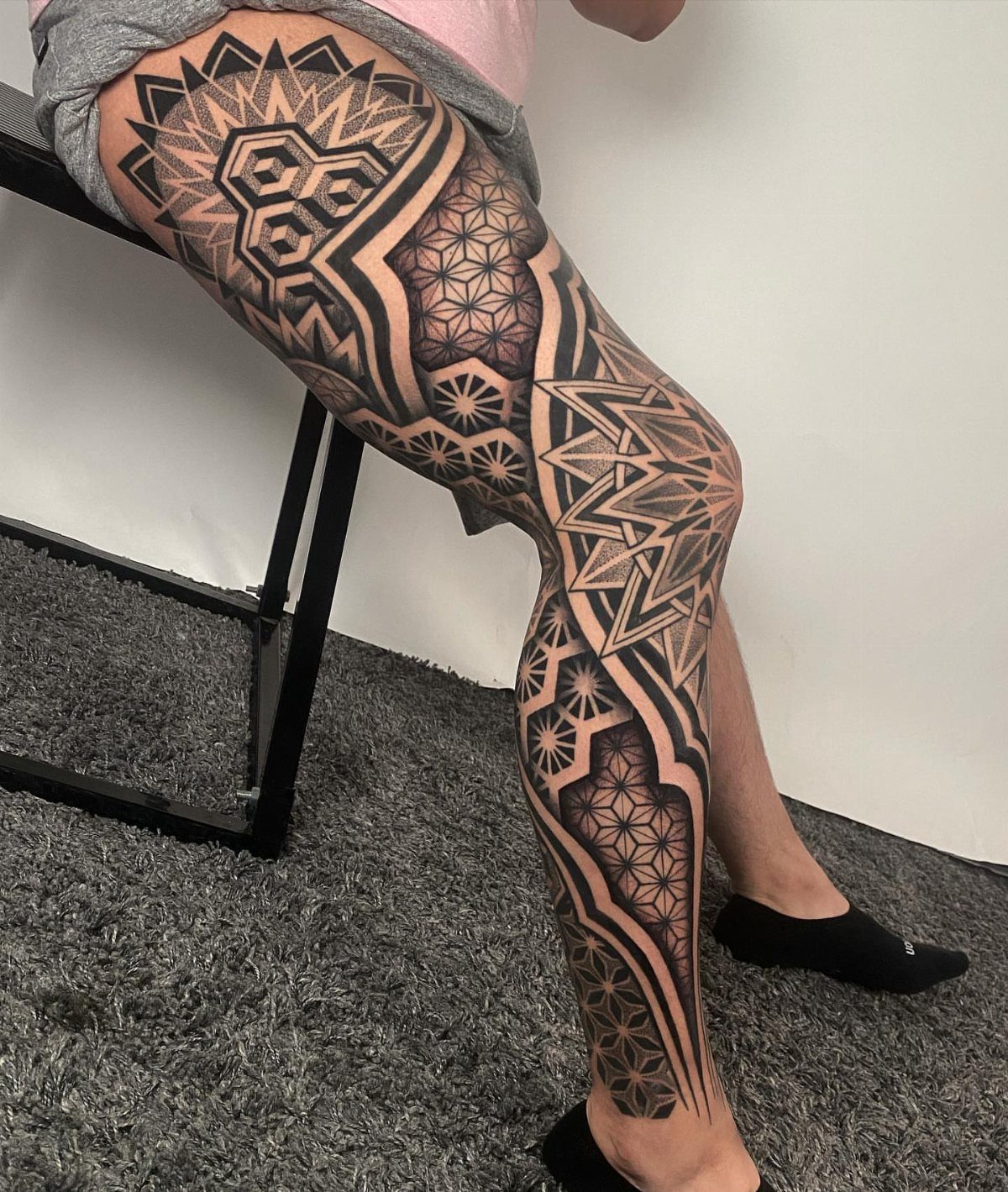
Geometric work on the leg lives or dies by the surface it sits on. The shin stays flat enough for lines that need to stay true; the calf’s curve distorts patterns unless the artist plans for it.
A full leg of interlocking shapes, black and grey from thigh to ankle, turns the limb into architecture.
These pieces pair well with mandala or ornamental styles, though a pure geometric sleeve demands a single vision from the start. Bands that circle the leg, continuous from front to back, emphasize the limb’s length and draw the eye upward.
Check the artist’s healed work. Crisp lines fresh from the needle mean little if they spread before the ink settles.

Traditional Japanese Tattoo Designs – Includes dragons, koi, tigers, masks, samurai, snakes, waves, flowers, and more.


DESIGN AND ELEMENTS ---- 14 sheets Classic Temporary Tattoo in different sizes including vintage roses, angel, eagle, swordand more. Almost unlimited creative combinations and options can meet your various needs.
10. Thigh Tattoos
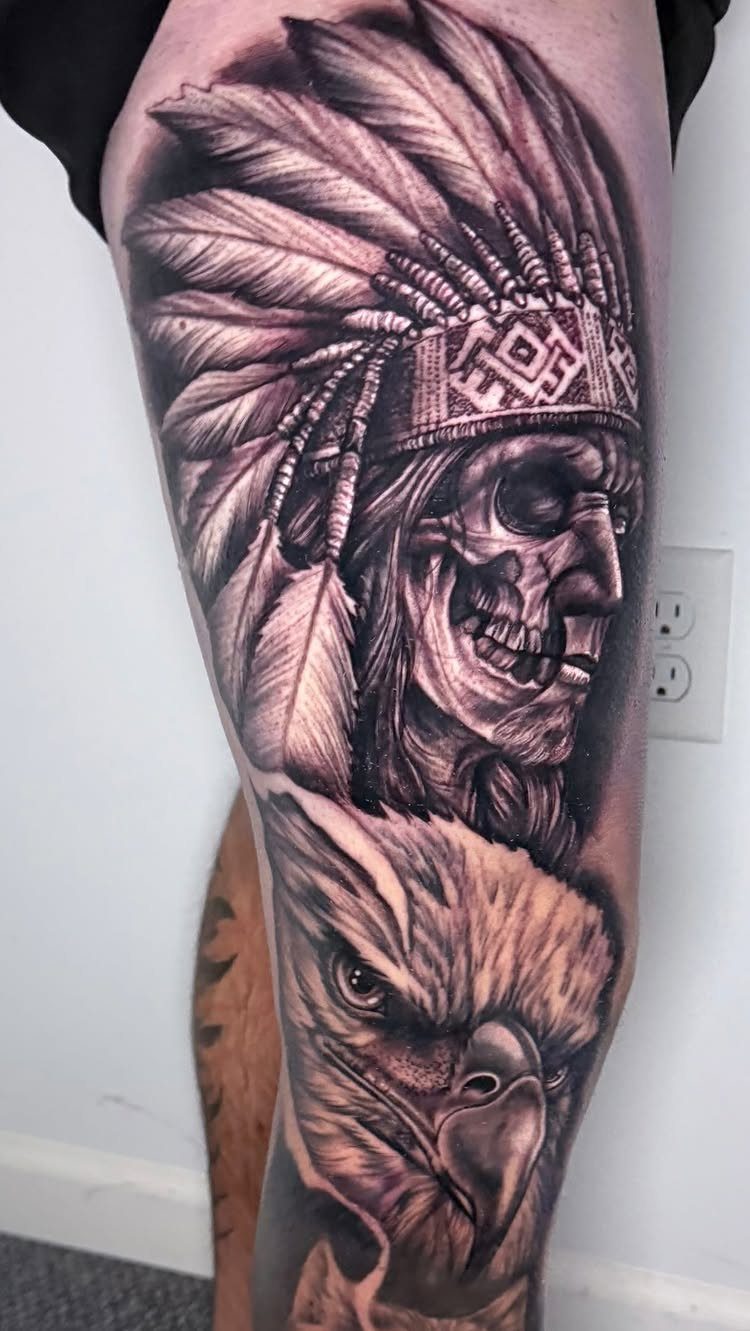
The thigh holds more space than most backs, with the added benefit of easy concealment. Front, outer, or inner: the outer thigh hurts least, the inner thigh most, and each surface reads differently when you move.
A Native American skull and eagle, as visible here, fills the front thigh with detail that would crowd a smaller spot.
The shape suits vertical compositions, portraits, animal pieces that need room for fur texture or feather layering. One piece credited to its maker notes 5 hours for kneecap and outer thigh work, with lower outer calf still settling after months.
Plan for swelling; pants that fit in morning may not by evening.

★【12 Sheets Large Butterfly Rose Flowers Temporary Tattoos For Women Adults】--COKTAK Brand Multicolor Mixed Style Vintage Butterflies Temporary Tattoos For Women Hot Fashion Variety 3D Butterfly Peony Lily Flower Florals Red Rose Lotus Watercolor Tattoo Stickers.

【48H Natural Color Development | Realistic Large Sexy Peony Floral Butterfly Tattoo】This semi-permanent tattoo features realistic peony flower butterfly patterns. It looks silver at first, darkening naturally to a rich tone in 48 hours. Avoid sensitive skin like the face; cover with clothing while sleeping to prevent transfer. Perfect for back, thigh, arms and wrists, suited for adult men and women who love subtle lifelike body art

【48H Natural Color Development | Realistic Large Sexy Floral Unique Tattoo】This semi-permanent tattoo features realistic large sexy peony floral patterns. It looks silver at first, darkening naturally to a rich tone in 48 hours. Avoid sensitive skin like the face; cover with clothing while sleeping to prevent transfer. Perfect for back, thigh, arms and wrists, suited for adult men and women who love subtle lifelike body art
11. Lion Leg Tattoo
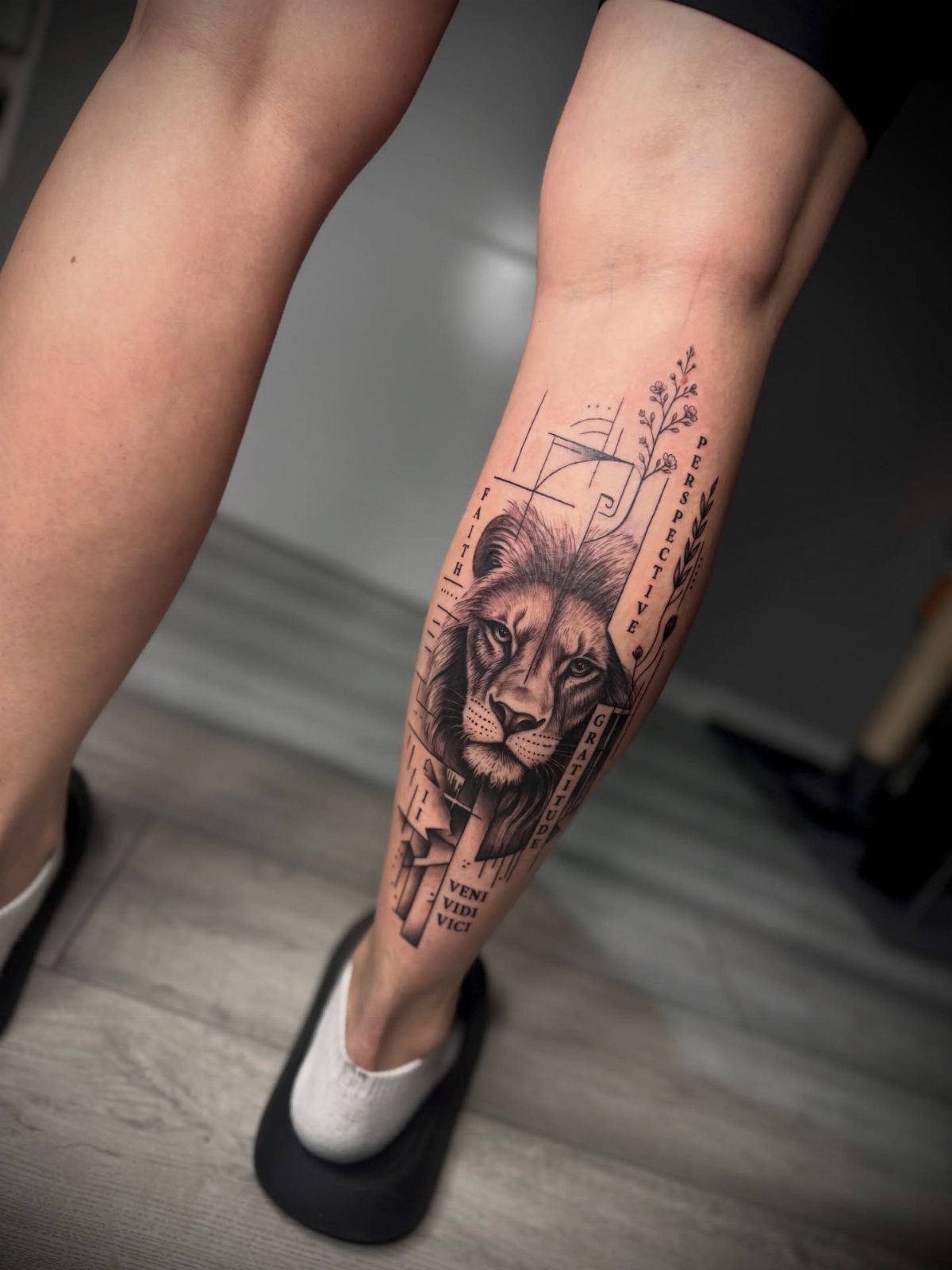
A lion on the leg carries the usual weight of the symbol: courage, family, protection.
The calf and shin together, as visible here, give enough length for a full mane and the geometric framing that sets off the portrait without cluttering it.
Text woven through the design, words like faith and perspective, personalizes a piece that might otherwise read as stock. The lower leg placement means constant visibility; choose a message you are prepared to explain.
Realism with geometric accents is the common approach now, though traditional and neo-traditional lions hold their own.
The thigh offers more space for a full body or a scene; the calf limits you to portrait or head, which is often enough.
12. Mandala Leg Tattoos

Mandala work turns the leg’s hardest surfaces into its most striking. The knee’s circle invites a centered pattern that moves with the joint; the shin takes dotwork or bold black lines with equal patience.
Full sleeves of mirrored geometry, as visible here, read as ornamental rather than narrative, impressive without requiring a story you may not have.
Dotwork ages softer than solid black, which can blur at edges over time. The knee itself, already noted as specialist territory, needs an artist who builds stretch and bend into the layout or the symmetry breaks with every step.
Most mandala leg pieces carry no specific meaning. The appeal is visual, immediate, enough for many.
13. Tribal Leg Tattoos

Polynesian tribal work turns the entire leg into a single carved surface, black ink following the limb’s length from thigh to foot.
The patterns are built from repeating geometric shapes, each one carrying specific meaning in the tradition it draws from, though many wearers choose them for the visual weight alone.
This style demands total coverage to read properly; a small tribal piece looks stranded, not bold. The foot and ankle extension, visible here, completes the flow rather than stopping short.
Black ink only, no grey wash, which keeps the contrast sharp for decades if the artist packs it solid. Find someone who understands the specific tradition they are borrowing from, or the result reads as costume rather than craft.
14. Fine Line Leg Tattoos

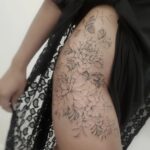
Fine line work lets you put a single blue flower and a few scattered stars on your leg with barely any ink, the lines thin as pen on paper.
Fine line work trades longevity for delicacy; the lines stay crisp for years only where skin moves least, so the outer thigh and calf beat the knee or ankle.
The style carries a reputation as feminine, though that boundary means less than it used to. Mythical figures, angels, literary references, or geometric accents alongside the thin lines all shift the tone without changing the technique.
Color in fine line, as visible here, fades faster than black. Expect touch-ups, and choose a placement where sun and friction stay minimal.
Pain Levels for Leg Tattoos
The outer thigh and calf carry the easiest sessions, with pain running about what you’d expect from a flu shot stretched across an hour. Muscle and fat dull the needle enough that most people chat through it.
The shin and knee are their own kind of appointment.
Bone sits right under thin skin there, and the vibration travels differently; the 8–10 range is not an exaggeration, and the knee ditch with its ligaments and nerve clusters can push higher.
Inner thigh ranks with the ankle at 7–9, though the reason differs: nerve density rather than bone proximity.
Athletes with dense muscle and low body fat sometimes report more pain in the thigh and calf than the charts suggest. Less padding means less buffer.
Plan longer sessions for the easier spots, shorter ones where the needle will grind. Your artist can segment a large piece across multiple appointments; asking for that is not weakness.
Cost Considerations
Small ankle pieces run $100 to $300. The gap between that and sleeve pricing is the gap between a single afternoon and a year-long project.
Hourly rates vary by artist experience and city, but the total cost follows time on the needle more than any other factor.
A cheap rate with an inexperienced hand often costs more in the long run; cover-up work or laser removal multiplies the original price.
Budget for tipping, aftercare supplies, and the touch-ups that large work sometimes needs once healed. The quoted price is rarely the final price.
Frequently Asked Questions
Does a bottom of leg tattoo hurt?
The ankle and shin rank among the most painful leg spots. Most people manage because the sessions stay short, but it is not an easy introduction to tattooing.
Is $40 a good tip for a $200 tattoo?
That amount sits right at the standard end of what most artists expect for a tip. Budgeting for tipping is part of the total cost, and most American shops expect somewhere in the middle of the usual range.
How long do leg tattoos take to heal?
Surface skin heals in about 2 to 3 weeks for most people, though individual variation runs wide. Some heal in under a week, others need a month.
Lower leg spots like the shin and ankle swell more, so elevating the leg helps early on, and the knee’s constant bending makes it the hardest area to keep still while healing.
What is the best placement for leg tattoos?
The outer thigh suits beginners best: it offers the most space, the least pain, and hides easily under clothing. The shin and knee demand more tolerance and experience, saved for those who already know how they handle the needle.