Chinese tattoo style covers everything from a single brushstroke character behind the ear to a full back dragon built across multiple sessions, and the ideas below run that same range.
What decides which idea is yours is how much skin you are willing to budget, where you want it to sit, and which symbols actually mean something to you rather than just looking cool in a photo.
The red ink lotus paired with koi or the black and grey phoenix wrapping a shoulder both carry meaning without needing a caption, but only one of them stays readable if you skip touch-ups, and that difference matters more than most people think at 22.
1. Chinese Dragon Tattoo

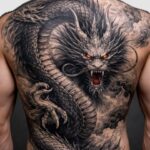
A Chinese dragon tattoo carries centuries of meaning in every curve of its serpentine body.
The style that reads clearest over time keeps the dragon’s scales, whiskers, and cloud patterns in solid black ink rather than shading that blurs after a few years.
Electric blue eyes show up in some dragon pieces for contrast; if you want color, plan for touch-ups.
Black and grey scales age better on large areas like the back or chest, where the full length of the body can unroll without crowding.
Budget for multiple sessions; a full back piece rarely finishes in one sitting.

Chinese Dragon Design: Features a detailed and intricate Chinese dragon motif, perfect for Asian-inspired, fantasy, and mythical projects.

Package Comes with: you will receive 1 piece reusable painting stencil, which is A4 size 8.3 x 11.7 inches / 21 x 29.7 cm

Product includes: Each package includes 2pcs distinct Chinese dragon PET templates in various poses, each measuring approximately 21cm/8.3inch wide by 29.7cm/11.7inch long, plus 1 brush. The diverse dragon designs offer rich creative options to meet different artistic expression needs.
2. Lotus Flower Tattoo

The lotus works in Chinese tattoo style because it carries weight without needing a whole sleeve to explain itself.
A single bloom on a wrist or behind an ear reads as purity and renewal; paired with koi or a red ribbon, it builds a larger story.
Black and grey shading keeps the petals dimensional, though I have seen red and pink gradients hold up well when the saturation is deep enough at the start.
Koi pairing is the classic move, but a lotus alone avoids the "too busy" problem on smaller placements.
Healing on a wrist is tricky; the inner wrist flexes constantly and scabs catch on sleeves. Aftercare is not a suggestion with these; plan for careful cleaning and no swimming until the skin seals.

🐉 23 SHEETS 3D DRAGON TEMPORARY TATTOOS – 23 different black dragon designs featuring tribal, totem and mythology-inspired artwork. Includes 12 × 21 cm half-arm sleeve tattoos and 6 × 9.6 cm palm-size tattoos for different styling options.


Value Pack Contents: You will receive 28 temporary temporary tattoo stickers in a dark fantasy style, including large stickers up to 7.8 x 3.9 inches and some smaller matching designs. The collection includes over 20 unique Gothic designs
3. Cherry Blossom Tattoo
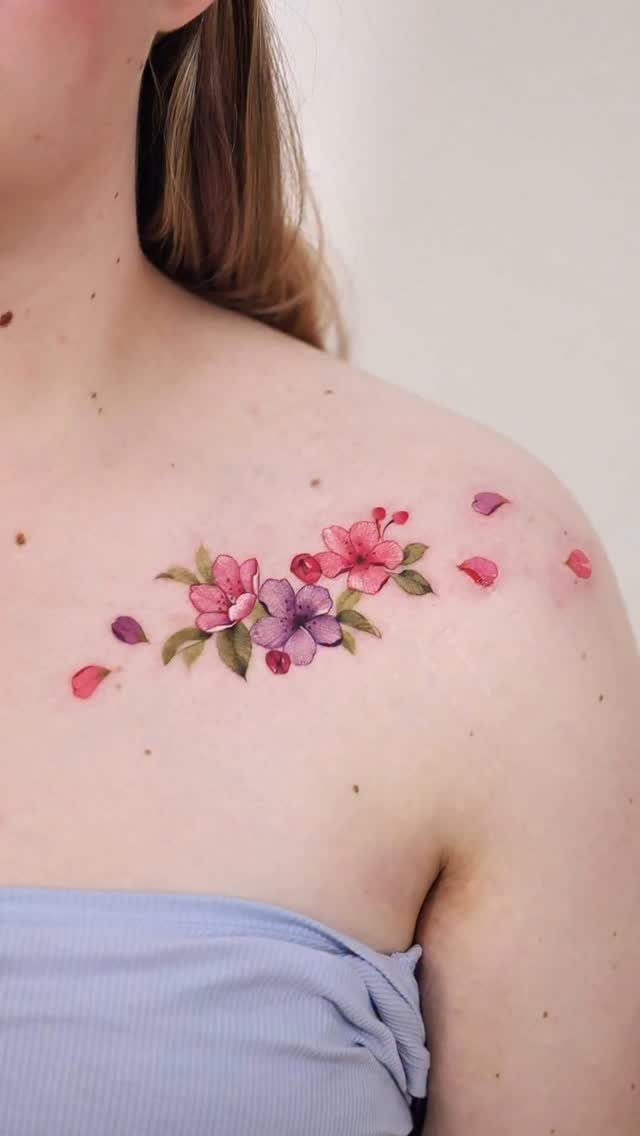
Cherry blossoms in Chinese tattoo art mark time passing, which sounds philosophical until you realize the same meaning makes them forgiving for a first piece.
A small branch of pink and purple petals above the collarbone or along the shoulder can stay delicate if the line work stays fine and the color sits in the petals, not bleeding into the background.
The vertical arrangement with calligraphy alongside, like the red ink version I have seen, needs a longer canvas: forearm, side, or down the spine.
Fine lines blur faster on areas that move or sun; a touch-up plan matters more here than with heavier black work.

❀FLOWER TEMPORARY TATTOO SET FOR WOMEN ADULTS KIDS❀Contains 50 sheets flower and butterfly temporary tattoo transfer stickers, 6cm*6cm,a variety of flash festive tattoos to express your personality with the appearance of real tattoos. Include flowers, rose, butterfly, leaf, Enough let you shimmer anywhere, like arms, wrists, fingers, ankle, neck, shoulder, feet, legs and even your hair!

【UNIQUE AMAZING DESIGNS】Each Size is about 10.5 x 6 cm / 4.1 x 2.36 inch. Contains 6 sheets temporary tattoo paper stickers which are printed with non-toxic ink.

[Semi-Permanent, Realistic Tattoos] INKARTLINK semi-permanent tattoos are lifelike, durable, waterproof, and sweat-resistant, lasting 7–14 days and gradually fading as the skin’s outer layer sheds. They’re perfect for everyday wear, events, or themed occasions. From the beach to the office, they stay vibrant, allowing you to effortlessly showcase your body art in any setting.
4. Chinese Calligraphy Tattoo

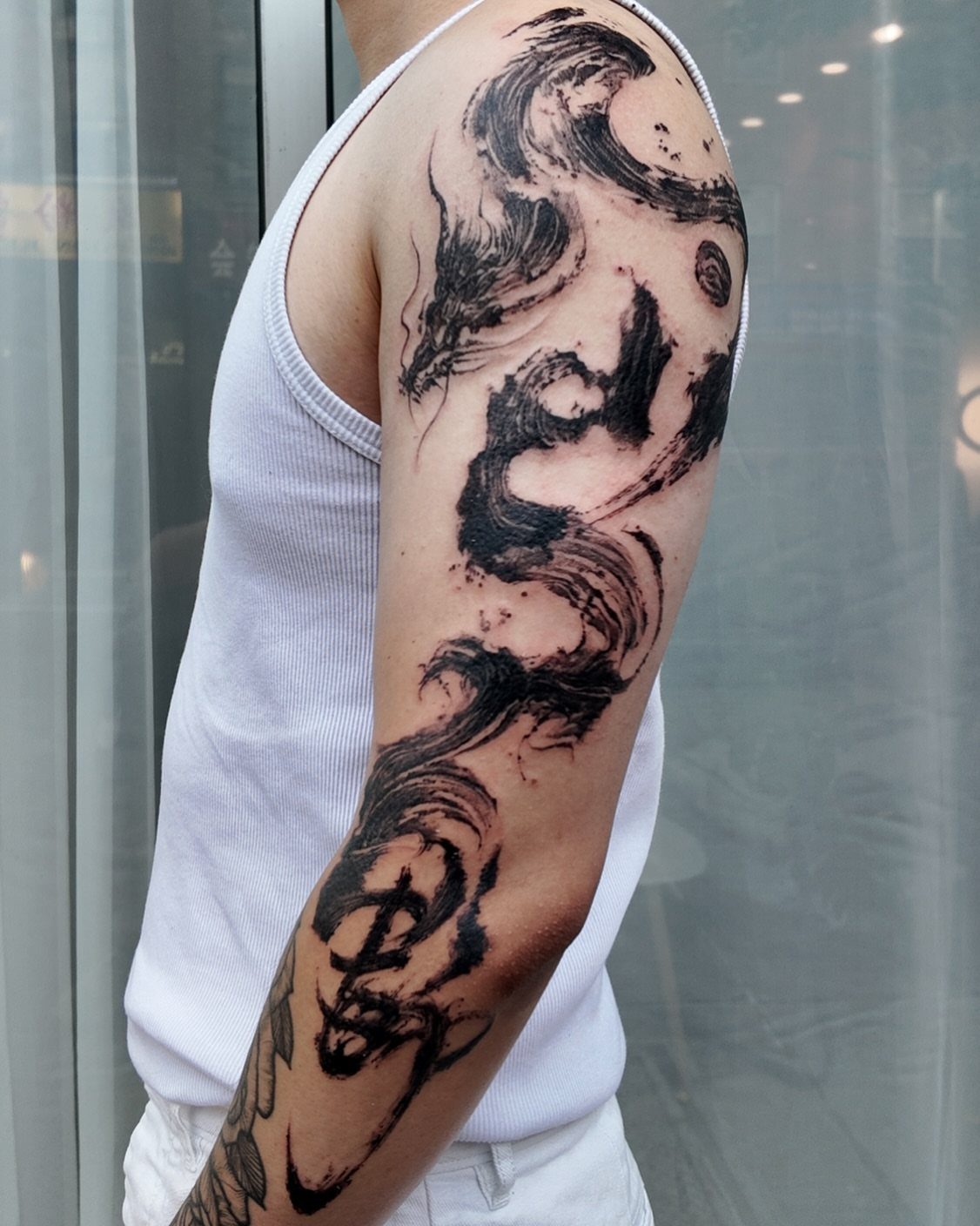
A single large brushstroke character, filled with smaller text inside its boundaries, turns a word into architecture.
The vertical arrangement suits the body naturally: forearm, spine, ribs, neck. Black ink carries the main stroke; red and gold accents, if you want them, sit inside or alongside.
The risk is translation.
A character that looks right might mean something adjacent to the intention, or nothing at all in modern usage. Hire a reader, not an app; the verification saves years of explaining.
Neck or forearm placement means visibility. Consider your work dress code before committing above the collar.

[Natural Herbal Formula & Hypoallergenic]: Herbal Juice Temporary Tattoo products are made of plant materials, completely harmless, natural and free of any harmful chemicals. Herbal Temporary Tattoo is not a simple tattoo sticker. It is different from the ordinary stickers we were familiar with as children. The product is waterproof, friction-resistant and non-reflective. It is almost the same as a real tattoo and lasts for 1-2 weeks.

OVER 60 TEMPORARY TATTOOS: One package includes 20pcs temporary tattoo stickers, more than 60 exquisite Chinese character tattoos designs. Safe, non-toxic, tasteless materials, realistic, waterproof, durable, carefully selected styles each can be called a classic, you can try a variety of different styles

🔥【Mythical 12-Sheet Collection】Own the legend with 12 sheets of exquisitely designed phoenix silhouette tattoos. Each piece captures the majestic form of the sacred firebird in elegant, intricate outlines—perfect for creating a powerful and cohesive statement.
5. Tiger Tattoo
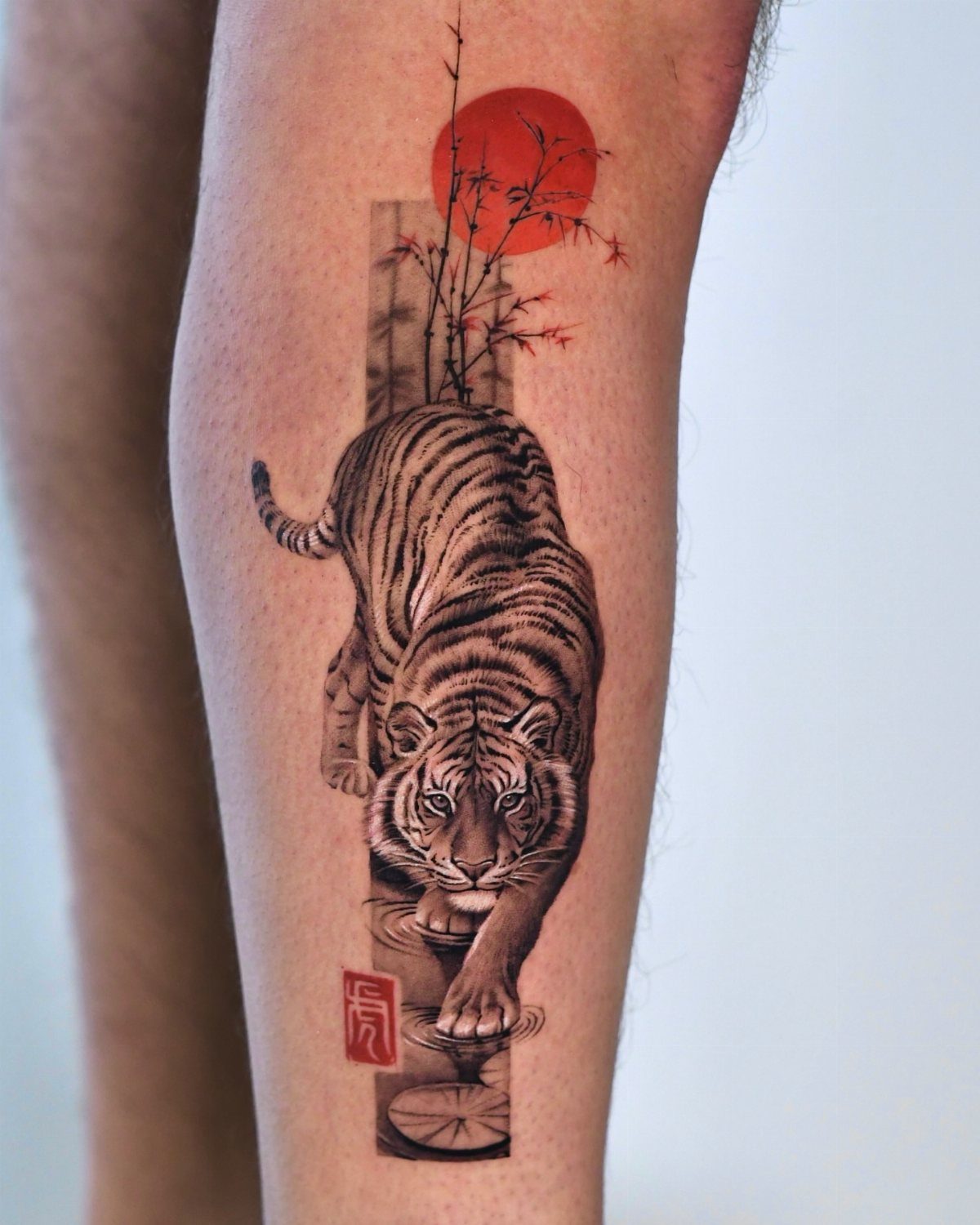
The Chinese-style tiger carries strength without the aggression of Western depictions; swirling clouds and cherry blossoms soften the stance without weakening it. Black ink with selective red keeps the animal readable at distance and interesting up close.
The bamboo frame and red sun behind the walking tiger are compositional choices that help the tattoo hold its shape as the leg moves.
A tiger surrounded by clouds rather than scenery suits a chest or back better, where the swirling patterns can wrap muscle naturally.
Dynamic poses age better than static ones; a walking or crouching tiger keeps looking alive even as lines soften slightly over decades.

Decoration Sets: :You will receive 4 painting stencil templates with different cherry blossom patterns, the patterns are vivid and beautiful. Dimensions are 11.7x8.3 inch/29.7x21cm.

Design Variety: This cherry blossom stencil set includes 12 reusable PET templates in 2 sizes (8.3x11.7inch/21x29.7cm and 5.5x7.9 inch/14x20cm) and 6 unique designs. You will receive versions of beautifully blooming cherry blossom branches and some designs feature delicate accents, such as scattered petals or butterflies. The package includes a 6.3 inch/16cm stencil brush for painting

Package Comes with: you will receive 1 piece reusable painting stencil, which is A4 size 8.3 x 11.7 inches / 21 x 29.7 cm
6. Koi Fish Tattoo

Koi in Chinese tattoo art swim upstream. Orange and red fish paired with stylized waves and floral blossoms reads as perseverance without needing a caption.
Black ink versions exist, and entwining them with lotus flowers saves money and still carries the meaning. Color demands more sessions and more upkeep; the red peony beside the koi will need refreshment depending on sun exposure.
Forearm placement works because the fish can follow the arm’s length, head toward the hand, tail toward the elbow. Wind bars and wave patterns fill gaps between main elements without cluttering.

🐟Chinese Style: the art template stencil set features various Chinese Style pattern design Fu Zodiac Great Wall Panda Fish Taiji etc , easy to bring you chinese element atmosphere, ideal for drawing tracing, house embellishment, making a pretty addition to your home.

Realistic Finish: Different from you know ordinary temporary tattoo stickers or fake tattoos. It is so real and comparable to the real tattoo. It is a semi-permanent technology, Water-Resistant, friction-resistant, and can last for a long time, staying on your skin for 1-2 weeks.

🐟Chinese Style: the art template stencil set features various Chinese Style pattern design Fu Zodiac Great Wall Panda Fish Taiji etc , easy to bring you chinese element atmosphere, ideal for drawing tracing, house embellishment, making a pretty addition to your home.
7. Phoenix Tattoo
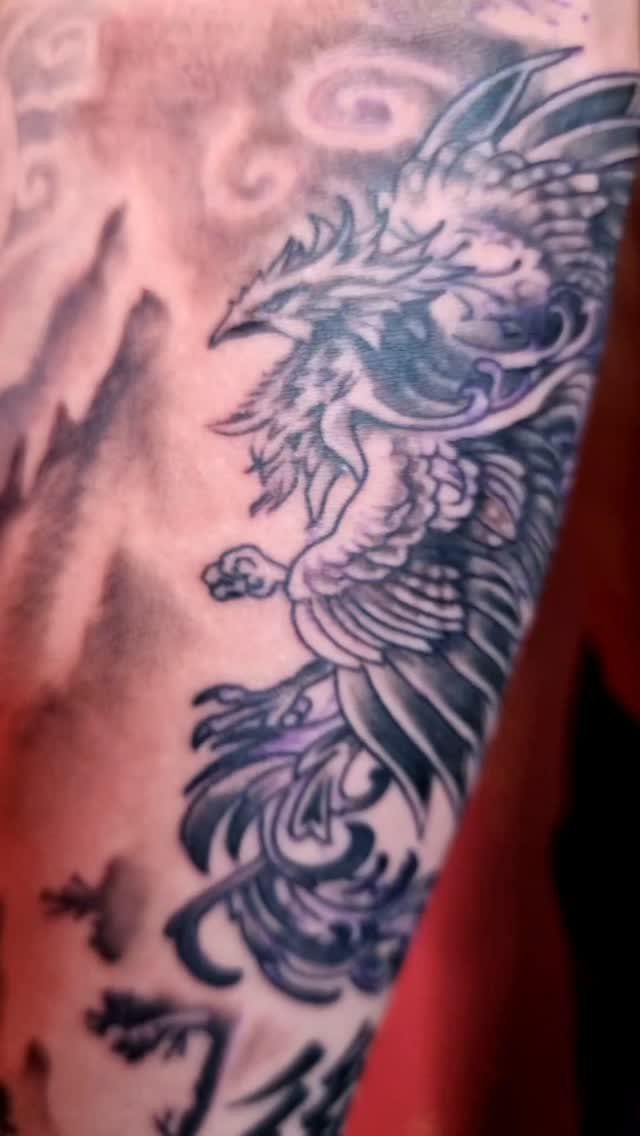
Grey wash shading on black ink gives the phoenix its lift without the maintenance cost of full color. The bird’s tail feathers wrap well around shoulders and thighs, where the swirling cloud patterns fill gaps between plumage naturally.
Swirling clouds at the base soften the composition and keep the eye moving; the bird reads as rising rather than static, which matters more than loading in extra symbols.
Clouds behind the wings keep the background active without competing for attention.
A phoenix in flight ages better than one posed on a perch; the spread wings hold their shape even as lines soften. The upper arm and outer thigh take this size without distortion.


✨【Premium 28-Piece Kit】Get massive value with 28 unique dragon tattoo sheets! Features large, intricate designs perfect for full sleeves, back pieces, or chest art. No repeating patterns—ideal for creating a complete, eye-catching look.

🐳[8 Sheets Black Dragon Tattoos in One Package!] - Original Brand of TASROI 3D imperial loong Tribal Dragon Temporary Tattoos For Women Men and Adults. Tattoos Temporary Contains 8 Large Sheets Water Transfer Animals Dragon Floral Flower Rose Moon Serpent Totem Armband Etc.
8. Pagoda Tattoo

Multi-tiered pagoda structures suit forearms and calves because the vertical tiers follow the bone. Black ink illustration keeps the architectural detail readable; each roof curve and railing post needs space to register, so scaling down too far loses the purpose.
Bamboo and mountain framing are common additions that extend the scene without changing the meaning; crossed swords and torii gates from some reference designs shift the cultural source toward Japan, so check with your artist if you want the piece to read Chinese specifically.
Vertical calligraphy running alongside the structure uses the same arm length efficiently. The moon or sun behind the highest tier gives the eye a resting point; without it, the dense ink can look heavy.


【Spiritual Lotus & Moon Designs】This semi-permanent tattoo set features minimalist fine-line designs inspired by lotus flowers, crescent moons, flowing vines, and subtle star accents. Symbolizing renewal, inner balance, and feminine energy, these delicate elements blend Eastern spirituality with modern aesthetics. Perfect for minimalist lovers, yoga and meditation enthusiasts, and those drawn to spiritual, calming, and quiet strength with effortless style.

Bold tattoo-style illustration of a koi fish surging through blooming lotus flowers, rich with symbolism — representing perseverance, transformation, good fortune, and spiritual purity drawn from Japanese and Asian artistic tradition.
Meaning of Symbols
A single character can carry the weight of a whole phrase if you choose the right one.
A single character can drift the same way a full phrase does: the form looks right, but the meaning behind it may have narrowed, shifted, or fallen out of daily use since the reference was printed.
Some designs pair each character with its English translation nearby. That helps the wearer explain the piece, but it also invites correction from anyone who reads Chinese.
A native reader checking your draft costs less than a cover-up. If you want the tattoo to read as personal philosophy rather than dictionary sampling, choose one concept and let the artist build visual weight around it.

[Semi-Permanent, Realistic Tattoos] INKARTLINK semi-permanent tattoos are lifelike, durable, waterproof, and sweat-resistant, lasting 7–14 days and gradually fading as the skin’s outer layer sheds. They’re perfect for everyday wear, events, or themed occasions. From the beach to the office, they stay vibrant, allowing you to effortlessly showcase your body art in any setting.
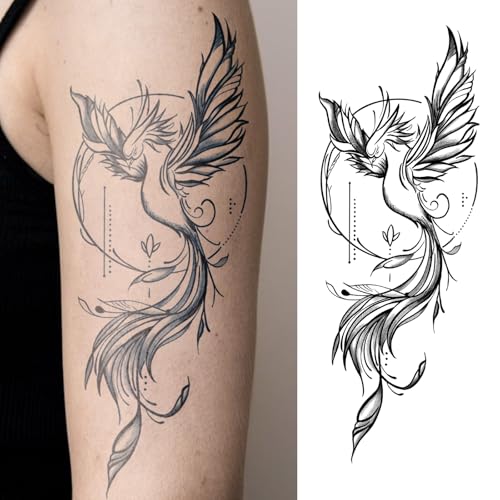
MYTHICAL PHOENIX ART: Features a breathtaking rising phoenix soaring gracefully amid minimalist circular lines and delicate linear accents. This powerful legendary bird motif is crafted using a digital hand-drawn fine line tattoo ensures crisp lines and flawless gradient shading to perfectly capture its sweeping wings, detailed layered feathers, and long, flowing tail plumage with artistic precision.

A fiery Chinese phoenix and a jade green dragon face off over a flaming orb in a yin yang circle, drawn in traditional tattoo flash style with bold outlines, stippled shading and a vintage distressed retro finish.
Placement Considerations
The vertical formats common in Chinese tattoo style follow the body’s long bones naturally. Forearms, calves, the line down the spine or along the ribs: these areas give a tall composition room to breathe.
A design built for vertical display will crowd on a shoulder cap or chest plate, where the skin spreads wide instead of long.
Areas that flex constantly need extra planning.
The inner wrist moves all day; the ribs expand with every breath. A piece that depends on fine detail or straight architectural lines will distort there over time.
Place your mock-up and move: bend the arm, turn the torso, watch how the lines travel. What sits still on paper shifts on skin.

Cherry Blossom Tree Pattern: A lush tree with a bent trunk and a cherry blossom tree pattern with blooming cherry blossoms on the branches. Novel pattern, unique and ingenious design. Perfect for Japanese home decoration, Japanese garden decoration, Japanese restaurant decoration, creating a strong Japanese atmosphere.

Package Includes: 4 pieces of cherry blossoms theme stencil, the size is approx. 11.8×11.8 inches/ 30 x 30 cm, which are proper presents for DIY lovers, enjoy happy painting time with friends and family members.

Cherry Blossom Flower Pattern:There is 1 A4 size cherry blossom branch, leaf and butterfly pattern stencil, and 2 smaller cherry blossom flower stencils, different sizes can meet your different needs of use for your painting projects.
Color Choices
Black ink does the structural work in most Chinese-style pieces.
It carries the dragon’s scales, the pagoda’s roof curves, the phoenix’s wing bones. Color sits inside that framework: red for lotus petals or peony flowers, pink gradients for cherry blossoms, gold accents inside calligraphy strokes.
Red ink carries its own meaning in Chinese tradition, so adding it changes more than the palette. A red lotus reads differently than a black one; a red sun behind a tiger shifts the symbolism toward luck and celebration.
The trade is maintenance. Red pigments fade faster than black under sun exposure, and gradients need deeper saturation at the start to hold their shift.
Plan for touch-ups if color carries the meaning you want; build the piece in black if you want the lowest lifetime cost.
Frequently Asked Questions
What is a Chinese style tattoo?
A Chinese style tattoo uses traditional symbols and artistic elements from Chinese culture: dragons with serpentine bodies and cloud patterns, lotus flowers, cherry blossoms, tigers softened by swirling clouds, pagoda architecture, and brushstroke calligraphy.
The palette stays tight: black ink builds the bones, and a touch of red, gold, or pink fills the open spaces without crowding them.
The style favors vertical compositions that follow the body’s long bones, and the symbols carry specific meanings that have accumulated over centuries.
What are the key differences between Chinese and Japanese tattoos?
Chinese-style tattoos keep the dragon’s body serpentine with whiskers and cloud patterns, while Japanese depictions differ in proportion and surrounding elements.
Pagodas mark the design as Chinese; crossed swords or torii gates swing it toward Japan, so tell your artist early if you want the piece to stay in one tradition.
The Chinese-style tiger also carries less aggression than Western versions, softened by clouds and cherry blossoms rather than presented as raw predator.