A back piece can run from a single afternoon session to a year of appointments, and the right style depends on whether you want the spine hidden or celebrated as the design’s center line.
The 9 ideas below move from a spider crawling across shoulder blades to two dragons facing each other down the spine, with stops at tribal wings, botanical stems, and lettering that fills the upper back.
Ask your artist how they handle vertebrae zones before any ink touches bone.
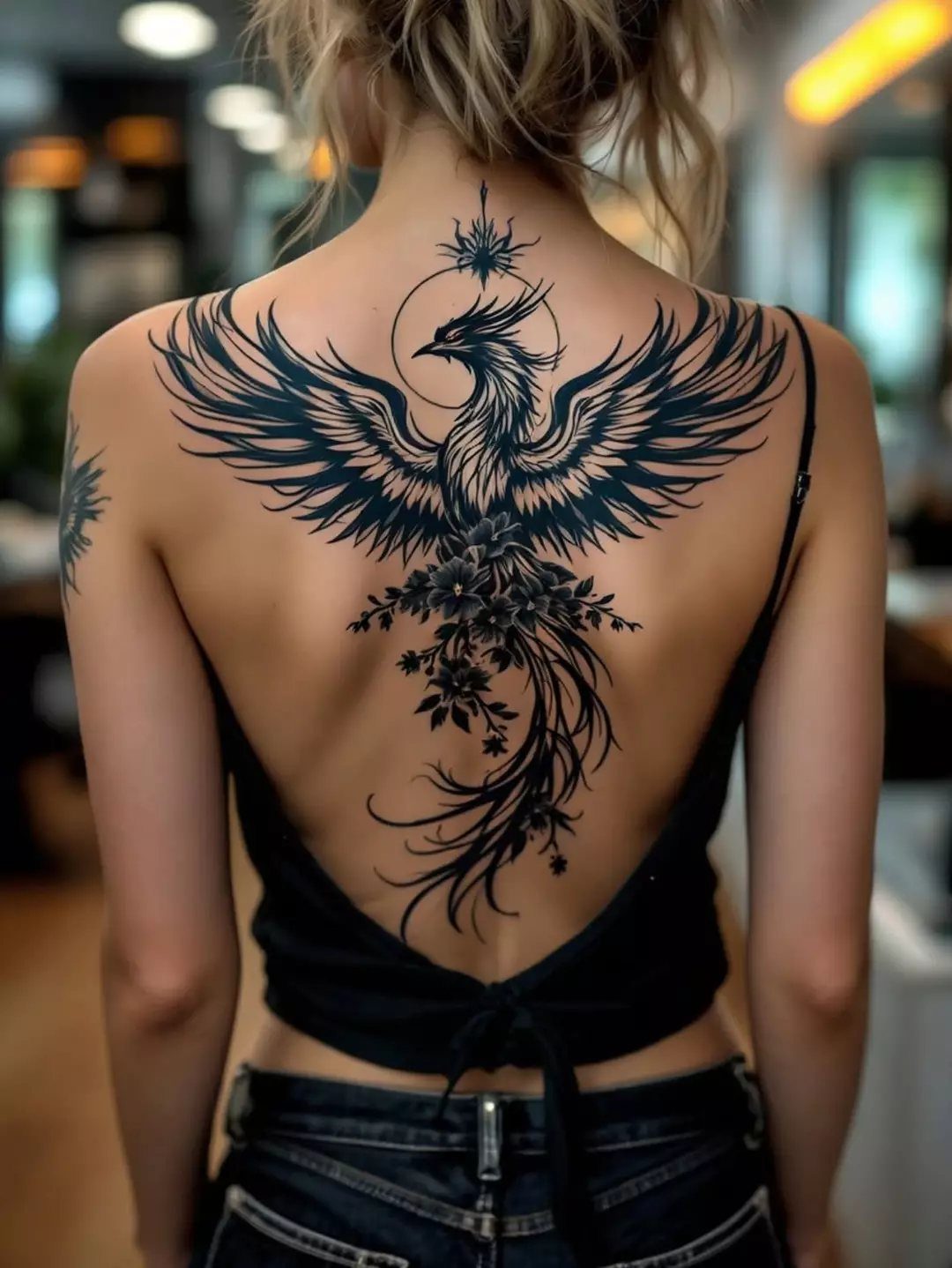
1. Black Ink Tribal Wings

Tribal wings work best when the central column mirrors actual vertebrae rather than turning into a generic stripe. The ornamental flourishes below the blades should stay symmetrical so the design holds its shape even if muscle tone changes.
A spine-like pattern needs a straight back to read right; slouching twists the column. Plan for 2 to 3 sessions minimum, black ink only heals fast but the repeated filling over bone hurts more than fleshy spots.
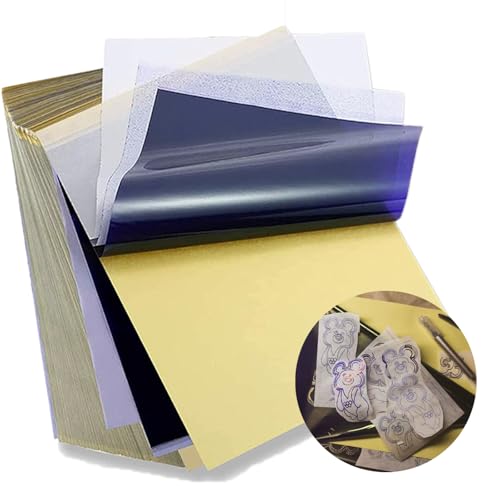
Standard size: Tattoo Transfer Paper is standard A4 paper size, each measures 8.27 in X 11.69 in. There are 4 levels in total. The thickness of the paper is very light and smooth to the touch.

Spirit Tattoo Classic Thermal Transfer Paper, 8.5” X11” (100 Sheets): Established since 1946, the original and trusted choice of tattoo artists globally, offering reliability and consistency in tattoo stencil creation.

Warm Tips: The tattoo transfer paper need to work with transfer medias.You will need to purchase the stencil ointment separately. Apply the design made on the master paper. Please pay attention to press the back side of the pattern to the skin for at least 3 seconds
2. Large Black Ink Spider

A spider centered on the spine draws the eye to posture, which is the point and the risk.
Long geometric legs with fine line details need steady hands and a flat surface; any curve in the upper back throws the angles off.
The shaded abdomen gives it weight, but that shading sits over bone where ink can blow out. Ask your artist how they handle vertebrae zones, and budget for touch-ups if the legs lose their crisp edges.

Spirit tribal Yin Yang circles design Tattoo!

6 Sheet Tribal Tattoos temporary, Each sheet measures 9cm* 19cm/3.54*7.48 inches (L*W).

Full Arm Tribal Totem Design Complete Arm Coverage From Shoulder To Wrist With Authentic Tribal Totem Patterns, 6 Sheets Included For Multiple Applications Or Sharing With Friends
3. Botanical Spine Tattoo
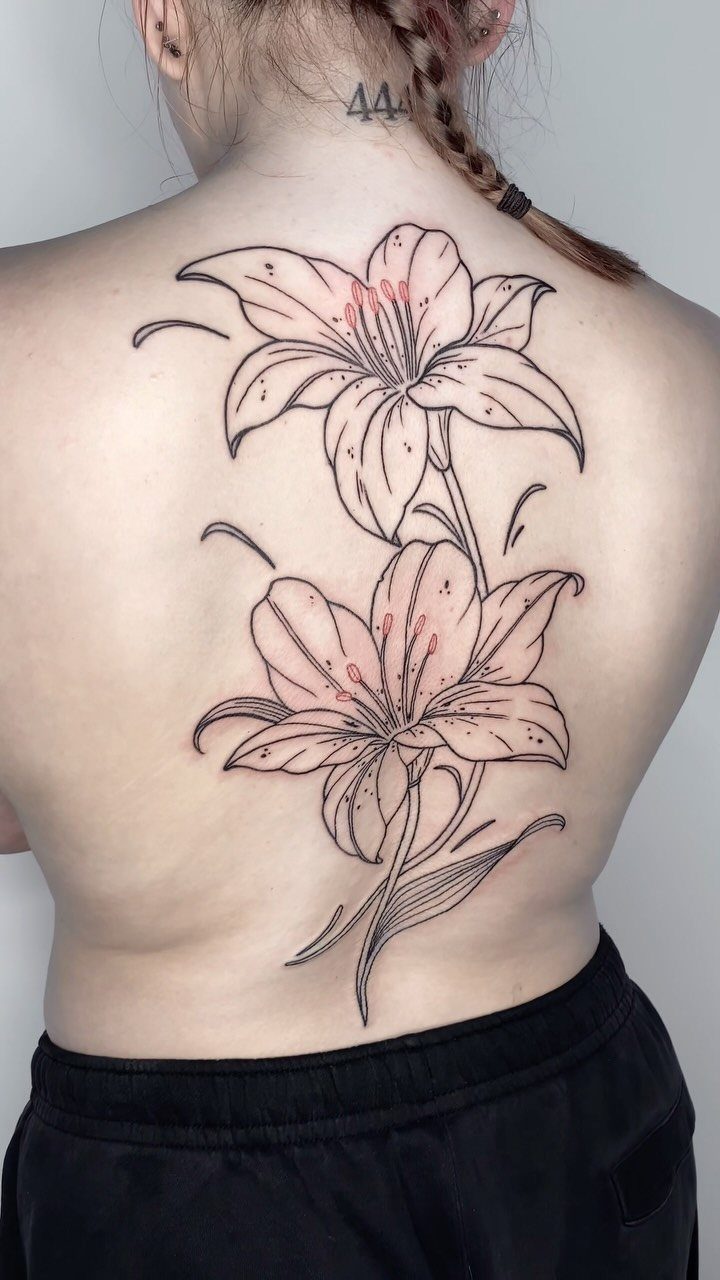
2 lilies running the spine turn the body’s midline into a stem, which flatters standing posture and exposes slouching. Pink shading adds depth but needs more sessions than straight black line work.
Botanical spine pieces read as delicate until you see the scale; these run long and the sitting time adds up.
Bring reference photos of real lilies, not other tattoos, so the artist builds from plant structure rather than copy of a copy.

ELEGANT LILY VINE DESIGN: Features a beautifully detailed black-and-white lily intertwined with graceful botanical vine elements. The artwork is crafted using a digital hand-drawn fine line tattoo technique with intricate dotwork shading, delivering crisp outlines, delicate petal textures, and timeless minimalist aesthetic charm.

Innovative Skin-Sync Technology: We don't just sit on the skin; we interact with it. By reacting organically with naturally occurring proteins in your skin's outermost layer (stratum corneum), our plant-based formula magically transforms from a transparent guide into a rich, ultra-realistic navy-black. It looks exactly like a healed, permanent tattoo—without the needles or depth.

★【16 Sheets Realistic Floral Proverb Words Temporary Tattoos For Women】--COKTAK Brand Vintage Black Mixed Style Proverb Words Tattoos. Package Includes 16 Sheets Realistic Waterproof Planet Lily Lotus Sunflower Rose Butterfly Floral Chains Tattoos Proverb Words Quotes Letters Tattoos Flower Chains Temporary Tattoo Stickers.
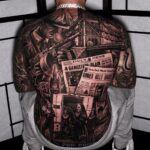
4. Chicano Style Back Tattoo

Full Chicano back work packs religion, street culture, and portraiture into one canvas, which means deciding what story matters most before the design starts.
Clown-faced women, lowriders, and LA logos each carry weight in Chicano work; adding more symbols just because they fit wastes space and blurs the message.
This style demands grayscale mastery, not color, so check that your artist’s healed blacks stay solid and their grays don’t muddy.
A full back in this detail takes months of sessions, often stretched across a year, so budget time as carefully as money.


[LARGE COLLECTION] Total 46sheets included. Extra large size temporary tattoos can cover your body parts larger, Yazhiji's full-arm tattoo is 22.83 inches (58CM) long, which covers the whole arm very well

5. Fine Line Celestial Tattoo
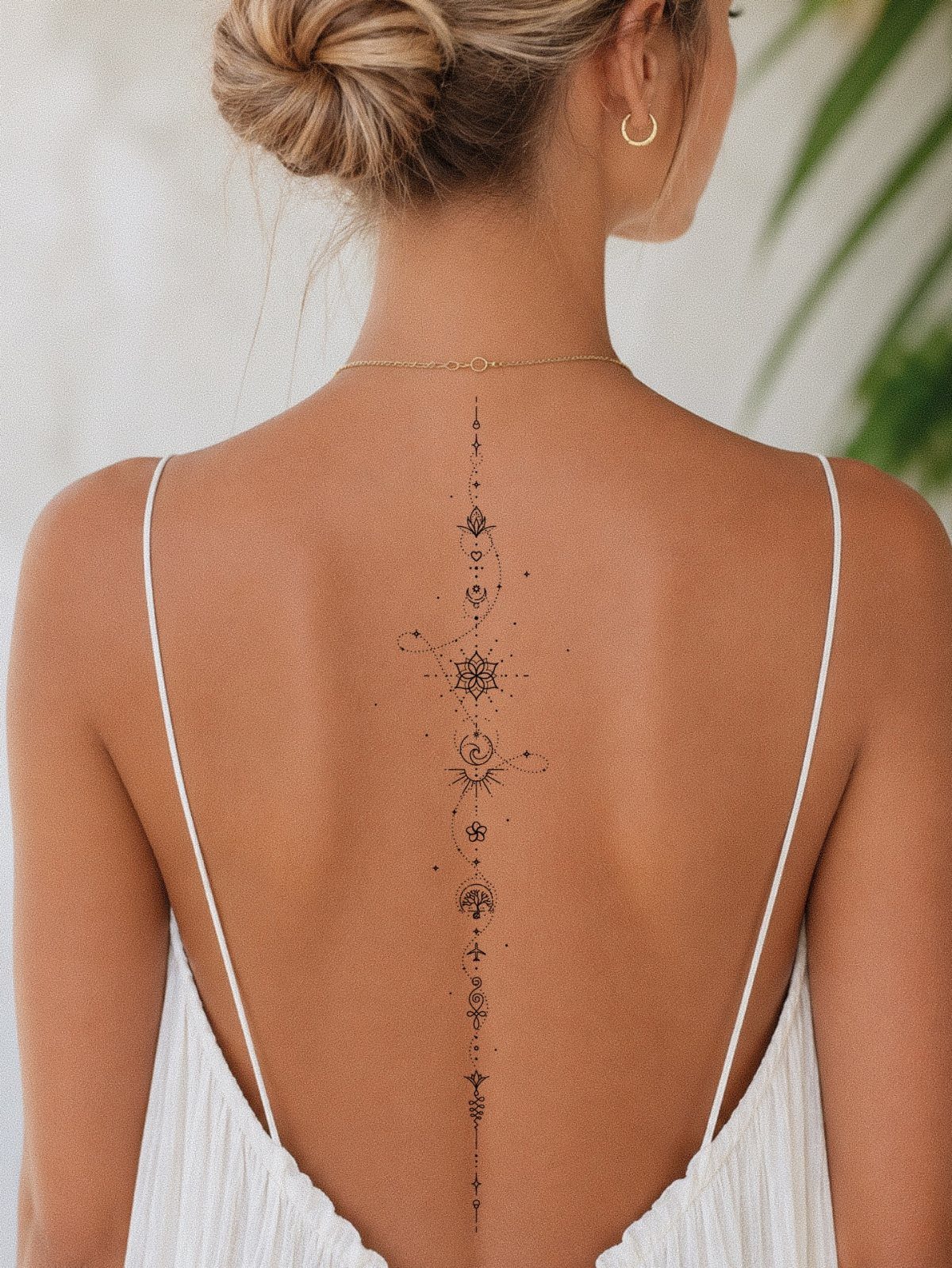
Celestial fine line down the spine lives or dies on needle control; the sun, any figures, and the swirling patterns all need consistent depth or the thin lines drop out. Intricate back pieces this delicate rarely age clean without touch-ups.
The vertical format suits narrow backs better than wide ones, where the design spreads thin. Ask to see healed photos from past clients, not fresh work, because fine line blurs faster on the trunk than on arms or legs.

MADE IN THE USA SINCE 1990: For over 30 years Dynamic Color has produced professional tattoo ink in the United States, an established American brand artists built their work on long before most imported labels existed.

MADE IN THE USA SINCE 1990: For over 30 years Dynamic Color has produced professional tattoo ink in the United States, an established American brand artists built their work on long before most imported labels existed.

MADE IN THE USA SINCE 1990: For over 30 years Dynamic Color has produced professional tattoo ink in the United States, an established American brand artists built their work on long before most imported labels existed.
6. Abstract Sketchy Back Tattoo

Abstract sketchy work lets the artist interpret the figure rather than copy anatomy, which means choosing someone whose loose lines you already like.
This style hides unevenness better than realism but still needs the scribbles to resolve into a shape from distance.
Check the artist’s portfolio for how their chaotic marks read from across the room versus up close; if the figure collapses into noise, keep looking.

Precision Transfer Performance - It’s professional-grade tattoo stencil paper delivers vibrant, high-definition transfers even for intricate designs. The carbon layer ensures sharp outlines without smudging or fading, ensuring crisp lines that stay true to your original artwork.

Precision Transfers & Long Lasting: Tattoo stencil paper delivers vibrant, high-definition transfers even for intricate designs. Creates crisp, dark lines that transfer cleanly to skin (clearly on different skin tones) which are easy to follow during tattooing. The carbon layer made from high-quality dyes ensures sharp outlines without smudging or fading and maintains crisp lines visibility throughout long tattoo sessions, so you can focus on creating art instead of re-drawing lines

Phomemo Tattoo Transfer Paper Kit: Paper size: 8.27" 11.69" (210 297 mm). Quantity: 1 box (100 sheets). Color: Blue. This Tattoo Stencil Paper features a dotted line design, allowing for easy tearing without tools. Tear off the master design and yellow backing sheet effortlessly for a smooth tattooing experience. This product is suitable for tattoo enthusiasts, artists, and professional tattoo artists, offering reliability and consistency in tattoo stencil creation
7. Large Script Back Tattoo

Large script across the upper back turns the shoulders into a frame, which means the word has to carry the whole piece; "Grateful" works because it is short enough to read at a glance and long enough to fill the space without repeating.
Flowing cursive looks effortless but needs a lettering specialist, not a generalist who happens to own a script font.
The strokes thicken and thin on purpose, and any wobble in the pull shows from across the room. Plan for one long session, possibly two if the artist builds the word in stages.

【 Temporary Tattoo Sleeves 】 : Include 8 sheets full sleeve temporary tattoos (size: 19 x 7 inches) .
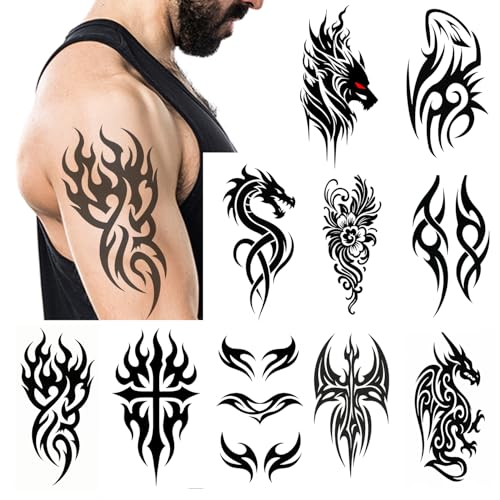
𝗣𝗲𝗿𝗳𝗲𝗰𝘁 𝗦𝗶𝘇𝗲 𝗳𝗼𝗿 𝗠𝘂𝗹𝘁𝗶𝗽𝗹𝗲 𝗣𝗹𝗮𝗰𝗲𝗺𝗲𝗻𝘁𝘀: Each tattoo sheet measures 7.4 x 4.7 inches, making them perfect for various body parts like your chest, arms, shoulders, or legs. Designed to fit comfortably and make a bold statement.

6 Sheet Tribal Tattoos temporary, Each sheet measures 6cm*10.5cm/2.36*4.13 inch (L*W).
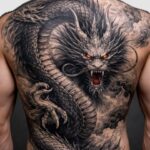
8. Symmetrical Dragon Back Tattoo

2 dragons facing along the spine create a natural mirror that flatters back width, though the symmetry demands a straight posture to hold.
Serpentine dragons in black ink carry Japanese tradition without needing the full color palette of Irezumi; you keep the drama and lose the years of sessions.
The crescent moons and geometry fill the gaps between wings and tails, so the negative space stays intentional rather than empty.
Ask your artist how they handle the spine gap; some leave a narrow strip down the center, others let the dragons overlap the bone. Either choice changes how the tattoo ages when skin shifts.

Lily Spine Vertical Design: This semi-permanent tattoos set features elongated lily flowers in a clean vertical layout, designed to follow the natural line of the spine. Rendered in fine-line style, the composition flows with the body for a look that’s elegant and subtly sensual. Ideal for women who appreciate minimalist, body-conscious tattoos that add a graceful accent without overpowering.

【Feminine Floral Design】These delicate lily tattoos are designed for subtle, meaningful self-expression. With fine lines and a natural matte finish, they blend seamlessly on the waist or arm. Perfect as a gift for May birthdays—when lilies bloom—or for anyone who loves elegant floral art. A beautiful reminder of purity and grace, artfully understated.

【Natural & Skin-Friendly】Made with plant-based extracts and free from harsh chemicals, UBICA semi permanent tattoos are gentle on all skin types—even sensitive skin. Express yourself without irritation!
9. Gothic Lettering Upper Back Tattoo
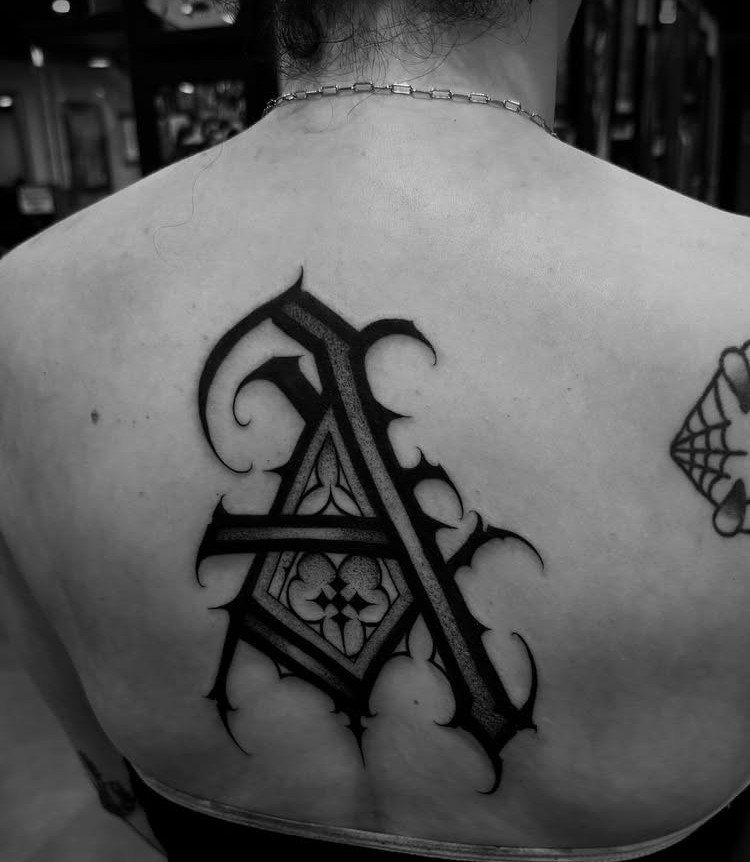
A single gothic letter on the upper back treats the shoulder blades as architecture, which suits people who want ornament without narrative.
The sharp serifs and flourishes read as metalwork or stone carving, not handwriting, so the design holds even if the exact letter loses personal meaning later.
If you are building a patchwork back, plan the negative space between pieces now so the gaps read as intentional later.
Gothic lettering at this scale needs solid black fill and precise edges; any blowout turns a deliberate point into a blur.
Budget for a specialist in ornamental or blackletter styles, and ask to see healed work where the thin connecting lines stayed crisp.


Frequently Asked Questions
What are those back tattoos called?
Back tattoos go by style names rather than one blanket term.
Back tattoos go by whatever style they are: tribal wings, botanical spine pieces, Chicano full back work, fine line celestial designs, abstract sketchy tattoos, large script, symmetrical dragons, or gothic lettering.
Each style uses the back differently: some run down the spine, others spread across the shoulders or cover the whole canvas.
What is the 1/3 rule tattoo?
The 1/3 rule means filling roughly one-third of a body part or one-third of a planned full area so the design breathes and the negative space reads as intentional.
On a back, this matters for patchwork builds where scattered pieces without planned gaps end up looking like clutter rather than a collected canvas.
What are common tattoo styles?
Common styles that work on a back include tribal with its black ink and symmetrical patterns, fine line for delicate celestial work, Chicano with its grayscale religious and street imagery, Japanese-influenced dragon designs, and ornamental gothic lettering.